
 EN
EN

Direct answer: The four main industrial gearbox types are worm gear reducers (60–85% efficiency, inherent self-locking, low cost), helical gear reducers (94–98% efficiency, high-power continuous duty), planetary gearboxes (95–99% efficiency, highest torque density and precision), and cycloidal gearboxes (90–95% efficiency, very low backlash, long service life). The correct choice depends on the required torque, duty cycle, self-locking need, noise tolerance, and total cost of ownership — not efficiency alone.
An industrial gearbox reduces motor speed to the required output speed while multiplying torque. Selecting the right type directly determines equipment efficiency, reliability, and service life. The four core types are: worm gear reducers, gear reducers (helical / bevel-helical / helical-worm), planetary gearboxes, and cycloidal gearboxes.
1. Worm Gear Reducers
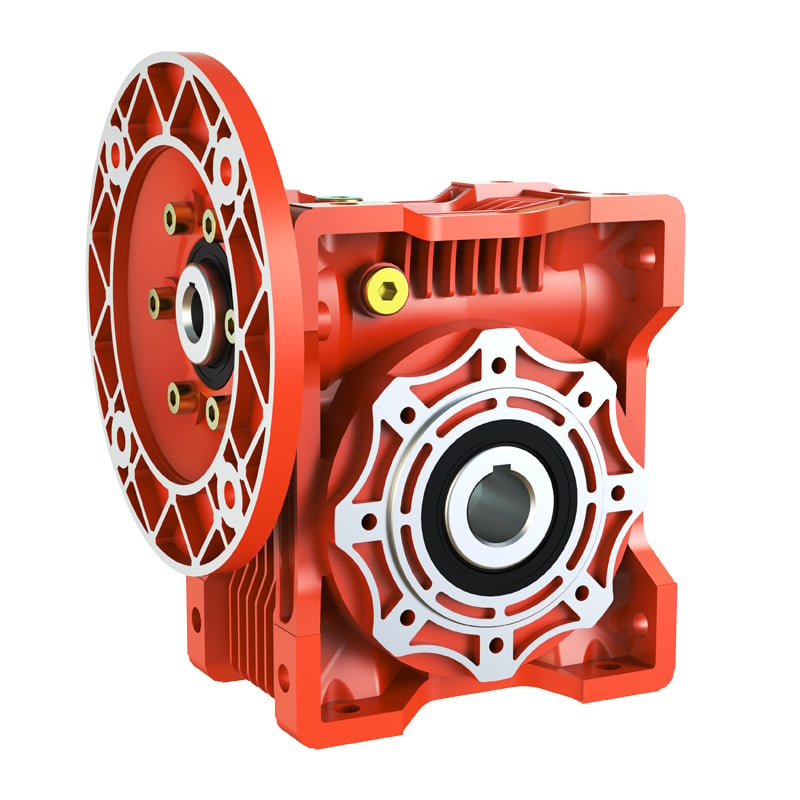
Worm gear reducers use a large-diameter screw meshing with peripheral gear teeth to deliver compact, high-load performance. They are the quietest and smoothest gear system available, with a built-in self-locking function that enhances operational safety.
- Self-locking — prevents back-driving, improving safety in lifting and positioning applications.
- High reduction ratios — achievable in a single stage.
- Compact structure — high load-bearing capacity relative to housing size.
- Low noise — smooth operation suitable for noise-sensitive environments.
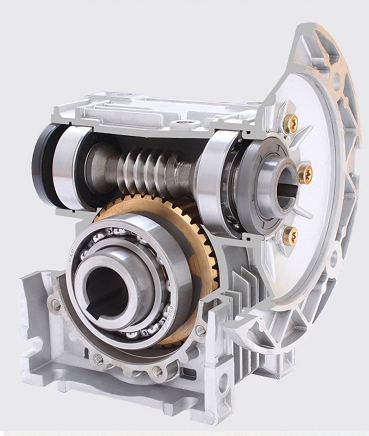
Explore Wuma WMRV Worm Gear Reducers →
| Dimension | Worm Gear Reducer |
|---|---|
| Efficiency | 60–85% (lower due to sliding friction) |
| Noise Level | Low — smooth and quiet |
| Typical Applications | Conveyors, food packaging, lifting equipment, mixers |
| Relative Cost | Low — cost-effective for standard applications |
2. Gear Reducers
Gear reducers transmit power efficiently over short distances at defined speeds. They are more compact than belt or chain drives and deliver higher efficiency. Three main variants cover the full range of industrial applications.
2.1 Helical Gear Reducer
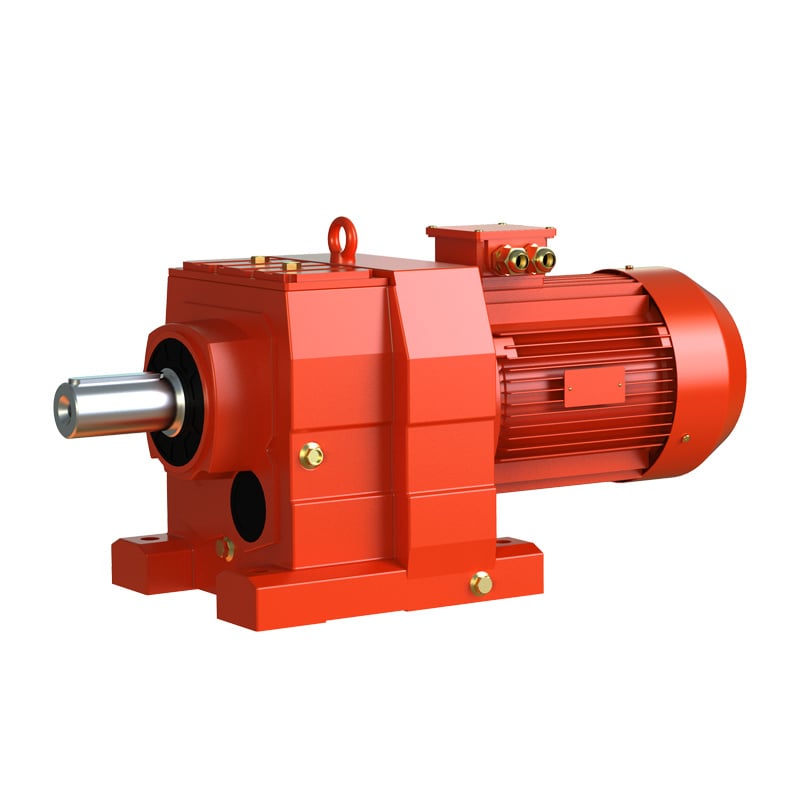
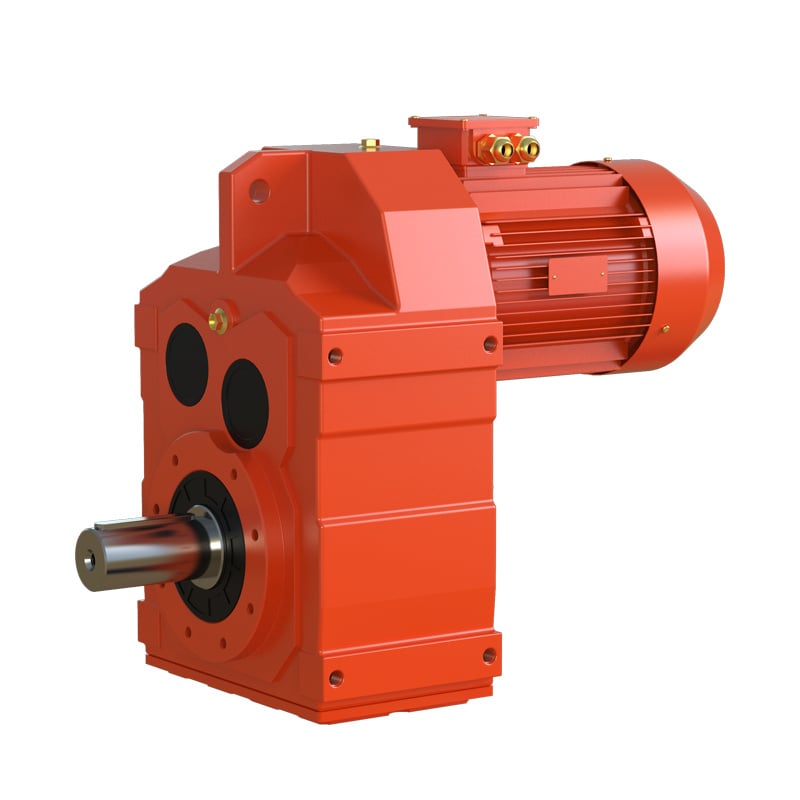
Angled helical teeth increase tooth contact area, spreading load evenly for lower stress and superior durability. Available in coaxial (Wuma WR Series) and parallel shaft (Wuma WF Series) configurations — with housing dimensions compatible with SEW models. Widely used in rubber, cement, conveyors, grinders, and coolers.
- High efficiency
- Smooth operation with low noise
- Reliable meshing and stable power transmission
Explore Wuma WR / WF Helical Gear Reducers →
| Dimension | Helical Gear Reducer |
|---|---|
| Efficiency | 94–98% (rolling contact, minimal friction loss) |
| Noise Level | Low to medium — smoother than spur gears |
| Typical Applications | Rubber, cement, conveyors, grinders, high-power industrial drives |
| Relative Cost | Medium — strong value for high-load, continuous duty |
2.2 Bevel-Helical Gear Reducer
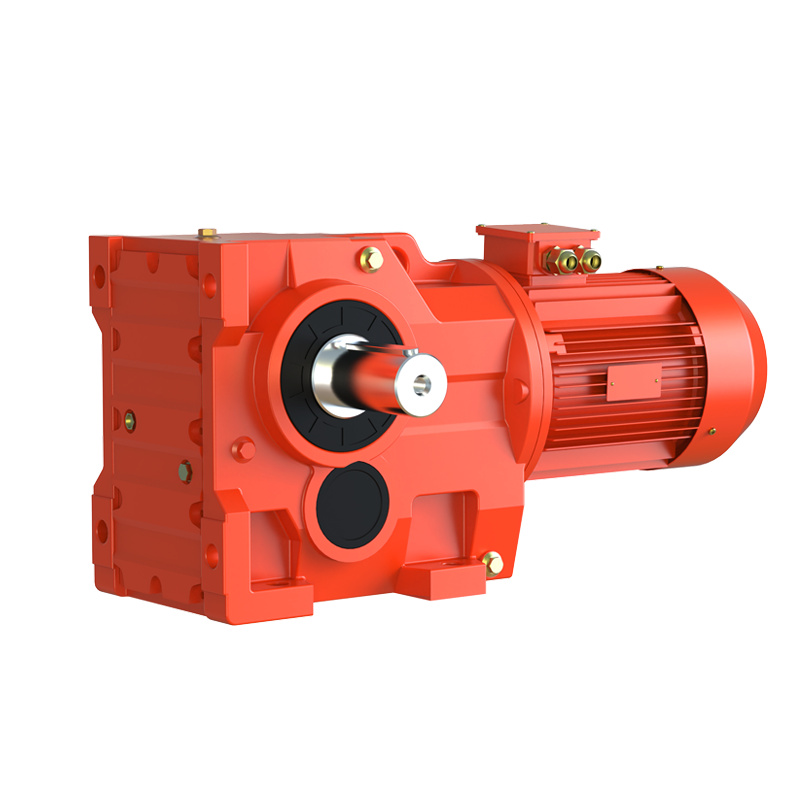
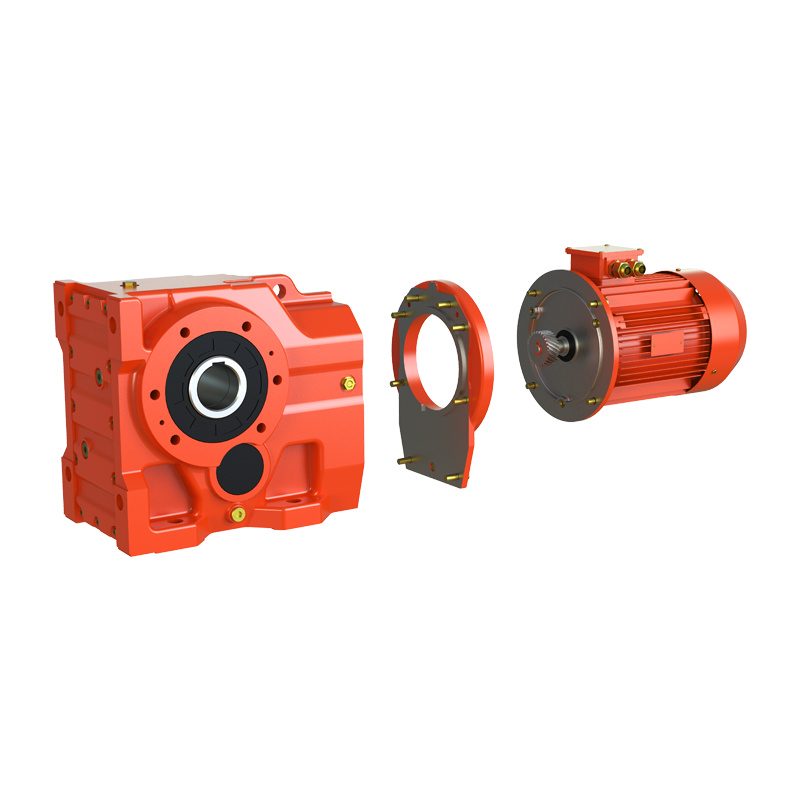
The 90° input-to-output shaft angle makes this the go-to solution for non-parallel shaft drives in confined spaces. Wuma WK Series delivers torque from 80 to 50,000 Nm. Common in aerospace, pharmaceuticals, mining, and textiles.
- Compact 90° right-angle configuration
- High transmission efficiency with low slip risk
- Flexible mounting orientation
Explore Wuma WK Bevel-Helical Gear Reducers →
| Dimension | Bevel-Helical Gear Reducer |
|---|---|
| Efficiency | 93–97% |
| Noise Level | Low — smooth and quiet at right-angle drive |
| Typical Applications | Aerospace, mining, pharmaceuticals, textiles, compact machinery |
| Relative Cost | Medium-high — premium for right-angle, high-torque demands |
2.3 Helical-Worm Gear Reducer
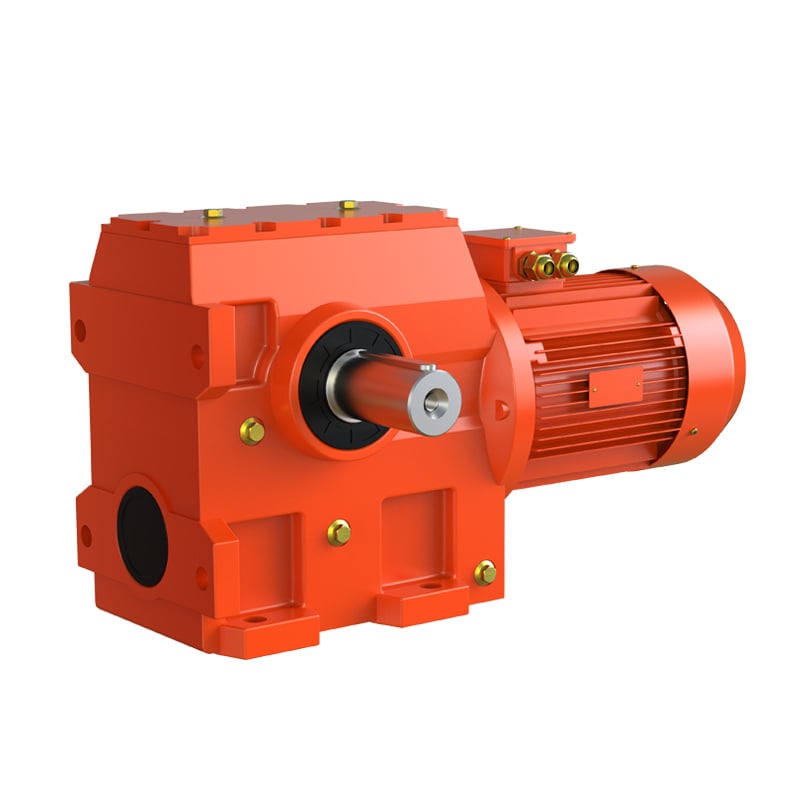
Combines a helical gear stage with a worm gear stage (Wuma WS Series) for higher efficiency than a standard worm reducer, while retaining a compact footprint. Sliding friction keeps operation smooth and quiet — ideal for moderate-duty factory and machinery applications.
Explore Wuma WS Helical-Worm Gear Reducers →
| Dimension | Helical-Worm Gear Reducer |
|---|---|
| Efficiency | 70–90% (better than pure worm) |
| Noise Level | Low — sliding contact remains quiet |
| Typical Applications | General machinery, factory automation, moderate-duty conveyors |
| Relative Cost | Low-medium — cost-effective hybrid solution |
3. Planetary Gearbox
Planetary gears orbit a central sun gear — distributing load across multiple contact points simultaneously. This delivers high torque density in a compact housing, making planetary gearboxes the preferred choice for precision-critical industries such as robotics, aerospace, and CNC machine tools.
- Multi-gear load distribution for extended service life
- Flexible reduction ratios via different gear combinations
- High efficiency maintained even at low power inputs
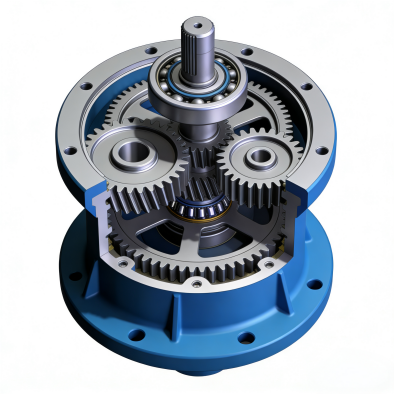
Explore Wuma Planetary Gearboxes →
| Dimension | Planetary Gearbox |
|---|---|
| Efficiency | 95–99% — highest among all gearbox types |
| Noise Level | Medium — manageable in most industrial settings |
| Typical Applications | Robotics, aerospace, CNC machines, servo drives, precision automation |
| Relative Cost | High — justified by precision and power density |
4. Cycloidal Gearbox
Based on planetary transmission principles with cycloidal-pin gear meshing, a double eccentric sleeve drives the cycloidal wheel in combined orbital and rotational motion — delivering high torque with minimal gear play. Widely applied in metallurgy, chemical processing, lifting, and textiles.
- Compact size with high speed reduction ratios in a single stage
- High load-carrying capacity with very low backlash
- Smooth, quiet operation and long service life
| Dimension | Cycloidal Gearbox |
|---|---|
| Efficiency | 90–95% |
| Noise Level | Low — smooth cycloidal motion reduces vibration |
| Typical Applications | Metallurgy, chemical processing, lifting equipment, textiles |
| Relative Cost | Medium-high — complex manufacture, long lifespan |
Quick Comparison: All Gearbox Types at a Glance
| Type | Efficiency | Noise | Best For | Cost |
|---|---|---|---|---|
| Worm Gear | 60–85% | Low | Conveyors, lifts, food packaging | Low |
| Helical Gear | 94–98% | Low–Med | High-power industrial, cement, rubber | Medium |
| Bevel-Helical | 93–97% | Low | Right-angle drives, mining, aerospace | Med–High |
| Helical-Worm | 70–90% | Low | General factory, moderate-duty drives | Low–Med |
| Planetary | 95–99% | Medium | Robotics, CNC, servo, precision automation | High |
| Cycloidal | 90–95% | Low | Metallurgy, chemical, lifting, textiles | Med–High |
All gearbox types above are manufactured by Wuma Drive and are in active use across industries in 80+ countries. Submit your technical parameters — power (kW), speed (rpm), required torque (Nm), and reduction ratio — and our engineers will recommend the best-fit solution.
FAQs
What are the main types of industrial gearboxes?
The four main types are: worm gear reducers (60–85% efficiency, self-locking, low cost), helical gear reducers (94–98% efficiency, high-power continuous duty), planetary gearboxes (95–99% efficiency, highest torque density and precision), and cycloidal gearboxes (90–95% efficiency, low backlash, long service life). Each suits different combinations of torque, speed, noise, space, and budget.
Which industrial gearbox has the highest efficiency?
Planetary gearboxes achieve the highest efficiency at 95–99%, due to load sharing across multiple planet gears simultaneously. Helical gear reducers follow at 94–98%. Worm gear reducers have the lowest efficiency (60–85%) because sliding friction between the steel worm and bronze worm wheel converts a significant portion of input power into heat.
What is the difference between a helical gear reducer and a worm gear reducer?
Helical gear reducers use angled teeth in rolling contact, achieving 94–98% efficiency. Worm gear reducers use a screw-and-wheel sliding contact, achieving 60–85% efficiency but providing inherent self-locking at reduction ratios of i ≥ 20. Choose helical for energy efficiency in continuous duty; choose worm gear when self-locking or a low-cost 90° right-angle drive is the priority.
When should I choose a planetary gearbox over a helical gear reducer?
Choose a planetary gearbox when the application requires maximum torque density in the smallest housing, precision positioning with minimal backlash (servo drives, robotics, CNC), or the highest efficiency at any power level. Choose a helical gear reducer for high-power continuous-duty industrial applications (cement, rubber, conveyors) where purchase cost matters more than absolute precision.
What is a cycloidal gearbox used for?
A cycloidal gearbox achieves 90–95% efficiency, very low backlash, high load-carrying capacity, and long service life through its eccentric cycloidal-pin gear meshing mechanism. It is widely used in metallurgy, chemical processing, lifting equipment, and textiles — applications requiring high single-stage reduction ratios and resistance to shock loading.
Ready to find the right gearbox for your application?
Contact Wuma Drive for a Free Selection Consultation →
 Hot News