
Decision summary: Choose an inline (parallel-shaft) gearbox when axial space is available and simplicity is priority; choose a right-angle gearbox when space is constrained and the motor must mount perpendicular to the load. For mounting orientation, horizontal is the default for reliability; vertical is used only when the application demands it, with extra provisions for lubrication and flange strength.
Gearbox layout decisions come down to two independent variables: shaft direction (inline vs right-angle) and mounting orientation (horizontal vs vertical). Together, they determine how the drive system occupies three-dimensional space.
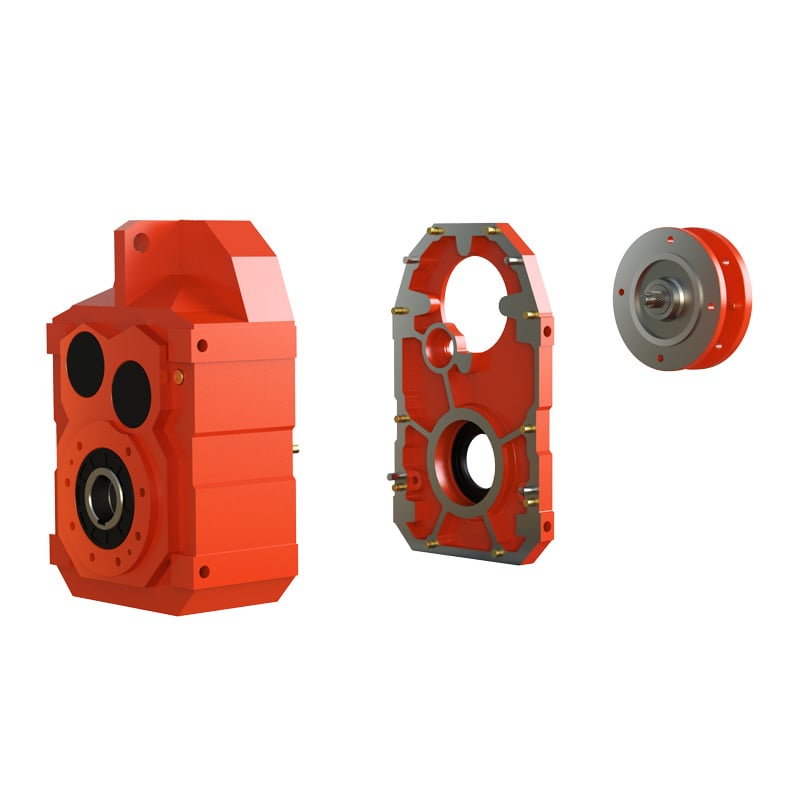
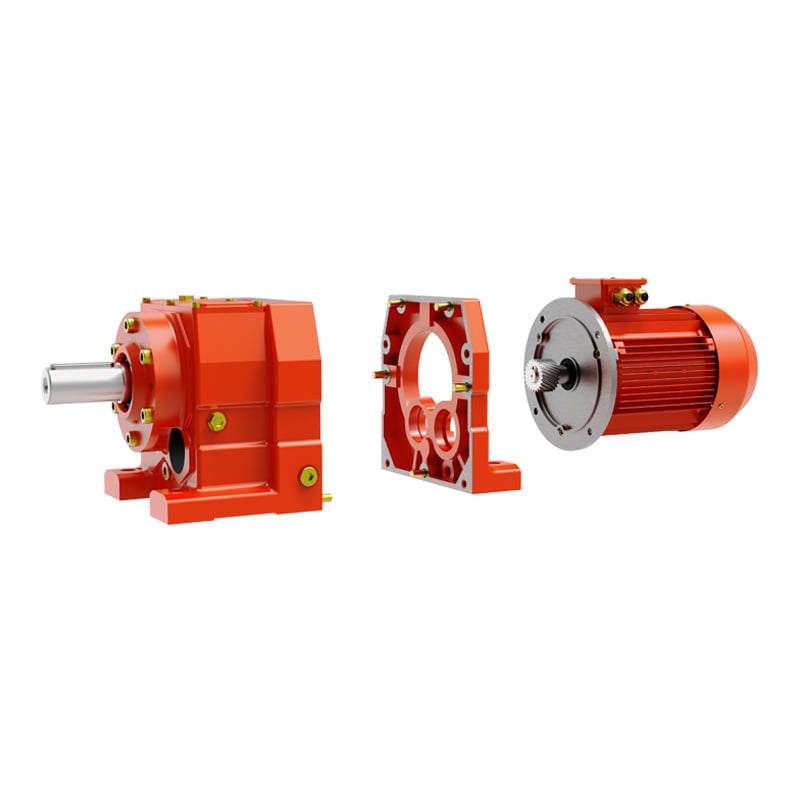
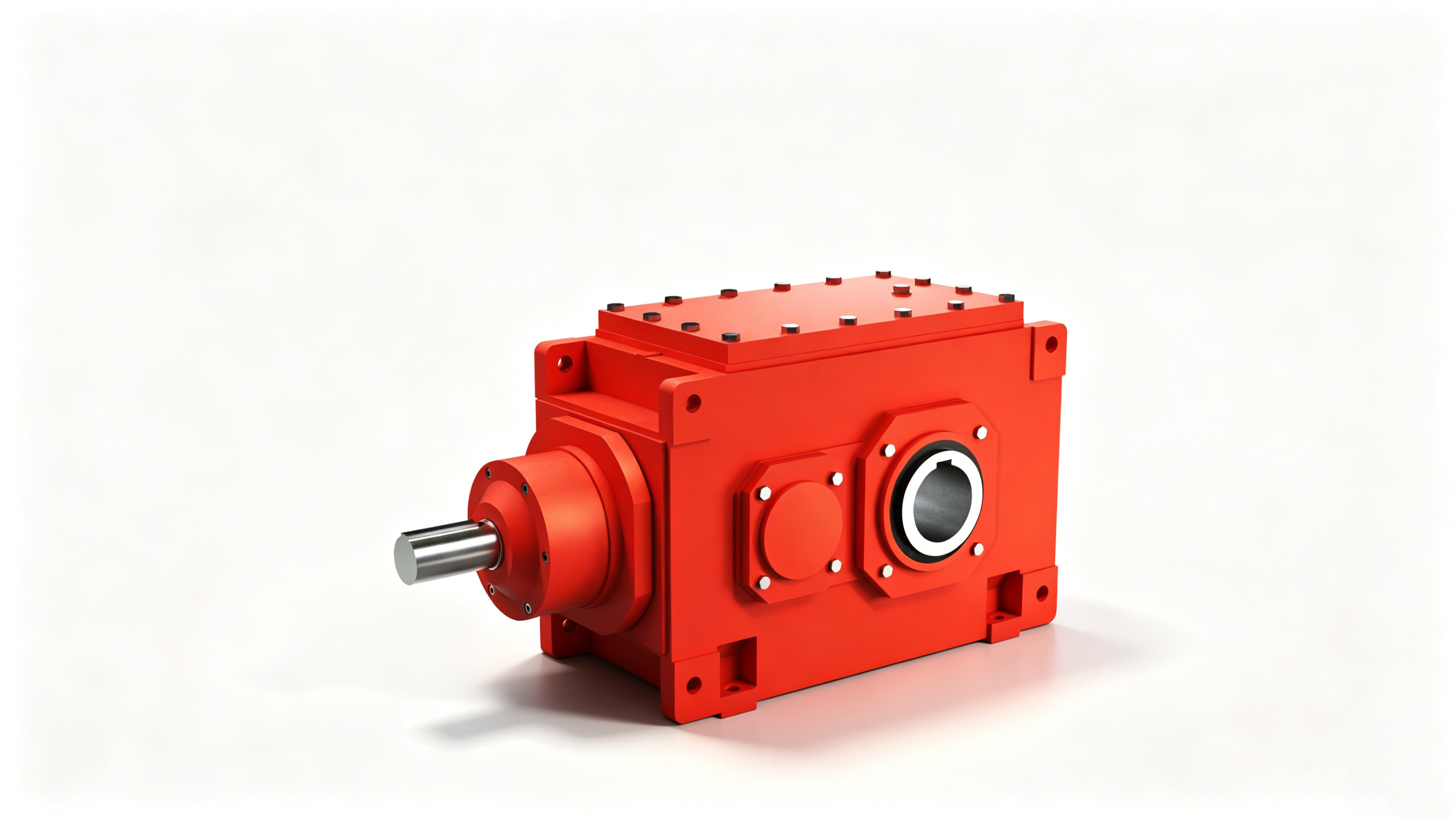
Input and output shafts run in the same direction, creating a straight-line motor–gearbox–load arrangement. This is the mechanically simpler option — easier to align, easier to maintain, and the most thermally efficient. The trade-off is axial length. For conveyors, fans, and mixers where the machine's natural orientation is already linear, no space is wasted. → Wuma Drive WF/WR Parallel-Shaft Series
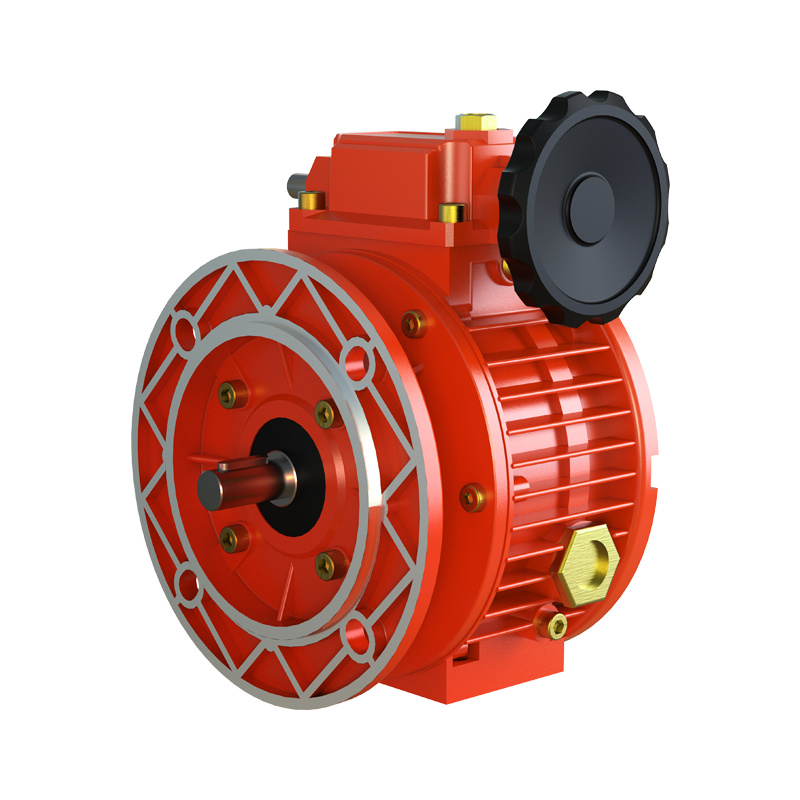
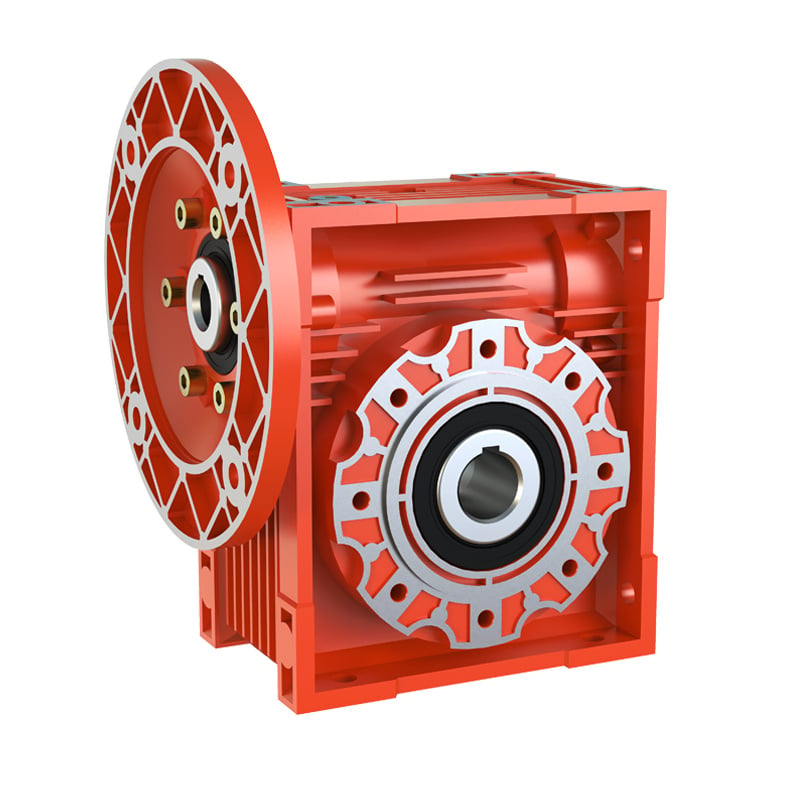
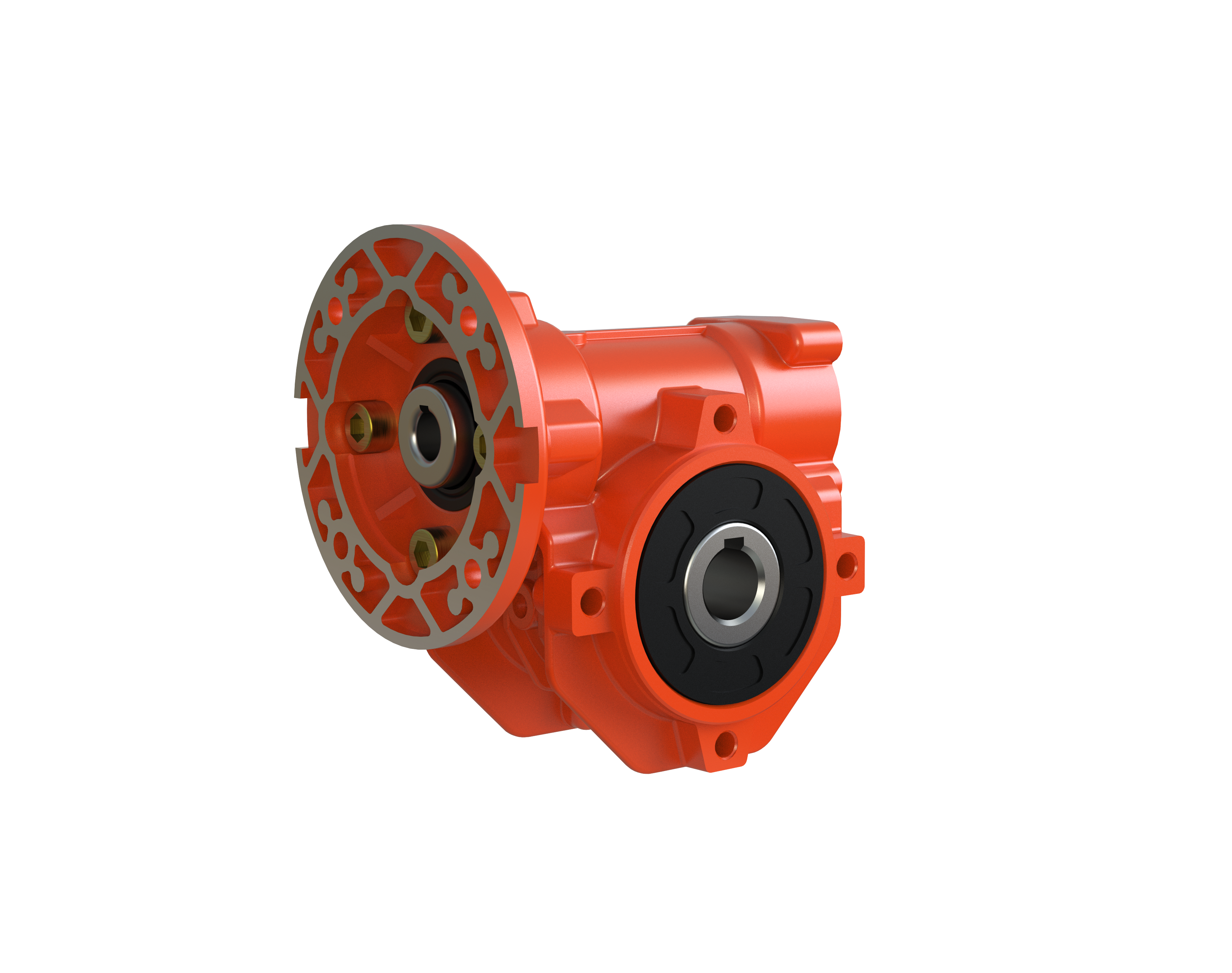
Input and output shafts are at 90°, using bevel gears or a worm-gear pair to redirect power. This "folds" the drive chain, allowing the motor to mount perpendicular to the load and saving floor space. In compact installations — tank agitators, crane travel drives, packaging lines — the L-shaped layout is often the only practical option. → Wuma Drive WS / WMRV / WK Right-Angle Series
Horizontal (foot-mounted) — output shaft points sideways; base sits on the floor. Low center of gravity, best lubrication conditions, simplest maintenance. This is the default for most industrial applications.
Vertical (flange-mounted) — output shaft points straight up or down; housing bolts directly to the equipment. Saves floor space but demands purpose-designed lubrication circuits, careful oil-level management, and higher flange connection stiffness.
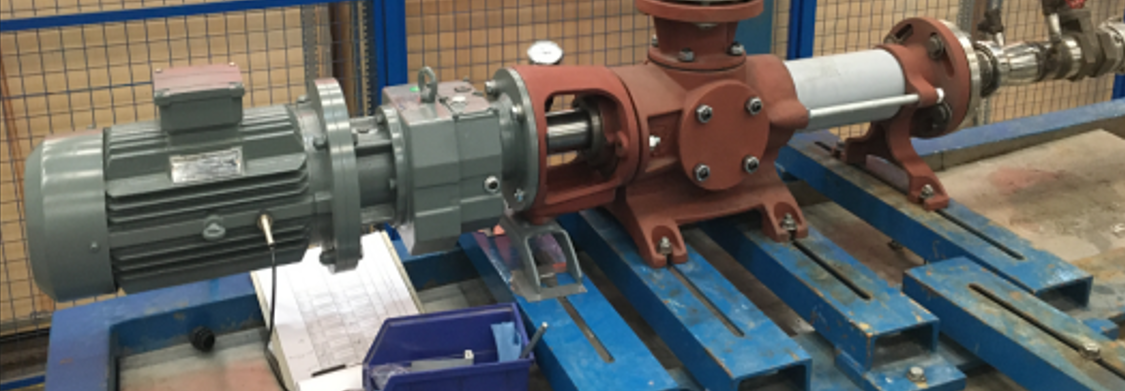
Motor and gearbox sit side by side on a flat surface, connected to the load via coupling or belt. All shaft centerlines must be precisely aligned. Best for heavy-duty continuous operation — mining conveyors, large fans — due to straightforward maintenance and superior heat dissipation.
Motor mounts on top of the gearbox; output shaft points straight down. The smallest footprint of any configuration — multiple agitator units can be packed closely on a tank roof. Requires dedicated oil-circuit design; high-power units often need a separate oil tank.
Work through these five criteria in order. Most applications resolve cleanly by criteria 1–2; criteria 3–5 prevent costly oversights at commissioning.
1. Map available space first
Parallel-shaft inline needs axial clearance; right-angle L-shape needs lateral clearance; vertical needs height. Compare the gearbox envelope dimensions against site constraints before evaluating anything else.
2. Match the interface and connection method
If the driven machine has an exposed input shaft, a hollow-bore right-angle gearbox that slips directly onto it is the simplest solution. For flexible coupling connections, a parallel-shaft horizontal gearbox is more straightforward. When space is not a constraint, always favor the simpler option.
3. Confirm lubrication and cooling provisions
Horizontal mounting offers the most mature lubrication practice — oil level is easy to set, housing surface provides natural cooling. Vertical mounting requires forced lubrication or specially designed splash circuits. In high-temperature or continuous heavy-load conditions, horizontal is the safer default.
4. Reserve maintenance access clearance
After installation, there must be accessible clearance for oil changes, bolt inspection, and routine servicing. Account for the motor terminal box position and lifting lug locations. A layout that appears compact on drawing can quietly raise long-term operating costs if it makes routine maintenance difficult.
5. Account for load direction and structural rigidity
The output shaft carries both radial and axial forces from the working machine. In horizontal mounting, these are transferred to the foundation through the housing. In vertical mounting, the gearbox acts as a cantilevered structure — placing higher demands on flange strength and connection stiffness. Verify these ratings against actual load data.
Inline (parallel-shaft) applications:
Right-angle applications:
Choose inline when axial space is available and simplicity is priority — it offers the best alignment ease, maintenance access, and thermal efficiency. Choose right-angle when floor space is constrained and the motor must mount perpendicular to the load.
Parallel-shaft horizontal is the most widely used configuration — it offers the simplest lubrication, the best heat dissipation, and the most accessible maintenance. It is the default unless space or application requirements dictate otherwise.
Vertical mounting is used when the driven machine requires a downward or upward output — such as tank agitators, reactors, and certain hoisting mechanisms. It saves floor space but requires dedicated lubrication provisions and higher flange connection stiffness.
Available space envelope → interface and connection method → lubrication and cooling provisions → maintenance access clearance → load direction and structural rigidity. Most applications resolve at criteria 1 or 2.
WF/WR parallel-shaft helical series for inline; WMRV worm gear, WS helical-worm, and WK bevel-helical series for right-angle — all available in horizontal and vertical mounting configurations.
Need help matching gearbox type and mounting position to your application?
Browse Gearbox Series → Contact Us → Hot News
2026-08-26
2026-08-18
2026-08-15
2026-08-11
2026-07-31
2026-07-29
Welcome to Wuma , a manufacturer committed to developing and manufacturing various types of gear reducers and gearmotors for the field of gear transmission.
No. 10, Xiangcun Industrial Zone, Dongyuan Town, Qingtian County, Lishui City, Zhejiang, China
Copyright © Zhejiang Wuma Drive Co., Ltd All Rights Reserved Privacy Policy Blog
 EN
EN