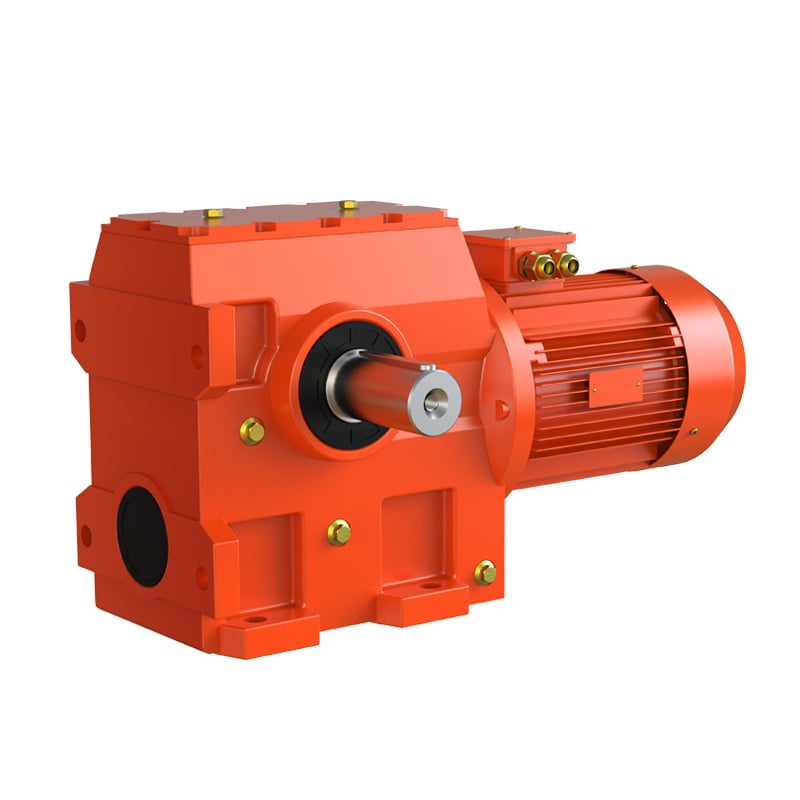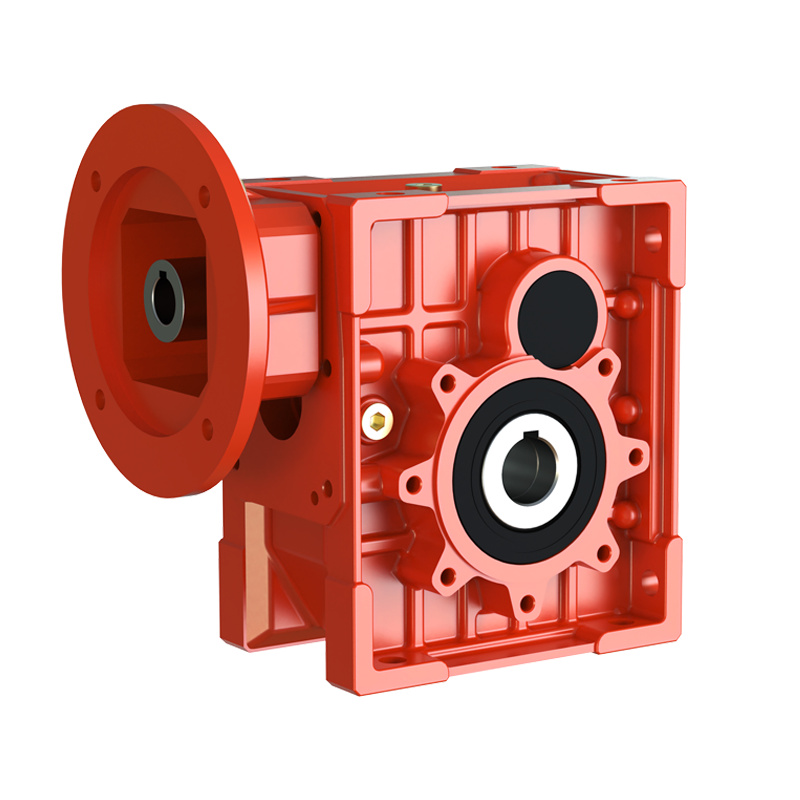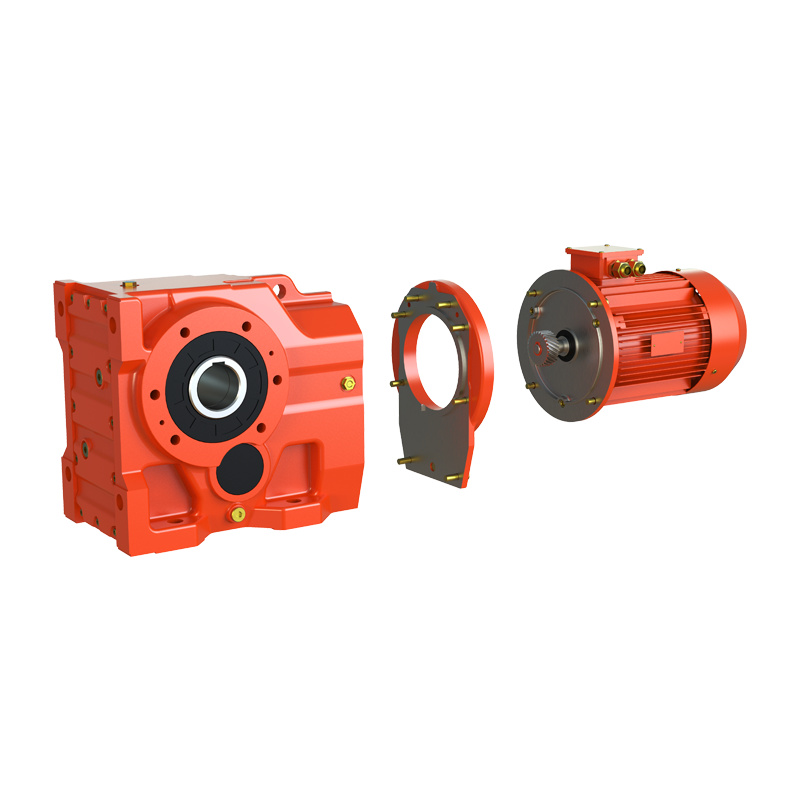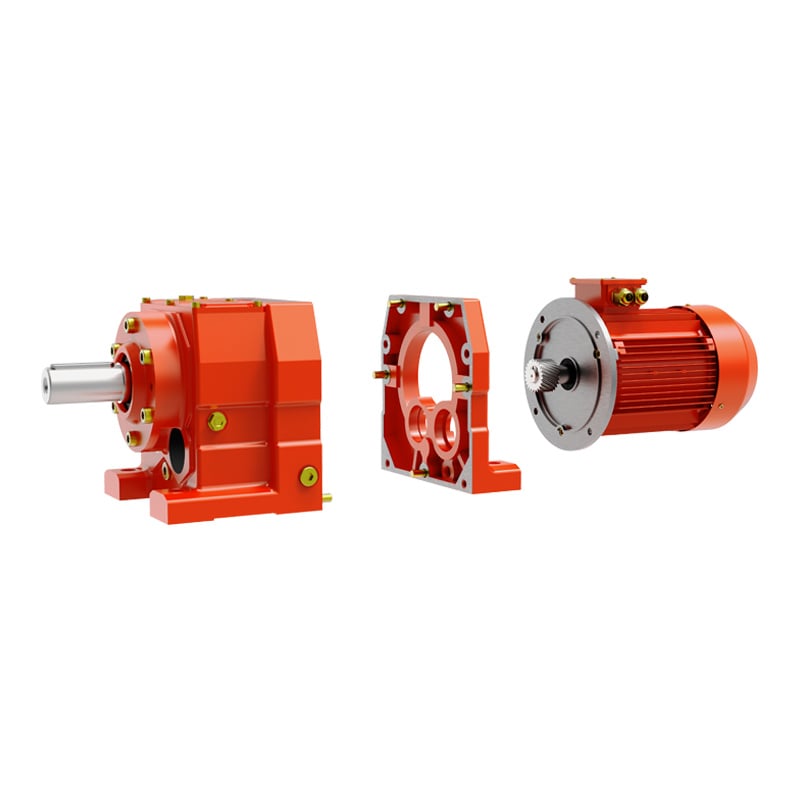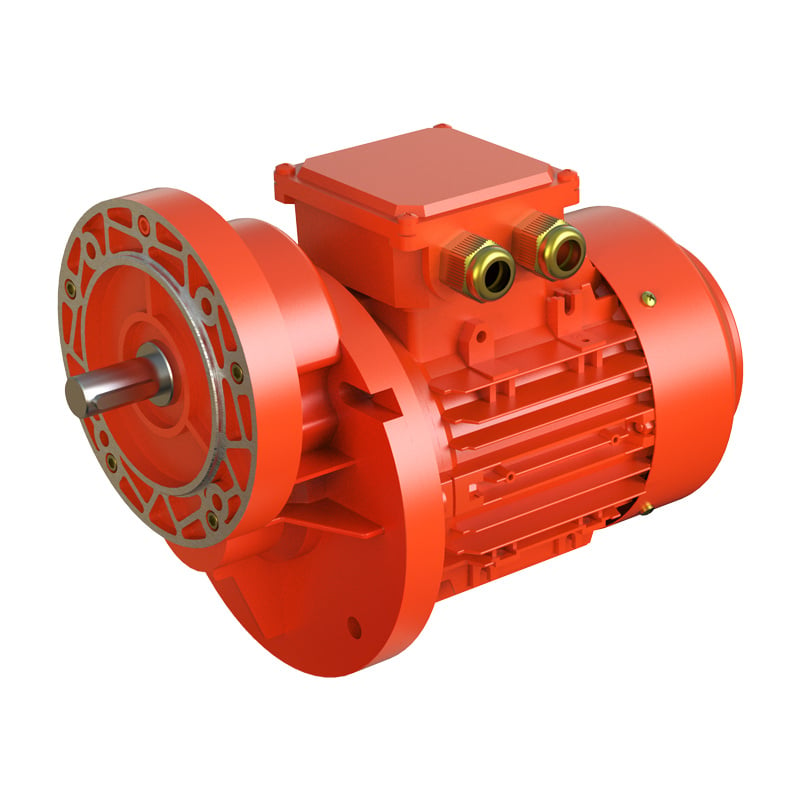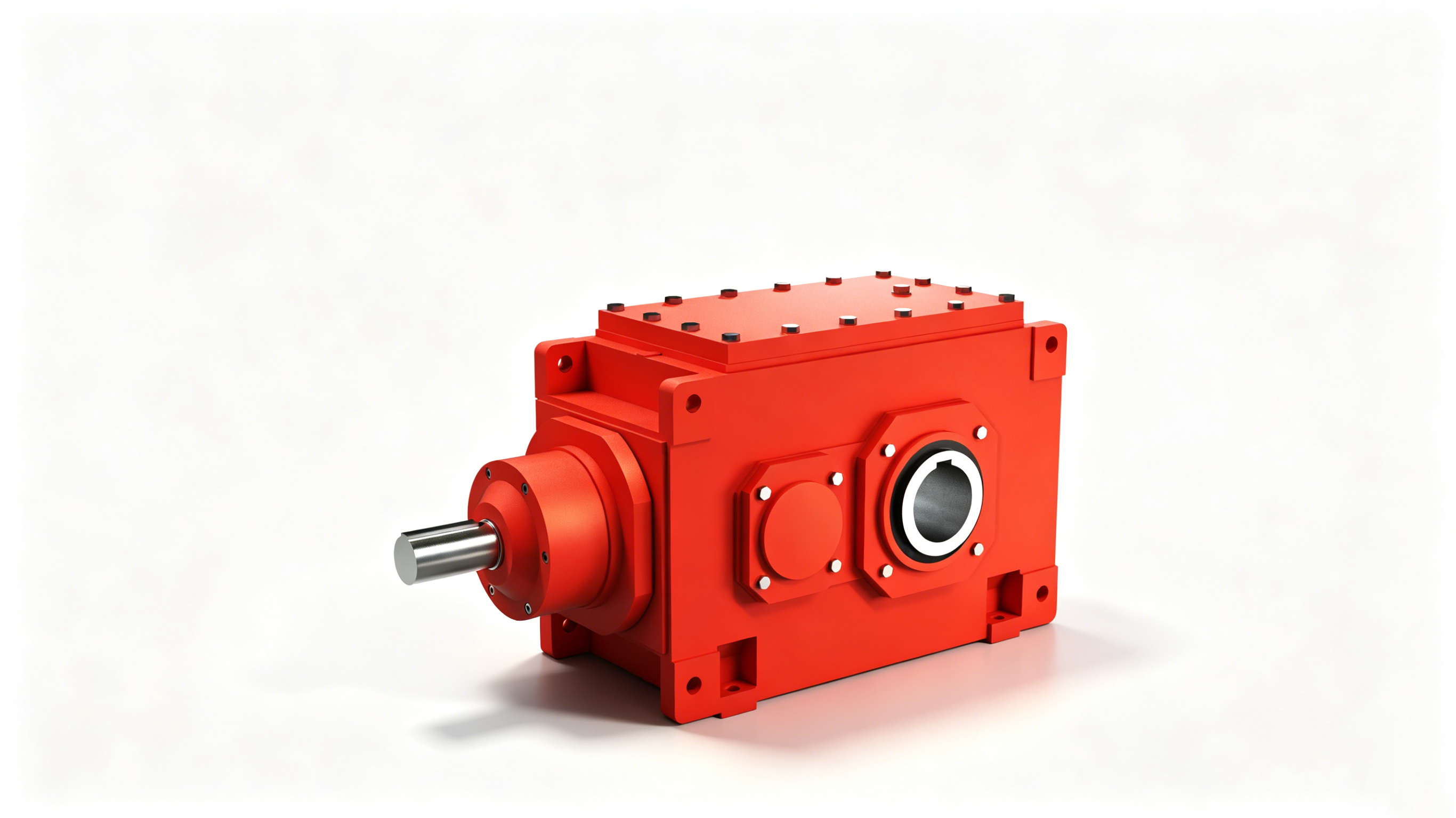

In continuous-duty automated manufacturing, drivetrain vibration is the root cause of bearing fatigue, premature oil seal deterioration, and catastrophic tooth breakage. The structural layout of the parallel shaft helical geared motor resolves this challenge through innate mechanical symmetry.
With input pinion and intermediate gear shafts arranged in a compact parallel plane, mechanical reaction vectors cancel out bending moments inside the housing. Dynamic testing proves this arrangement absorbs 40% higher vibrational impact than cross-axis or offset bevel-worm configurations during sudden motor start-stop cycles.
The precision-engineered 30° helix angle ensures that two or more teeth remain simultaneously engaged at any instant of torque transfer. Rather than abrupt impact engagement, tooth contact transitions smoothly across the tooth face, curbing mechanical noise below 65 dB(A) in full-load operation.
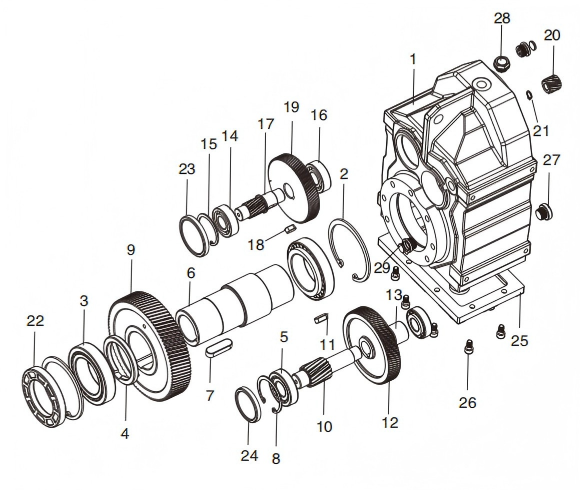
Structural balance is only as durable as the metallurgy and machining tolerances that support it. Low-grade commercial reducers frequently suffer from tooth spalling and center-distance drift because they rely on surface-only induction hardening and unstabilized iron castings. In contrast, WUMA enforces strict aerospace-grade metallurgical and CNC machining controls:
1. 20CrMnTi Vacuum Carburizing & Quenching: All pinions and helical gear wheels are produced from certified 20CrMnTi low-carbon alloy steel. Through controlled deep-carburizing heat treatment, the tooth surface achieves a rock-solid hardness of HRC 58–62 for superior pitting and scuffing resistance, while the gear hub retains a tough, ductile core (HRC 33–40) to withstand extreme shock loads and emergency stops.
2. 100% In-House Chemical Verification via Emission Spectrometer: Every incoming batch of steel bars and iron castings is verified with a direct-reading optical emission spectrometer, confirming precise Carbon (C), Chromium (Cr), Manganese (Mn), and Titanium (Ti) percentages before entering the CNC line.
3. LG MAZAK Horizontal Machining Centers: Heavy-duty horizontal machining centers (HMCs) process four gearbox housings simultaneously in a single setup. This eliminates secondary clamping errors and ensures micro-inch bore concentricity, center-distance accuracy, and bearing alignment.
4. Mitsubishi CNC Gear Grinding to DIN Class 5–6: High-speed input pinions are ground with profile crowning and lead modification, restricting profile tolerance to <0.01 mm (finer than a human hair) and achieving an ultra-smooth tooth surface roughness of Ra ≤ 0.8 μm. High-speed gear meshing instruments thoroughly inspect teeth to eliminate micro-burrs and meshing hum.
Drawing on decades of powertrain field data and customer engineering feedback, the WUMA WF series incorporates six proprietary manufacturing upgrades designed to minimize downtime and simplify plant maintenance:
Foot structure ribbing has been strengthened to counter high starting torque. An integrated motor disassembly slot allows technicians to separate motors cleanly without damaging precision mounting spigots.
End-cover mounting bolt quantities are matched to European standards for uniform joint compression. The breather vent is strategically relocated away from internal oil splash waves, eliminating oil mist expulsion.
Produced with automated static pressure iron casting lines, HT250 gray iron casings feature ultra-dense molecular grain structure, flawless exterior aesthetics, and zero internal air pockets or shrinkage cavities.
High-strength magnetic oil drain plugs capture microscopic metallic wear particles during break-in, extending synthetic oil change intervals up to 8,000–10,000 hours and safeguarding precision bearings.
Replacing traditional thin oils, a specialized heavy-duty anti-rust grease and automated vacuum wrapping protect gears against salt spray, ocean humidity, and condensation during transoceanic shipping.
Every completed unit enters a dedicated soundproof chamber for variable-frequency load testing and undergoes dual pneumatic airtightness checks to guarantee leak-free operation prior to crating.
For mechanical engineers, machine builders, and MRO maintenance teams, retrofitting or integrating a gearbox should minimize mechanical modifications. The WUMA WF series is engineered to international modular standards, featuring standardized dimensions that align with widely used industrial F series gearboxes (subject to confirmation against specific application drawings).
| Parameter / Model | WUMA WF Series Range | Engineering Specification |
|---|---|---|
| Frame Sizes Covered | WF 37 to WF 157 | Matches international F37 – F157 frame sizes |
| Maximum Output Torque | Up to 12,000 N·m | High torque density in a slim-profile envelope |
| Ratio Coverage (i) | i = 3.77 to 281.71 (Multi-stage >20,000) | 2-stage and 3-stage high-efficiency gear trains |
| Transmission Efficiency | 94% – 96% | Far outperforms worm reducers (typical 60%–80%) |
| Output Mounting Options | Solid Shaft, Hollow Shaft, Flange, Torque Arm | Keyway, Spline, or Shrink Disc (WFAF / WFAZ) |
| Motor Input Compatibility | IEC (B5/B14), NEMA C-Face, Servo Adapters | Precision adapters for S60, S80, S90, S110, S130 |
| Explosion-Proof Compliance | ATEX Certified (Gas & Dust) | Zone 1/21 & Zone 2/22 hazardous applications |
Foot mounting bolt centers, center shaft heights, output shaft diameters, keyway tolerances, and torque-arm buffer interfaces follow standardized industrial conventions. Equipment builders and plant engineers can smoothly integrate WUMA WF reducers into modular conveyor lines and machinery frames with verified dimensional alignment.
Thanks to its ultra-slim profile and shaft-mounted hollow-bore configuration, the parallel shaft helical gearbox solves critical space and mechanical alignment constraints across diverse industrial sectors:
Direct shaft-mounted execution eliminates coupling misalignment and chain stretch on long-distance belt, roller, and bucket conveyors. The rubber-buffered torque arm absorbs shock from sudden material drop impact.
The slender, flat-sided casing slips easily into tight overhead gantry and automated storage shuttle carriages, maximizing vertical lift clearance without sacrificing heavy-duty torque capacity.
With high transmission efficiency (>95%) and backlash controlled via CNC grinding, the WF series eliminates filling inconsistencies, rejects mechanical jitter, and delivers 24/7 continuous duty stability.
Equipped with oversized output bearing spans and high radial force capacity, the WF series withstands turbulent fluid agitation and high overturning moments in wastewater and chemical treatment tanks.
A parallel shaft helical gearbox features symmetrical center-distance geometry where input and output shafts run along parallel axes. This design balances mechanical reaction forces, absorbs up to 40% more shock load vibrations than cross-shaft arrangements, and delivers higher tooth contact ratios with continuous 30-degree helical meshing.
The WUMA WF series is engineered to standardized modular dimensions. Output shaft diameters, center heights, foot mounting hole pitches, output flange spigots, and torque arm interfaces follow common international industrial conventions, facilitating smooth integration with compatible F-series gear units upon verification against official engineering drawings.
WUMA incorporates four sealing safeguards: 100% pneumatic pressure testing at assembly, optimized breather vent placement away from internal gear oil-splash paths, increased end-cover bolt patterns for uniform clamping, and premium high-temperature dual-lip skeleton oil seals running on precision-ground shaft sleeves.
The WF series offers versatile mounting options including solid shaft foot mounting (WF), B5/B14 output flange mounting (WFF), hollow shaft with keyway (WFA), hollow shaft with shrink disc (WFAF/WFAZ), and shaft-mounted execution with an integrated rubber buffer torque arm (WFAT).
High-frequency induction hardening creates a brittle surface crust prone to micro-cracking and tooth spalling under shear stress. Vacuum carburizing allows carbon to diffuse deeply into 20CrMnTi alloy steel, producing a rock-hard case (HRC 58-62) for wear resistance while preserving a ductile core (HRC 33-40) to absorb severe shock and peak starting torques.
Download detailed 2D/3D CAD models, request dimensional cross-reference sizing, or consult our drivetrain engineers for custom servo/motor configurations.
 Hot News
2026-08-26
2026-08-18
2026-08-15
2026-08-11
2026-07-31
2026-07-29
Welcome to Wuma, a manufacturer committed to developing and manufacturing various types of gear reducers and gearmotors for the field of gear transmission.
No. 10, Xiangcun Industrial Zone, Dongyuan Town, Qingtian County, Lishui City, Zhejiang, China
Copyright © Zhejiang Wuma Drive Co., Ltd All Rights Reserved Privacy Policy Blog
 EN