
 EN
EN

Direct answer: For outdoor gear reducers, the minimum IP rating depends on operating environment: IP65 for dusty sites, IP67 for wet or rainy conditions, and IP67+ for salt spray or coastal installations. Selecting below the required rating allows moisture and contaminants to penetrate the gearbox — causing lubricant deterioration, gear rust, and component seizure within months. IP rating selection is the single most impactful protection decision for any outdoor drive system.
What Is an IP Protection Rating?
The IP (Ingress Protection) rating, defined by IEC 60529, quantifies a gear reducer's resistance to the entry of solid particles and liquids. It is indicated by two digits after "IP" — the first for dust resistance (0–6), the second for water resistance (0–9). The higher the digit, the stronger the protection level.
| IP Rating | Dust Protection | Water Protection | Typical Application |
|---|---|---|---|
| IP54 | Dust-protected (limited ingress) | Splash-proof from all directions | Light indoor/semi-outdoor, low-dust factory |
| IP55 | Dust-protected | Low-pressure water jets, all directions | Mild outdoor, sheltered installation |
| IP65 | Completely dust-tight | Low-pressure water jets, all directions | Mines, gravel yards, dusty outdoor sites |
| IP66 | Completely dust-tight | High-pressure water jets, all directions | Food processing, washdown environments |
| IP67 | Completely dust-tight | Temporary immersion up to 1 m / 30 min | Outdoor logistics, construction, wet environments |
| IP68 | Completely dust-tight | Continuous immersion beyond 1 m | Submersible equipment, port infrastructure |
IP Rating Selection by Outdoor Environment
Outdoor operating environments vary significantly — from dry dusty mines to salt-laden coastal installations. Matching IP rating to the actual operating environment is the most important protection decision in gear reducer selection.
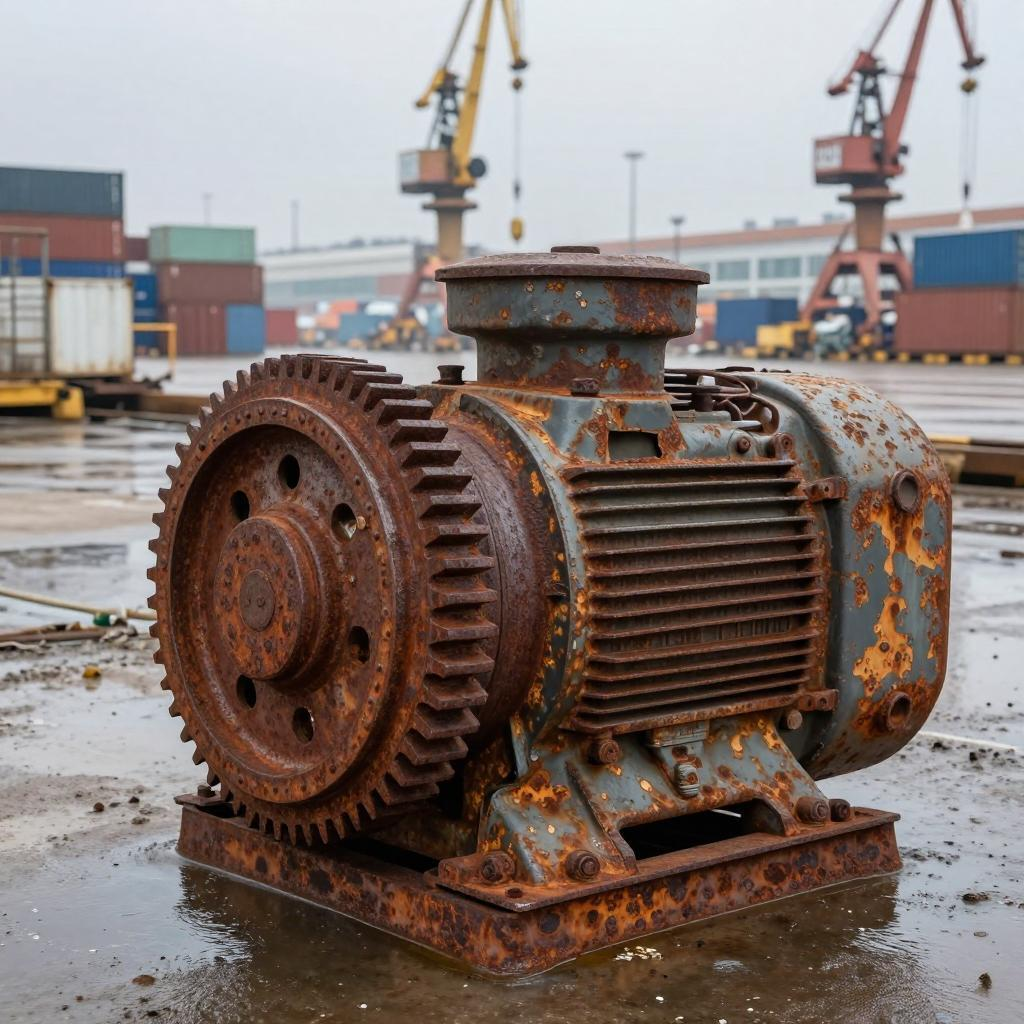
Dusty Environments — Mines, Quarries, Gravel Yards: IP65 Minimum
Complete dust exclusion is the priority. Without it, fine mineral dust mixes with lubricant to form abrasive slurry — accelerating "three-body wear" on gear teeth and bearing races, reducing transmission efficiency from the design target of 96–98% down to levels that require premature overhaul.
- Minimum rating: IP65
- Supplementary measure: Dust cover + labyrinth seal combination at coupling gaps
- Inspection: Clean external surfaces and check seal integrity monthly
Wet & Rainy Environments — Logistics Yards, Construction Sites: IP67 Minimum
Daily rain, ground splash, and condensation all create moisture infiltration risk. IP67 ensures the gearbox can withstand temporary immersion without water ingress — critical for equipment installed near drainage channels, loading bays, or low-lying outdoor areas.
- Minimum rating: IP67
- Installation height: Minimum 30 cm above ground level, away from standing water zones
- Additional measures: Rain cap on top of housing; replace standard vent cap with waterproof vent valve to balance internal air pressure without allowing water infiltration
Salt Spray Environments — Ports, Coastal Sites: IP67+ with Anti-Corrosion Treatment
Salt-laden air dramatically accelerates electrochemical corrosion on metal surfaces. IP67 alone is insufficient — the casing surface treatment and fastener protection are equally critical in coastal installations.
- Minimum rating: IP67 or higher
- Casing treatment: Double rust prevention — cathodic electrophoresis + fluorocarbon spraying, paint thickness ≥ 80 μm
- Fastener protection: Anti-loosening fastener structure, anti-corrosion lubricant or plastic protective caps on bolt heads
- Inspection cycle: Check tightening torque on all exposed fasteners every 3 months
Environment-to-IP Rating Quick Reference
| Environment Type | Typical Sites | Minimum IP Rating | Key Supplementary Measure |
|---|---|---|---|
| Dusty / dry outdoor | Mines, quarries, cement plants | IP65 | Labyrinth seal at coupling gaps |
| Wet / rainy outdoor | Logistics yards, construction sites | IP67 | Waterproof vent valve + rain cap |
| High humidity / salt spray | Ports, coastal installations | IP67+ | Anti-corrosion coating ≥ 80 μm + protected fasteners |
| High-pressure washdown | Food processing, slaughterhouses | IP66 / IP69K | Food-grade seals + stainless fasteners |
| Submersible / flood-prone | Port infrastructure, water treatment | IP68 | Continuous immersion-rated seals + pressure equalization |
Beyond IP Rating: Three Protection Details That Determine Long-Term Reliability
IP rating defines the housing barrier — but seal design, lubrication selection, and maintenance discipline determine whether that barrier holds over years of outdoor operation.
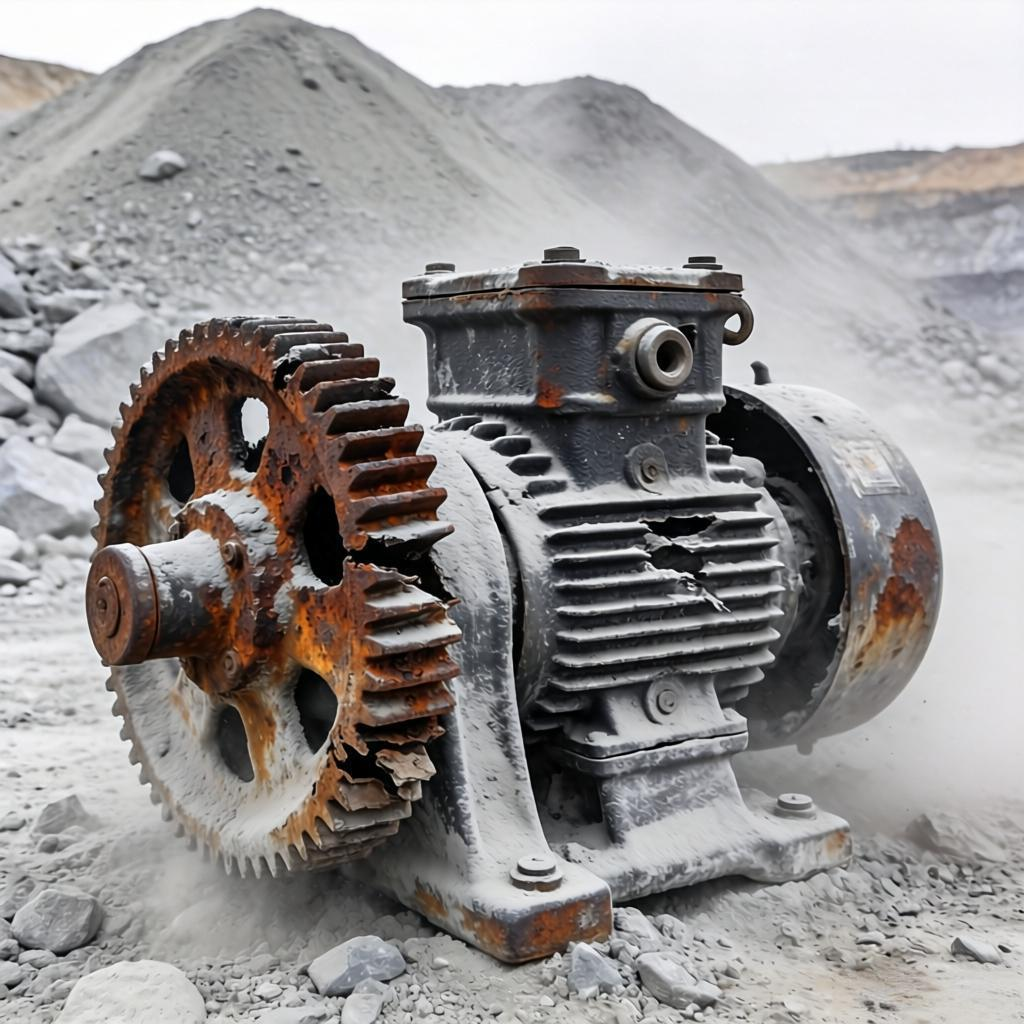
1. Sealing & Drainage Design
Select gear reducers using a combined skeleton oil seal and labyrinth seal system — providing dynamic and static sealing redundancy. Static interfaces (housing joints, end covers) should be sealed with O-rings plus sealant for double protection. A drain plug at the lowest point of the housing allows periodic removal of internal condensate, preventing moisture accumulation that leads to lubricant emulsification and bearing damage.
2. Lubricant Selection for Outdoor Conditions
Standard gear oils are designed for controlled indoor conditions. Outdoor installations require lubricants matched to the actual operating temperature range and humidity level:
- Cold climates (below -10°C): Wide-temperature-range gear oil rated from -30°C to 100°C — prevents viscosity failure at low temperatures during cold starts
- High-temperature summer operation: Clean debris from heat sink fins regularly; install sunshade canopy if direct solar radiation is significant
- Humid or wet environments: Anti-emulsifying lubricant — prevents water contamination from breaking down the oil film and degrading lubrication performance
3. Routine Maintenance Schedule
Proactive maintenance extends gear reducer service life by 2–3× compared to reactive repair. Follow this minimum inspection cycle for outdoor installations:
| Frequency | Maintenance Action | Purpose |
|---|---|---|
| Weekly | Clean air intake filter element | Prevents blockage-induced abnormal internal pressure that forces contaminants past seals |
| Monthly | Inspect seal condition; replace aged or cracked gaskets | Maintains the primary moisture barrier before visible leakage occurs |
| Quarterly | Check gears and bearings for corrosion; replace emulsified or deteriorated lubricant; check fastener torque (salt spray environments) | Early detection of lubricant failure and corrosion before component damage occurs |
| Annually | Full drain and refill with fresh lubricant; inspect internal gear and bearing surfaces; reapply anti-corrosion coating where needed | Resets the internal environment and confirms structural integrity for the next service cycle |
FAQ: Gear Reducer IP Rating
What IP rating does an outdoor gear reducer need?
IP65 for dusty sites (mines, gravel yards); IP67 for wet or rainy environments (logistics yards, construction sites); IP67 or higher for salt spray environments (ports, coastal installations). Selecting below the required rating leads to lubricant contamination, gear rust, and premature failure within months.
What does the IP rating on a gear reducer mean?
IP (Ingress Protection) rating — defined by IEC 60529 — uses two digits to indicate dust and water protection levels. The first digit (0–6) rates dust exclusion; the second (0–9) rates water resistance. IP67 means completely dust-tight and capable of withstanding temporary immersion up to 1 meter for 30 minutes.
What is the difference between IP65 and IP67?
IP65 provides complete dust exclusion and protection from low-pressure water jets — suitable for rain and splash. IP67 adds protection against temporary immersion up to 1 meter depth, required for environments with flooding risk, standing water, or high-pressure washdown.
How often should outdoor gear reducer seals be inspected?
Weekly: clean air intake filter. Monthly: inspect and replace aged or cracked seals and gaskets. Quarterly: check gears and bearings for corrosion, replace emulsified lubricant, and verify fastener torque in salt spray environments.
What lubricant should I use for an outdoor gear reducer in cold or humid environments?
Cold climates: use gear oil rated for -30°C to 100°C. Humid environments: select anti-emulsifying lubricant to resist water contamination. Always match lubricant specification to the actual operating temperature range of the installation location.
Selecting the correct IP rating for the operating environment — and backing it with proper sealing, lubrication, and maintenance — is what separates gear reducers that last years from those that fail within months. Zhejiang Wuma Drive Co., Ltd. supplies outdoor-rated gear reducers with verified IP protection, anti-corrosion treatment options, and full selection support for every environment type.
Need help selecting the right IP-rated gear reducer for your outdoor application?
Contact Wuma Drive — Get a Free Outdoor Environment Selection Consultation →
 Hot News