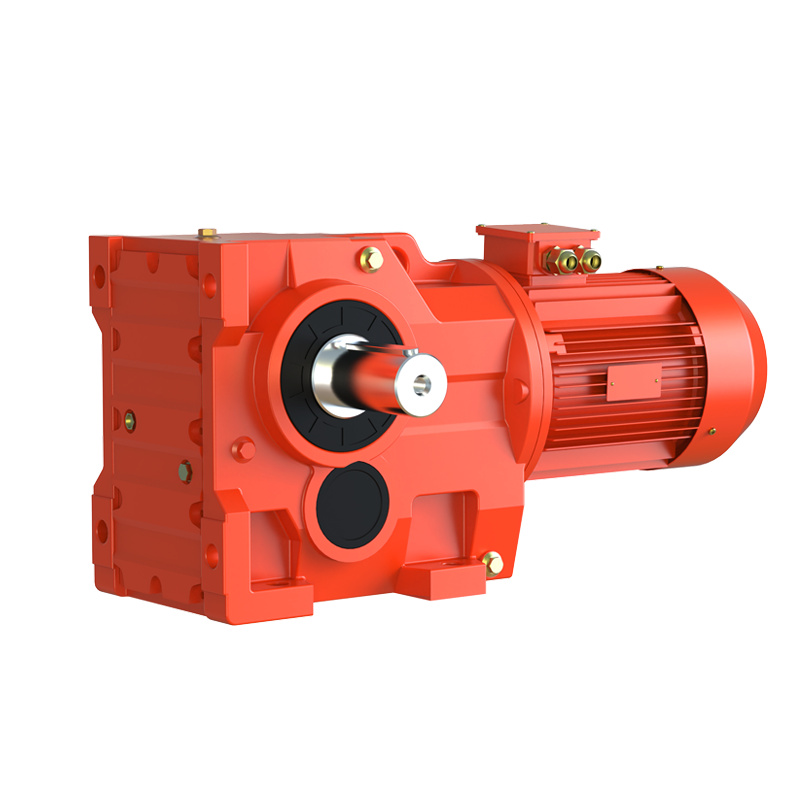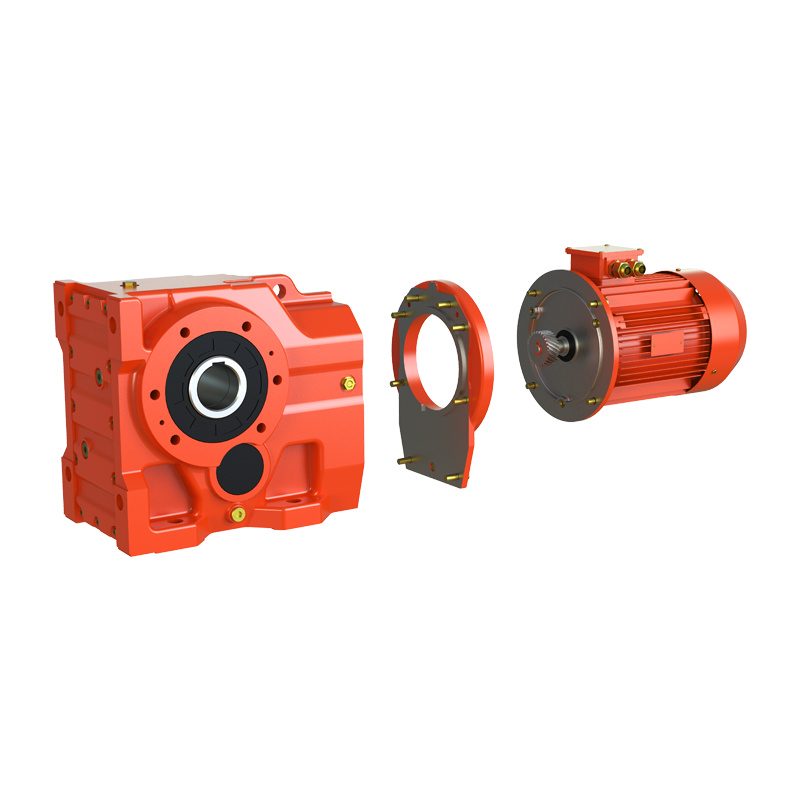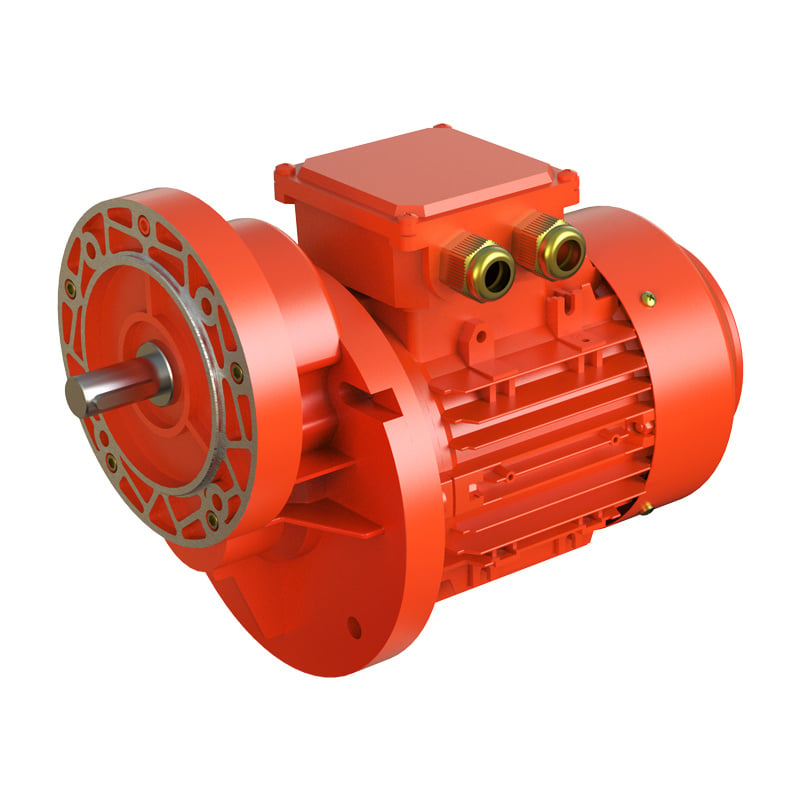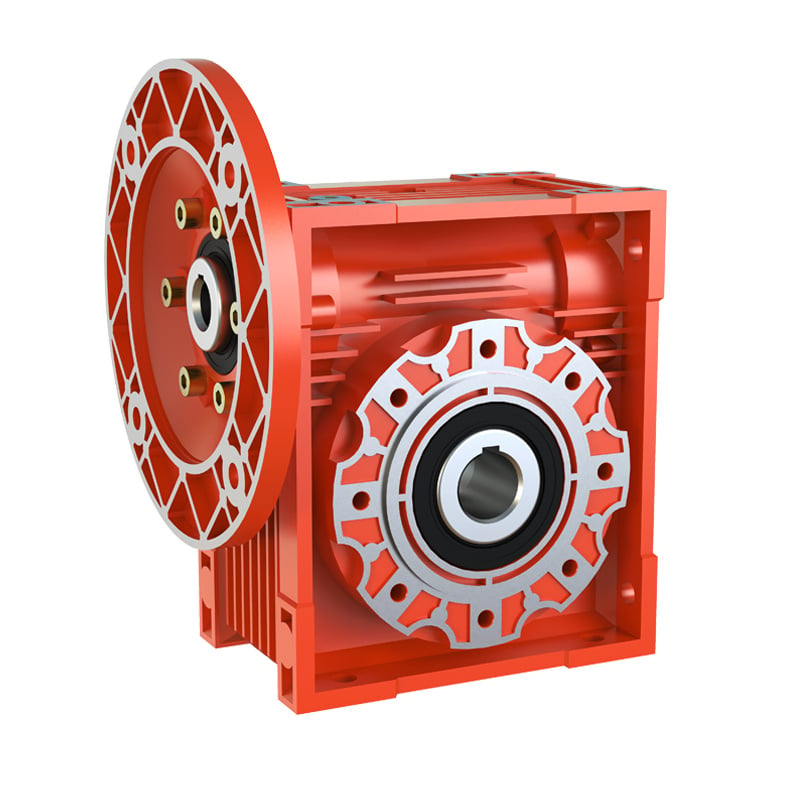

In a reducer's power transmission system, bearings are the core components that support all the rotating parts. So, the material you choose for those bearings? Different materials come with their own personalities—different hardness, wear resistance, how they handle heat, their friction quirks. All of this can change a reducer's efficiency, energy loss and its lifespan in several ways.
The main bearing materials out there are high-carbon chromium steel, ceramics, stainless steel, and plastics. And right now, high-carbon chromium steel is the workhorse, the most widely used material in the speed reducer industry by far.
There are two big reasons:
1.Efficient: Under normal lubrication, the rolling friction coefficient of reducer is very small---around 0.001 to 0.002. That means it just hums along, keeping efficiency nice and stable during those medium-to-high-speed runs.
2.Tough and Lifetime: After heat treatment (quenching and tempering), it hits a hardness of HRC 60–64. This thing resists wear. It holds its dimensional precision through millions of cycles, which means the efficiency doesn't take a nosedive over the long haul.
Now, depending on what you're doing, you might need something different. Here’s how we generally think about material selection and efficiency:
1.For High-Speed, High-Precision Jobs (like Robotics or Machine Tools)
Our Go-To: Hybrid ceramic bearings (silicon nitride balls, steel rings).
Why: Less friction, less heat, lower inertia. It can actually give the high-speed stage of your reducer a nice 3%–6% efficiency boost and let you go longer between lubrication breaks.
2.For Heavy-Duty Grunt Work (like Mining or Wind Power)
Our Go-To: High-carbon chromium bearing steel (GCr15SiMn is a classic).
Why: This stuff is all about fatigue strength and just handling the load. Under heavy pressure, it keeps that rolling contact stable, so you don't lose efficiency because things start deforming. Plus, it's the most cost-effective option here.
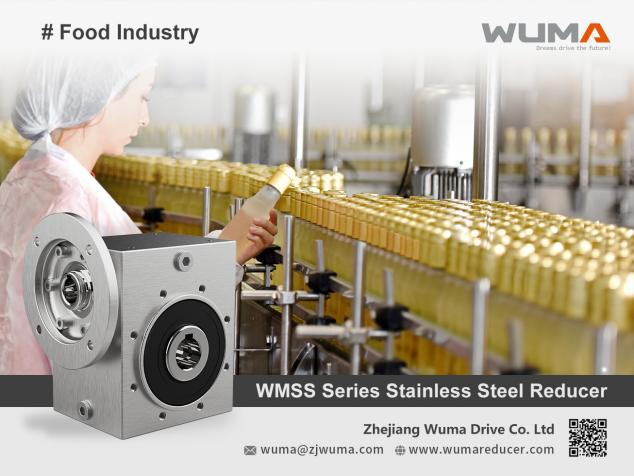
3.For Corrosive or Super-Clean Environments (Food Processing, Pharma, Marine)
Our Go-To: Stainless steel bearings or steel bearings with special coatings.
The Trade-off: Here, fighting corrosion is job number one. That means efficiency might take a tiny hit compared to standard high-carbon chromium steel. But you can make up for that friction loss with smarter lubrication, like using food-grade greases.
4.For Light-Duty, Low-Speed Stuff (think Smart Home Gadgets, Office Equipment)
Our Go-To: Engineering plastic bearings or self-lubricating steel bearings.
Why: They're self-lubricating, so they're basically maintenance-free. Quiet, low friction—perfect for the efficiency needs of those small, low-power applications.
Conclusion:
Bearing material is a big deal for reducer efficiency. It basically controls energy loss by tweaking the friction, heat, wear rate, and inertia.
1.High-Carbon Chromium Steel: It's the all-rounder, the solid foundation. Best balance of cost, strength, and efficiency. It's what we pick for the vast majority of industrial reducers.
2.Ceramics: When you need speed, precision, and a long, long life, ceramics are a game-changer. They're a key path to upgrading performance in high-end reducers.
3.Stainless Steel / Plastics: These are chosen for specific environments. Efficiency sometimes takes a backseat to other must-haves like corrosion resistance or keeping things lightweight.
 Hot News
2026-08-26
2026-08-18
2026-08-15
2026-08-11
2026-07-31
2026-07-29
Welcome to Wuma , a manufacturer committed to developing and manufacturing various types of gear reducers and gearmotors for the field of gear transmission.
No. 10, Xiangcun Industrial Zone, Dongyuan Town, Qingtian County, Lishui City, Zhejiang, China
Copyright © Zhejiang Wuma Drive Co., Ltd All Rights Reserved Privacy Policy Blog
 EN
EN