-
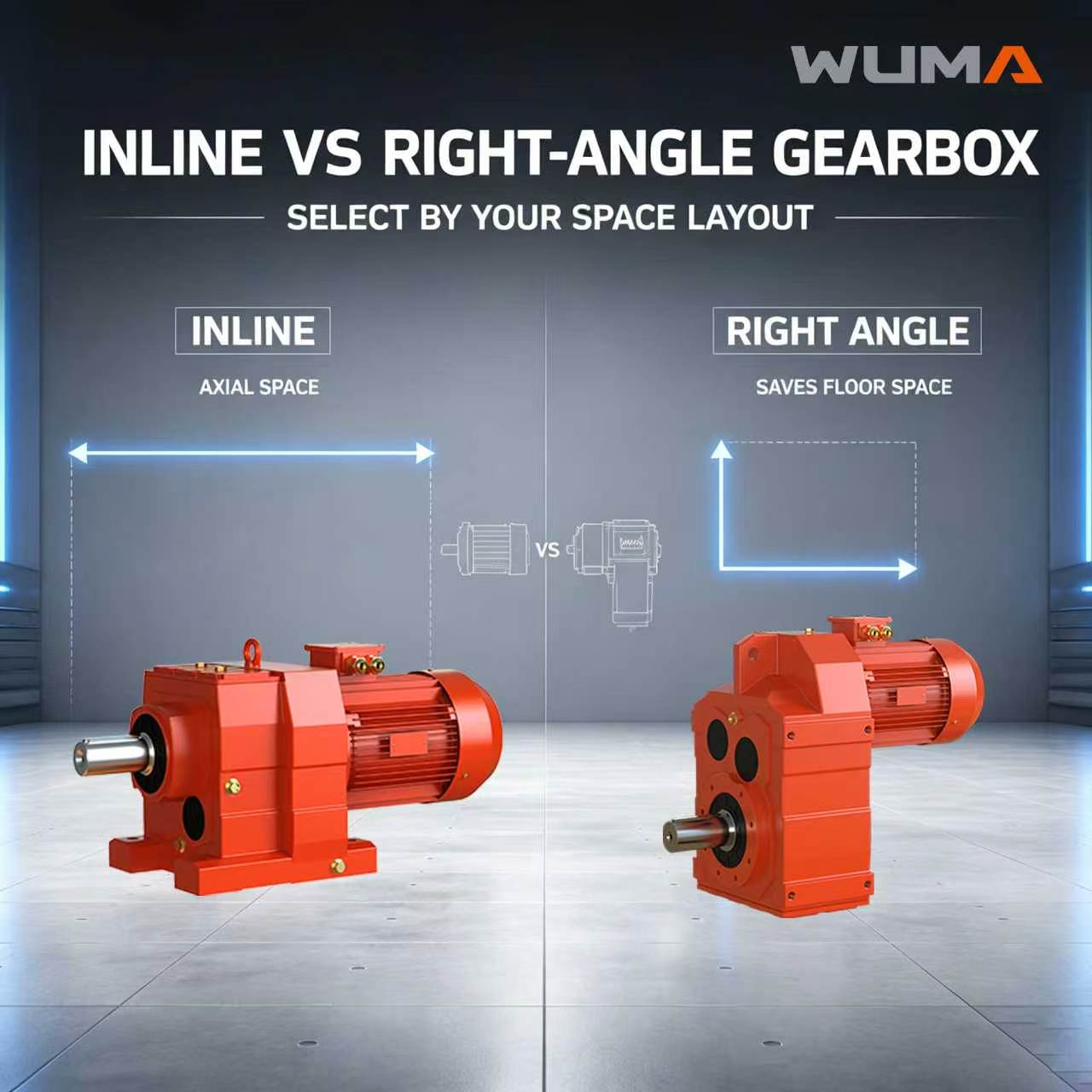
Looking for a Reliable Alternative to European Gearboxes? ——Meet the WUMRV Series
Cost-effective worm gear reducer with European equivalent quality. WUMRV series offers direct replacement for premium European gearboxes, 20-40% cost savings, fast delivery, IP55 protection and wide industrial application.
May. 22. 2026 -
WUMA’s Gearboxes & Worm Reducers Built for Global Industry
Premium WUMA worm gear reducers & industrial gearboxes with 30-year manufacturing experience. High torque, low noise, stable performance, CE ISO certified. Custom transmission solutions for automation, mining, food packaging industry. Fast supply & global service.
May. 21. 2026 -
Ensuring Zero Downtime in Food Packaging: WUMA’s Stainless Steel Reducer Bearings Solutions
Premium stainless steel reducer bearings from WUMA ensure zero downtime for food packaging lines. Food-grade, rust-proof, washdown-resistant bearings deliver hygienic, low-maintenance and 24/7 stable operation for food processing plants.
May. 15. 2026 -
Beyond the Gearbox: How WUMA Supports Your Project from Selection to After-Sales
Professional full-lifecycle support from WUMA Drive: gearbox selection, fast 24-hour global after-sales response, on-time delivery, standardized closed-loop service and customized technical solutions for worldwide transmission equipment projects.
May. 14. 2026 -
Reducer Selection in Mining Machinery: WUMA’s WH and WB series industrial gearbox for Dust Protection, Impact Resistance, and High Reliability
Looking for reliable industrial gearboxes for mining machinery? WUMA WH and WB series feature premium dust protection, impact resistance and high thermal stability, ideal for heavy-load mining operations. Learn selection tips & full reducer solutions here.
May. 13. 2026 -
Common Selection Mistakes That Kill Conveyor Gearboxes Fast
Most conveyor gearboxes fail early not due to quality defects, but improper selection. This article outlines four critical selection mistakes: ignoring actual load, mismatched mounting type, neglecting harsh working environments, and blind over-spec or underpowered matching. It also shares practical selection tips to calculate real load, match mounting forms, adapt site conditions and choose cost-effective models. Avoiding these errors helps reduce wear, cut maintenance costs and ensure long-term stable operation of conveyor gearboxes.
Apr. 25. 2026 -
Gear Reducer Abnormal Noise Reason: What Do Humming, Clicking, and Shrieking Sounds Mean?
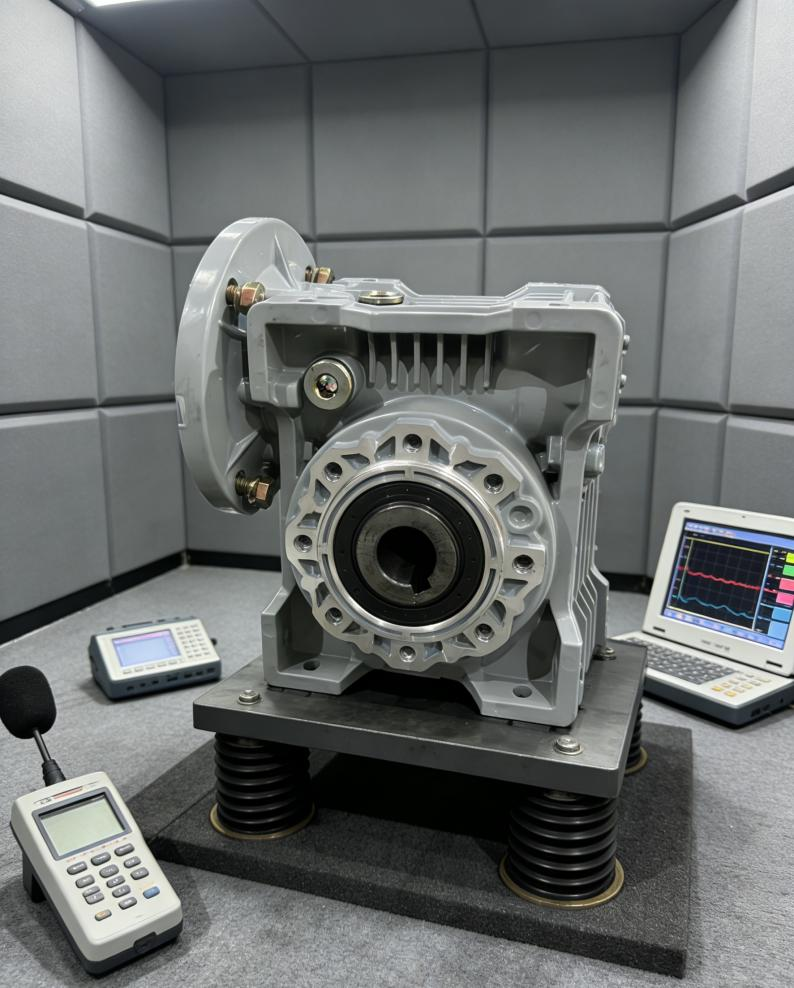
Normal gear reducers emit steady meshing sounds; abnormal noises (humming, clicking, shrieking) indicate internal faults. Humming links to gear wear/bearing vibration, clicking to tooth damage/foreign particles, and shrieking to poor lubrication/high-speed shaft issues. WUMA ensures product quality through professional noise testing.
Apr. 22. 2026 -
How does the Protection Level(IP)of Reducer directly affect equipment?
The IP protection level is a core indicator for reducers, which directly determines equipment stability and service life in industrial environments. Comprising dustproof and waterproof ratings, different IP grades like IP54/IP55, IP65/IP66 and IP67 adapt to ordinary workshops, extreme dusty or water-spray conditions, and even short-term water immersion. Choosing a proper IP rating avoids premature failures and cuts maintenance costs. Meanwhile, over-high IP causes unnecessary costs, and regular seal maintenance is still required to ensure protection performance.
Apr. 20. 2026 -
New Product Launch | ZHEJIANG WUMA DRIVE CO.,LTD WDVF Worm Gear Reducer: High Performance and Cost-Effectiveness!
This promotion introduces ZHEJIANG WUMA DRIVE’s new WDVF worm gear reducer series launched in 2026. Featuring interchangeable mounting dimensions with Bonfiglioli VF reducers, high torque, compact structure, excellent heat dissipation, and flexible installation, the WDVF series meets heavy‑duty industrial demands. Built under ISO 9001, DIN, and AGMA standards with intelligent Industry 4.0 production, these gearboxes are widely used in food, ceramics, plastics, textiles, environmental protection, and automation. The series supports custom shafts, torque arms, and IEC motor matching. With global service to over 80 countries, WuMA Drive provides reliable, energy‑efficient, cost‑effective transmission solutions with fast delivery and customization.
Apr. 17. 2026 -
The dual secrets behind Worm gearbox's self-locking feature: the gearbox ratio determines whether it's present or not, and the materials determine its strength.
The self-locking performance of worm gearboxes is determined by two core factors: ratio and material. The gear ratio acts as the master switch: self-locking is reliable above 60:1, uncertain between 30:1–50:1, and almost non-existent below 20:1. Materials serve as the control valve: aluminum bronze offers strong self-locking with lower efficiency, while tin bronze provides higher efficiency but weaker self-locking. Selection should prioritize ratio first, then material. Wuma Transmission delivers tailored solutions to balance self-locking and efficiency optimally.
Mar. 30. 2026 -
The Importance of Accurately Selecting the Appropriate Service Factor
This article emphasizes the importance of accurately selecting the service factor (SF) in speed reducer applications. The service factor is the ratio between the reducer’s rated torque and actual load torque, serving as compensation for operational uncertainties. In practice, users often choose either an excessively low SF to cut costs, causing premature failures such as pitting, scuffing and tooth breakage, or an overly high SF to avoid risks, leading to higher costs, larger inertia, increased energy consumption and degraded dynamic performance. A reasonable service factor should be determined by evaluating duty cycle type, start-stop frequency and dynamic load. Accurate SF selection achieves the optimal balance between reliability, performance and economic efficiency.
Mar. 27. 2026 -
The difference between no-load and loaded operation of a speed reducer
Gearboxes are core mechanical transmission components for industrial automation and robotics, designed to reduce speed and increase output torque. Their operating properties differ drastically between no-load and loaded conditions, featuring distinct mechanical, thermal and electrical characteristics. Under no-load operation, the gearbox only overcomes internal friction and lubrication losses, with low power consumption and stable rotating speed, acting as a reliable baseline for system testing and tuning. Under loaded conditions, it withstands both internal resistance and external load torque, with efficiency peaking at 70-90% of the rated torque and faster thermal rise. Excessively high no-load current signals internal faults including bearing wear, gear damage, degraded lubricant or electrical issues, rather than insufficient load. Distinguishing the two operating modes supports effective equipment health monitoring, predictive maintenance and accurate fault diagnosis.
Mar. 26. 2026