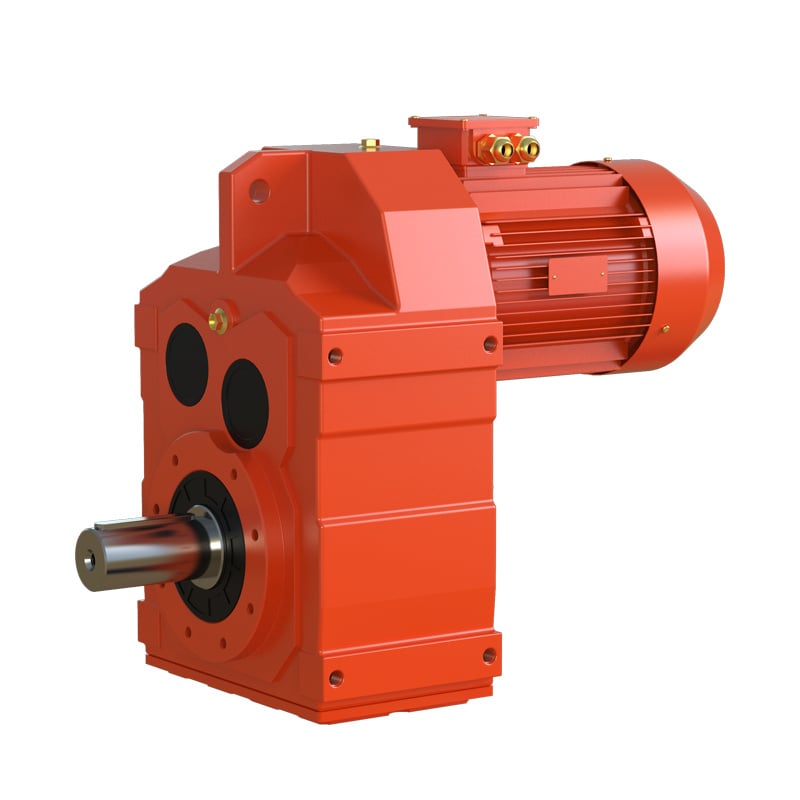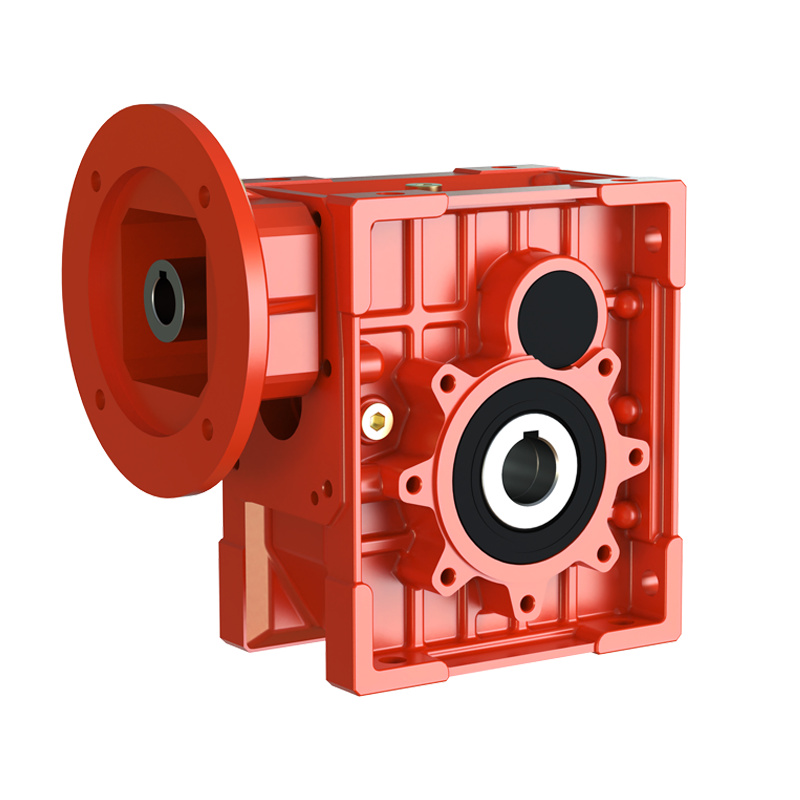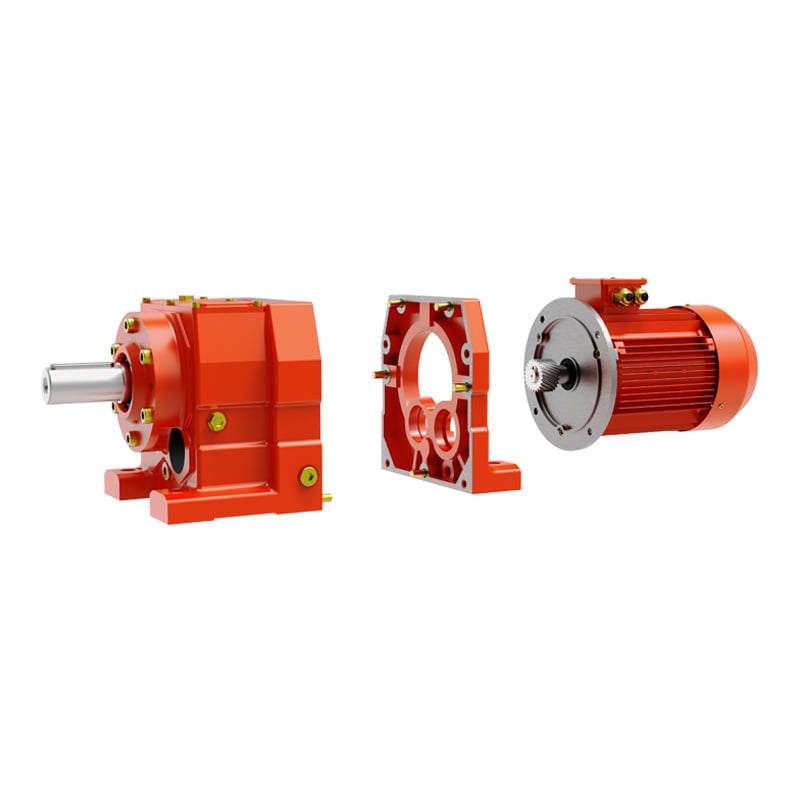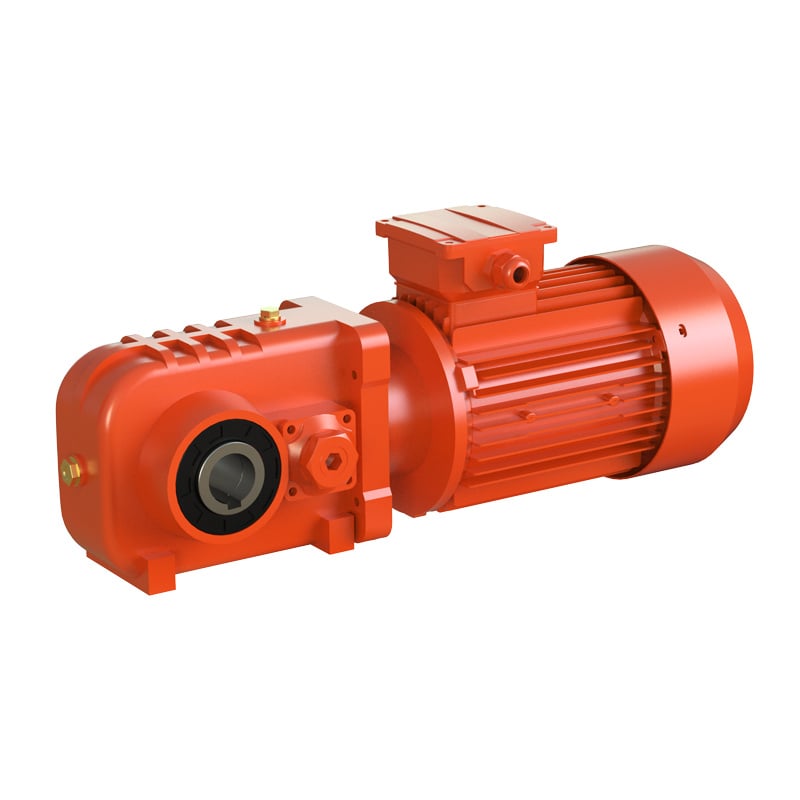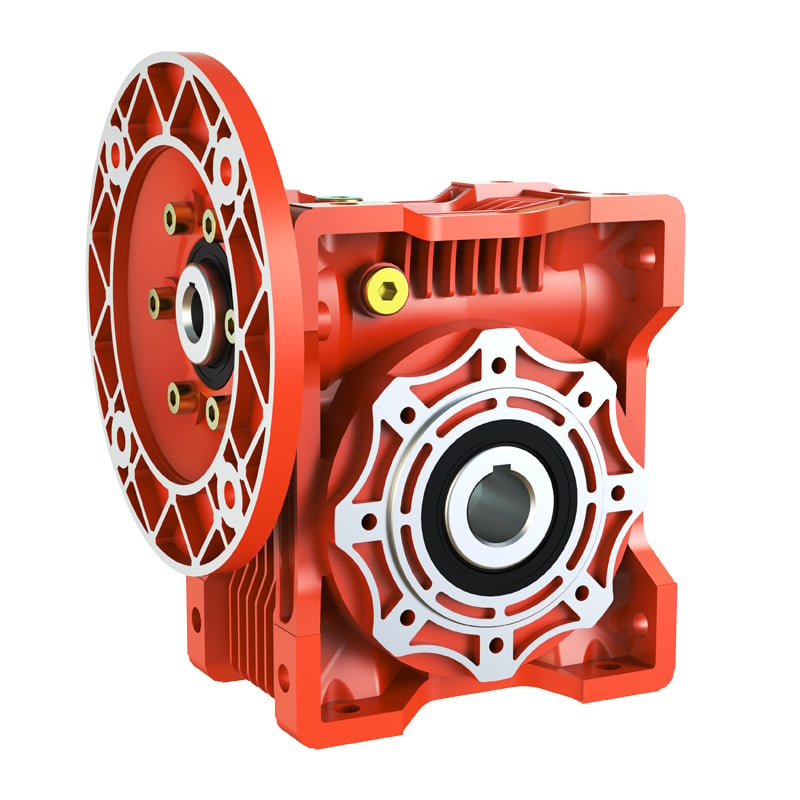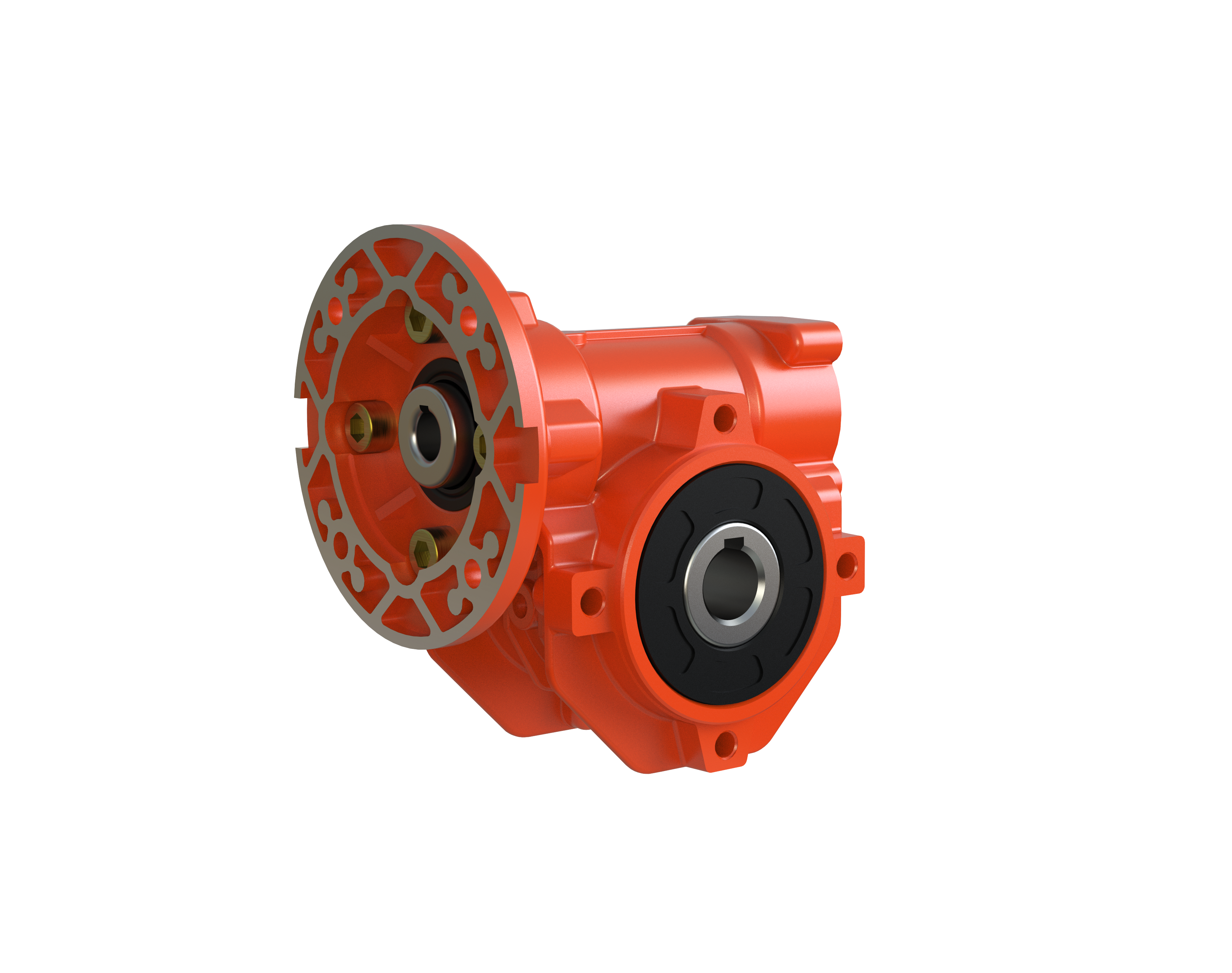

The three key functions of a speed reducer:
1.Speed “Converter”: Adapting the motor to different working conditions.
The speed of a motor is usually fixed, but the requirements of different equipment vary greatly: conveyor lines need slow and steady speeds, machine tool spindles require precise speed control, and mixing equipment requires low speed and high torque. The speed reducer acts like a "speed control valve," converting high-speed rotation into the low-speed output required by the equipment without altering the motor's original performance. This allows a single motor to adapt to various working scenarios, preventing equipment jamming or motor overload due to speed mismatch.
2.Torque Amplifier: Adding a “buff” to power.
The torque output of a motor is often limited, especially at startup, easily leading to insufficient torque and equipment failing to start or running unstablely. The core magic of a speed reducer is “speed reduction and torque increase”—as the speed decreases, the torque is proportionally amplified, like lengthening the lever arm when tightening a screw with a wrench, making equipment start more smoothly and run more powerfully, significantly reducing malfunctions caused by insufficient torque.
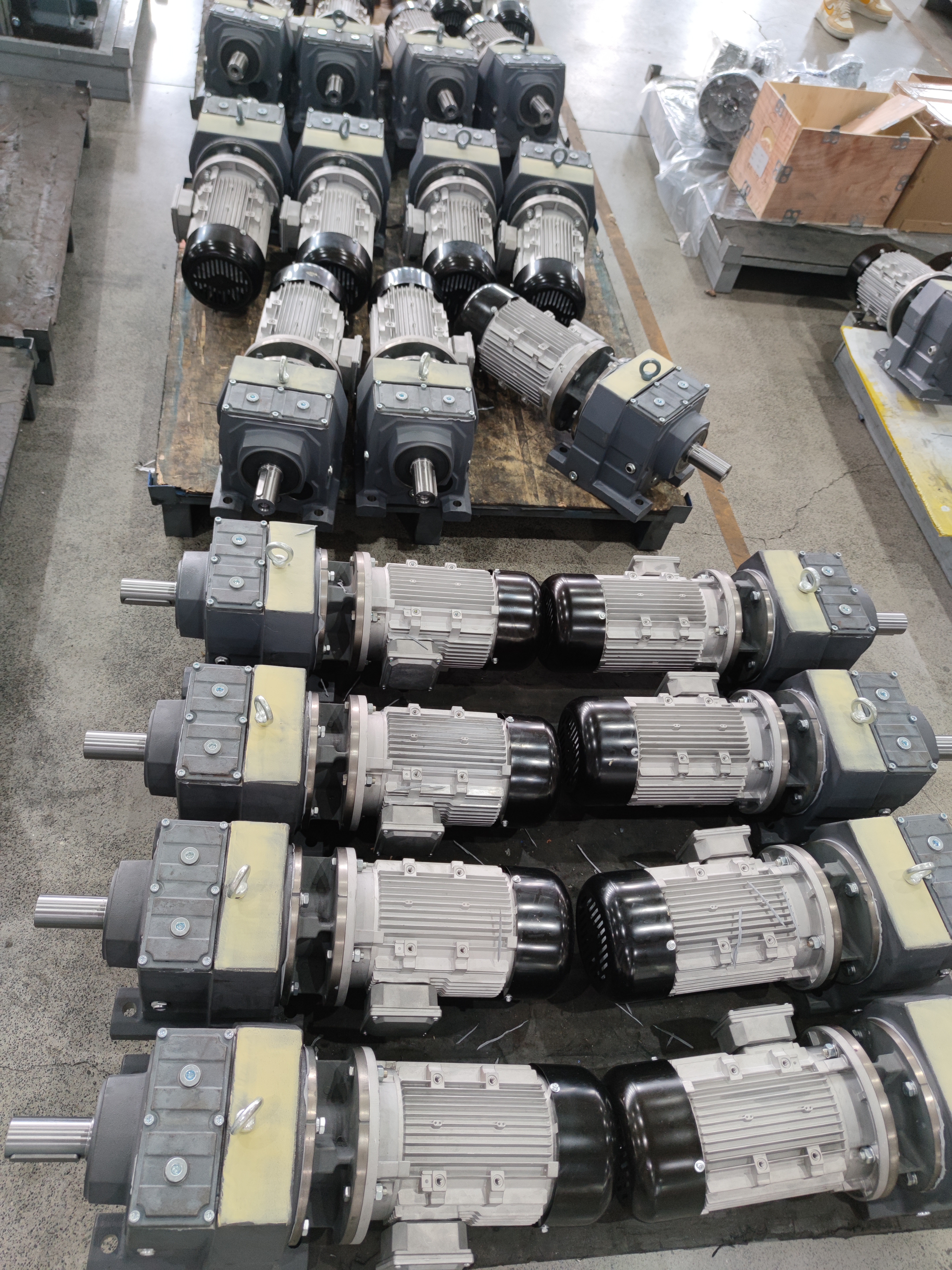
3.Precision Stabilizer: Improving equipment efficiency and accuracy.
In industrial production, “precision” equals productivity! Through precise reduction ratio design, reducers achieve stable transmission ratios, allowing for more precise equipment movements (such as precise positioning of robot joints and synchronous operation of automated production lines). Simultaneously, it reduces energy loss during transmission, making the entire power system more efficient, reducing energy consumption and extending the lifespan of motors and equipment.
What would industrial production be like without reducers?
1. Direct motor drive: Excessive speed leads to accelerated equipment wear and significantly shortened lifespan;
2. Insufficient starting torque: Heavy equipment cannot start, and light equipment frequently stalls;
3. Poor transmission precision: Product processing errors increase, and automated production lines cannot operate synchronously;
4. Motor overload burnout: Frequent motor failures due to loads exceeding the tolerance range affect production progress.
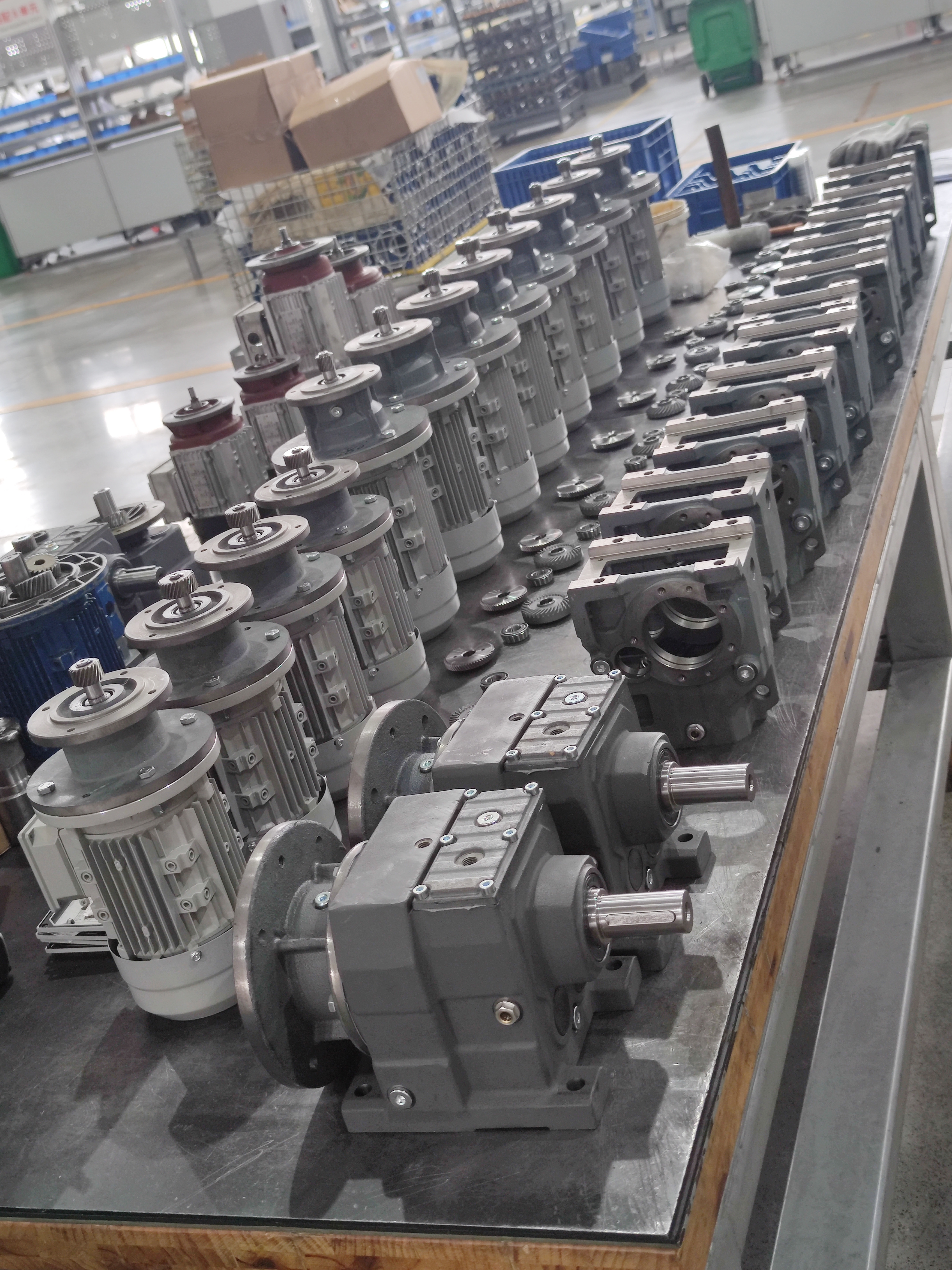
The motor is the source of power, and the reducer is the soul of control. This close collaboration of the “golden combination” not only ensures the safe and stable operation of industrial equipment but also makes power transmission more efficient and precise, becoming a crucial support for the upgrading and development of modern manufacturing. From automobile manufacturing to logistics automation, from the robotics industry to new energy equipment, the reducer is ubiquitous. This seemingly insignificant component silently safeguards the efficient production of various industries!
 Hot News
2026-08-26
2026-08-18
2026-08-15
2026-08-11
2026-07-31
2026-07-29
Welcome to Wuma , a manufacturer committed to developing and manufacturing various types of gear reducers and gearmotors for the field of gear transmission.
No. 10, Xiangcun Industrial Zone, Dongyuan Town, Qingtian County, Lishui City, Zhejiang, China
Copyright © Zhejiang Wuma Drive Co., Ltd All Rights Reserved Privacy Policy Blog
 EN
EN