Surface treatment of stainless steel speed reducers: brushed vs. polished
In the industrial manufacturing sector, speed reducers are not only core components for power transmission, but their appearance and surface quality are also increasingly becoming important benchmarks for measuring product grade, corrosion resistance, and brand value. For stainless steel speed reducers widely used in food machinery, medical equipment, cleanrooms, outdoor equipment, and high-end automated production lines, the choice of surface treatment process is particularly crucial. Among these, wire drawing and grinding (polishing) are the two most common technical routes, giving products drastically different textures, performance, and economic benefits. This article will delve into the characteristics, advantages, disadvantages, and application scenarios of these two processes.
I. Brushed finish: A combination of textured art and practicality
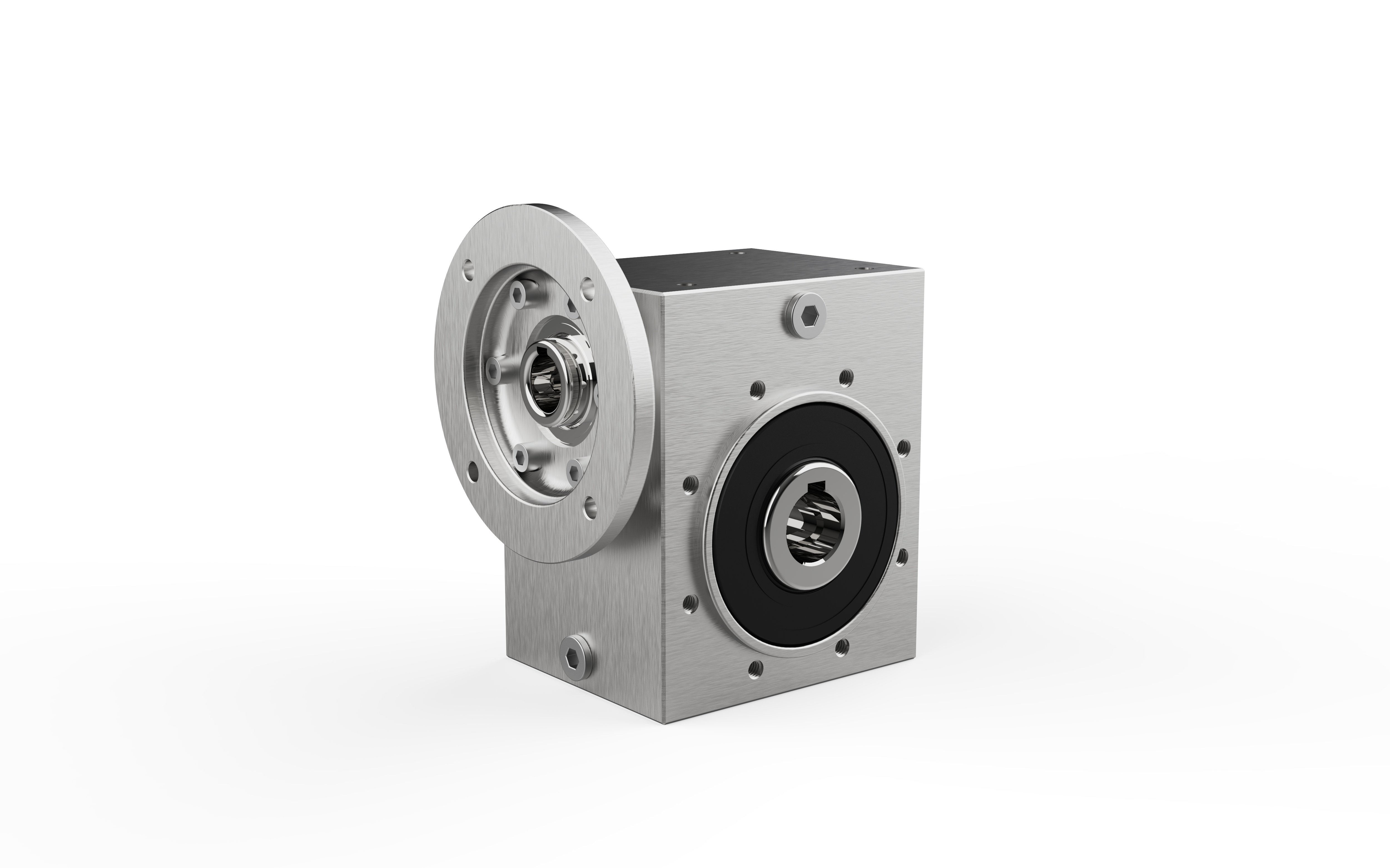
Brushing is a processing technique that creates linear textures on a metal surface through mechanical friction. Its core principle is not to remove large amounts of material, but rather to create uniform, thread-like patterns through directional, regular scratching.
1. Technological Process:
Typically, scouring pads, nylon wheels, or specialized rubbing ribbons/wheels are used to apply linear or swirling friction along a fixed direction on the equipment surface. Depending on the fineness of the texture, it can be categorized as straight threads (hairline), random threads (snowflake pattern), swirling threads, and spiral threads. For gearbox housings, straight threads or swirling threads are often used to convey a sense of neatness and order.
2. Core Features and Advantages:
Unique texture, showcasing industrial aesthetics: The matte finish produced by brushing has a delicate metallic luster, giving it a high-end feel. It can effectively hide minor scratches or dents on the metal raw materials, creating a visually unified and soft appearance.
Excellent scratch resistance: The existing uniform texture on the surface can cover up minor scratches that may occur during future use, allowing the equipment to maintain a good appearance even after frequent operation or maintenance, making it more maintainable.
Good fingerprint and stain resistance: Compared to high-gloss surfaces, matte brushed surfaces are less prone to leaving obvious fingerprints, water stains and dirt, making them easier to clean and maintain daily.
Relatively controllable cost: The automation of achieving standardized brushed texture is high, and for mass production, its overall cost is usually lower than that of high-standard polishing that requires a mirror finish.
3. Limitations:
Corrosion resistance is relatively basic: The wire drawing process itself does not change the physical and chemical state of the material surface. Although stainless steel is inherently rust-resistant, if the wire drawing texture is deep, corrosive media may be trapped in extremely harsh corrosive environments. Typically, a passivation treatment is required after wire drawing to form a reinforced chromium oxide protective film on the surface.
Limited gloss: It aims for a matte or soft-gloss effect, but cannot achieve the shimmering and high-gloss brightness of a mirror.
II. Grinding (Polishing) Process: The Pursuit of Ultimate Smoothness and Functionality
Grinding is a broader concept, generally referring to the process of gradually removing tiny bumps from the surface of a material through physical or chemical means, making it smooth and shiny. It can be divided into mechanical polishing (grinding), chemical polishing, and electrolytic polishing, etc. For stainless steel speed reducers, mechanical polishing is the most common.
1. Technological Process:
This is a progressively refining process. It begins with coarse grinding wheels or belts to remove machining marks, weld spots, and other imperfections. Then, progressively finer grits of sandpaper, oilstones, or polishing paste are used for multiple stages of fine grinding. Finally, cloth wheels, wool wheels, or polishing wax may be used to achieve a mirror finish. The process is intricate and requires highly skilled operators.
2. Core Features and Advantages:
Extremely high surface smoothness and cleanliness: Mirror polishing produces a mirror-like shine, greatly enhancing the product's visual appeal and technological feel. The extremely smooth surface makes it difficult for dirt, bacteria, and residues to adhere, which is crucial for industries with extremely stringent hygiene requirements, such as food, pharmaceuticals, and bioengineering. During cleaning, water or cleaning agents can flow away quickly, leaving no dead corners.
Essentially enhancing corrosion resistance: In particular, electropolishing is a process that selectively dissolves microscopic protrusions on the surface through electrochemical means. It can uniformly remove a layer of metal from the surface, eliminate the stress layer formed by machining and embedded impurities (such as iron particles), making the surface chromium content relatively rich, and the passivation film thicker, more uniform and stronger. Its corrosion resistance is among the best of all mechanical treatment methods.
Reduced frictional resistance: The ultra-smooth surface helps reduce the adsorption of dust and particulate matter in clean environments.
3. Limitations:
High cost: Especially for gearbox housings with complex shapes, achieving a uniform mirror finish is extremely time-consuming, drastically increasing labor and material costs. Electropolishing requires specialized equipment and chemical baths.
Zero tolerance for scratches: The high-gloss mirror surface is like a bright "scratch amplifier". Any tiny scratches or bumps will be extremely noticeable, which means that the equipment needs to be handled with extra care during transportation, installation and use, and the later maintenance and repair are difficult and costly.
Fingerprints are easily left behind: Glossy surfaces are prone to fingerprints and oil stains, affecting their appearance and requiring frequent wiping.
III. Comparative Summary and Application Selection Guide
|
Feature Dimension |
wire drawing process |
Grinding (polishing) process |
|
Appearance |
Matte/soft finish with directional silky texture, understated and industrial style. |
Highlights, mirror finishes, or soft lighting create a clean, high-tech feel. |
|
Corrosion resistance |
Good (depending on substrate + passivation treatment), but the texture may hide corrosion. |
Excellent (especially electropolishing), with the highest quality surface passivation film and strong resistance to pitting corrosion. |
|
Scratch resistance |
Excellent; minor scratches blend easily into the original texture. |
Poor quality; any scratches are very noticeable. |
|
Hygiene and cleanliness |
Good quality, easy to clean, and fingerprint resistant. |
Excellent (mirror/electropolished), with no residue on the surface, meeting the highest hygiene standards. |
|
Process cost |
It has relatively low costs, is easy to automate, and is highly efficient. |
The cost is high, especially for mirror polishing of complex workpieces, which is time-consuming and labor-intensive. |
|
Maintenance |
Easy to maintain and repair locally. |
Maintenance is difficult and professional repair is costly. |
|
Typical application scenarios |
General industrial environments, outdoor equipment, machine tool accessories, and automated production lines that require aesthetics but are not extremely hygienic. |
Food and beverage processing equipment, pharmaceutical machinery, operating room equipment, biological laboratory instruments, and high-end display equipment. |
Conclusions and Recommendations:
Choosing between brushed or polished finishes is not simply an aesthetic decision, but a comprehensive technical decision based on the product's final usage environment, functional requirements, and total lifecycle cost.
Choosing the brushed finish is ideal when you're looking for cost-effectiveness, durability, and classic industrial aesthetics. Suitable for most industrial environments, it strikes the best balance between wear resistance, ease of maintenance, and cost control, making it the preferred choice for general-purpose stainless steel gearboxes.
Choosing polishing (especially mirror or electropolishing) is appropriate when you face: the highest level of hygiene standards (such as FDA, GMP certification), highly corrosive environments (such as chemical or marine climates), or extremely high requirements for the presentation of your equipment. In these situations, performance takes precedence over cost, providing the product with a top-tier corrosion barrier and cleanliness guarantee.
In actual production, combined applications also exist. For example, the main exposed surfaces of the reducer are brushed to achieve a durable texture, while the interface flanges or internal cavities that come into contact with materials are high-gloss polished to ensure hygiene. A wise manufacturer should fully understand the language of these two processes, "dressing" the reducer in the most suitable "outer garment" for different missions, thereby winning both functional and aesthetic recognition in the fierce market competition.
 Hot News
2026-08-26
2026-08-18
2026-08-15
2026-08-11
2026-07-31
2026-07-29
Welcome to Wuma , a manufacturer committed to developing and manufacturing various types of gear reducers and gearmotors for the field of gear transmission.
No. 10, Xiangcun Industrial Zone, Dongyuan Town, Qingtian County, Lishui City, Zhejiang, China
Copyright © Zhejiang Wuma Drive Co., Ltd All Rights Reserved Privacy Policy Blog
 EN
EN