
 EN
EN

Direct answer: Helical gears engage progressively through angled teeth, keeping multiple teeth in contact simultaneously. This eliminates the abrupt impact of spur gear meshing — reducing noise, distributing load across a larger contact area, and extending gear life. Every Wuma Drive helical gearbox (WK / WR / WF / WS series) uses helical gear technology as standard, achieving transmission efficiency of 94–98% across industrial applications.
What Makes Helical and Spur Gears Different?
The difference begins at the moment of tooth engagement. Spur gears have straight teeth parallel to the shaft axis — when two spur gear teeth meet, they engage abruptly across the entire tooth width simultaneously, like two flat edges slamming together. This full-width impact generates noise, vibration, and concentrated stress at the tooth root.
Helical gears have teeth cut at an angle to the shaft axis. As the gears rotate, tooth contact begins at one edge and progressively moves across the tooth face — a gradual rolling engagement that eliminates the sudden impact. The result: smoother torque delivery, lower noise, and significantly reduced stress on any single tooth.
| Property | Spur Gear | Helical Gear |
|---|---|---|
| Tooth Orientation | Straight — parallel to shaft axis | Angled — cut at helix angle (typically 15°–25°) |
| Engagement Type | Abrupt — full tooth width contacts at once | Progressive — contact sweeps across tooth face |
| Contact Ratio | Low (typically 1.2–1.5 teeth in mesh) | High (typically 2.0–3.0+ teeth in mesh) |
| Noise Level | High — impact noise at each tooth engagement | Low — smooth progressive contact |
| Vibration | High — periodic shock loads | Low — continuous load sharing |
| Load Capacity | Lower — stress concentrated on fewer teeth | Higher — load distributed across multiple teeth |
| Transmission Efficiency | 90–94% | 94–98% |
| Axial Thrust | None | Present — managed by thrust bearings |
| Manufacturing Complexity | Simple — lower tooling cost | Moderate — requires precision helix angle control |
| Relative Cost | Low | Medium |
Why Contact Ratio Is the Key Performance Driver
Contact ratio is the average number of gear teeth simultaneously in mesh during rotation. A higher contact ratio means more teeth share the transmitted load at any given moment — directly reducing stress per tooth, reducing noise, and increasing fatigue life.
Spur gears typically achieve a contact ratio of 1.2–1.5. This means that for significant portions of each rotation cycle, only one tooth pair carries the entire load — a recipe for stress concentration and impact shock.
Helical gears achieve contact ratios of 2.0 and above. At any moment during rotation, two or more tooth pairs share the load simultaneously. The transition between tooth pairs is seamless rather than abrupt, maintaining constant torque delivery and eliminating the periodic shock that causes noise and accelerated wear in spur gear drives.
The Axial Thrust Limitation — and How It Is Engineered Away
Helical gears have one inherent trade-off: the angled tooth geometry generates an axial force component along the shaft in addition to the tangential driving force. If unmanaged, this axial thrust can displace the shaft, create uneven gear face loading, and accelerate bearing wear.
Wuma Drive engineers address this through precision bearing selection and positioning. Angular contact bearings or paired tapered roller bearings at the shaft ends absorb the axial load entirely, converting what would be a structural liability into a fully managed design parameter. The result is even stress distribution across the full tooth face and elimination of the displacement risk — without any compromise on load capacity or efficiency.
An alternative engineering approach used in some high-load designs is the herringbone (double-helical) gear — two opposing helical gear sets on a single gear body whose axial thrusts cancel each other out. This eliminates axial loads entirely at the cost of higher manufacturing complexity.
When to Choose Helical vs Spur Gears
Spur gears are not inherently inferior — they are the right choice for specific conditions. The decision depends on speed, noise tolerance, load, and budget:
| Condition | Choose Spur Gear | Choose Helical Gear |
|---|---|---|
| Operating Speed | Low speed, intermittent duty | Medium to high speed, continuous duty |
| Noise Requirement | Noise acceptable (outdoor, remote machinery) | Low noise required (food, pharma, indoor) |
| Load Level | Light to medium load | Medium to heavy load, high torque density |
| Axial Load Tolerance | Zero axial load allowed on shaft | Axial load managed by bearing design |
| Budget | Lowest initial cost priority | Lower total cost of ownership over service life |
| Service Life Priority | Acceptable replacement cycle | Maximum longevity, minimal maintenance |
Wuma Drive Helical Gearbox Series: WK / WR / WF / WS
All Wuma Drive helical gear reducers use precision-ground helical gear sets as standard — engineered to deliver 94–98% transmission efficiency, low noise, and long maintenance-free service life across demanding industrial applications.
| Series | Configuration | Torque Range | Best Application |
|---|---|---|---|
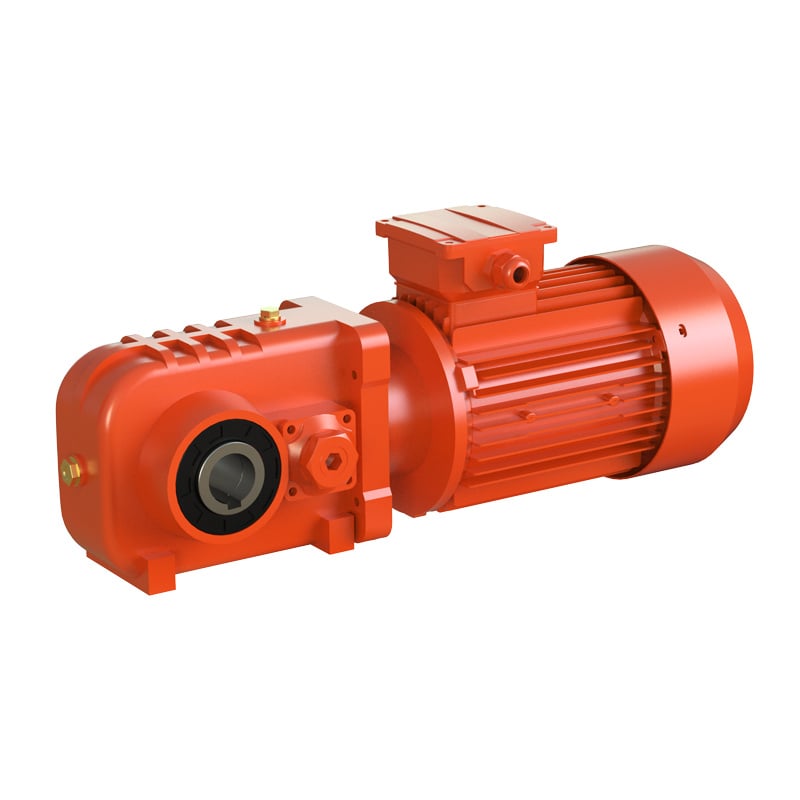
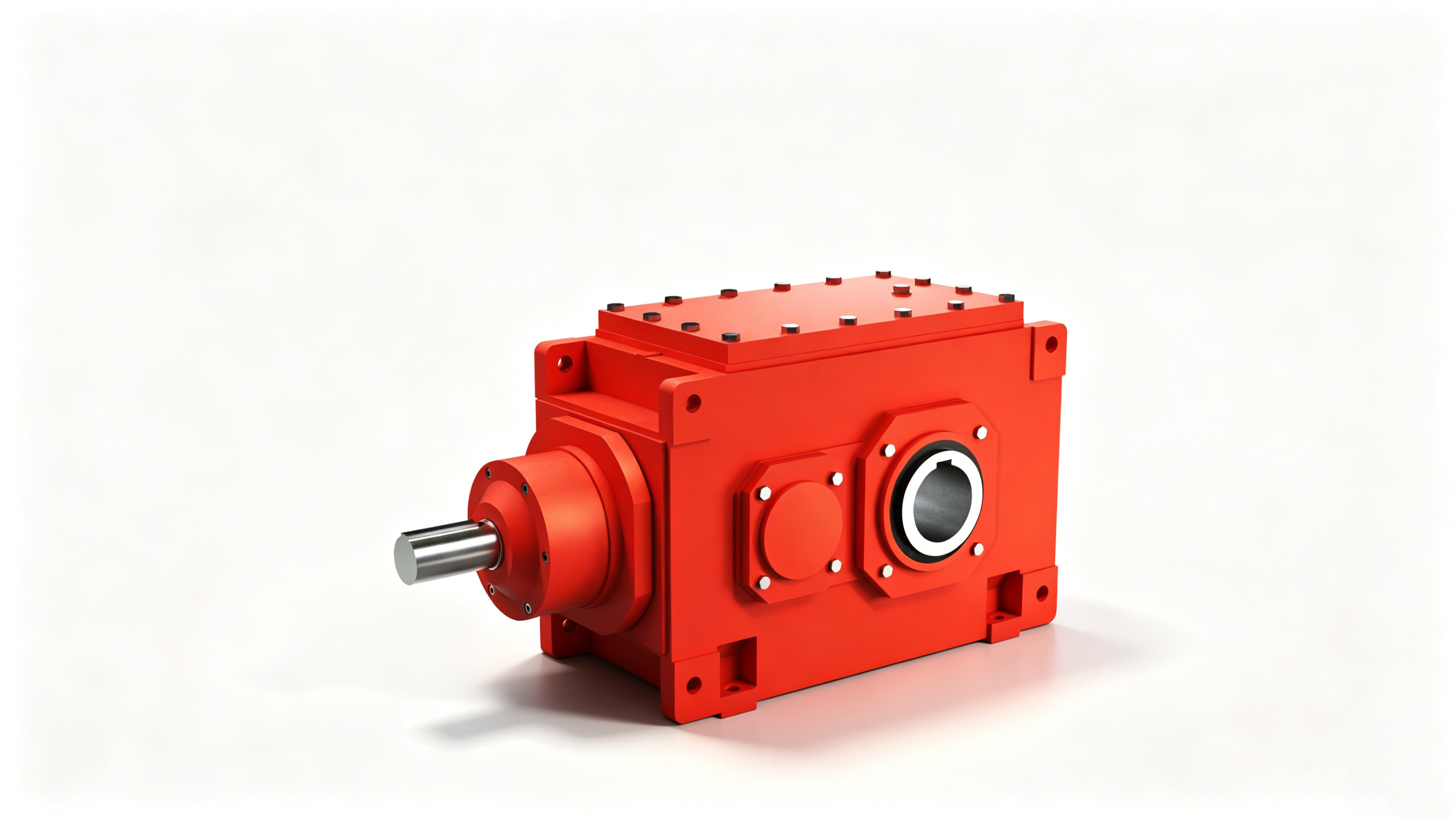
| WK Series | Bevel-helical, 90° right-angle drive | 80–50,000 N·m | Mining, aerospace, pharmaceuticals, right-angle compact drives |
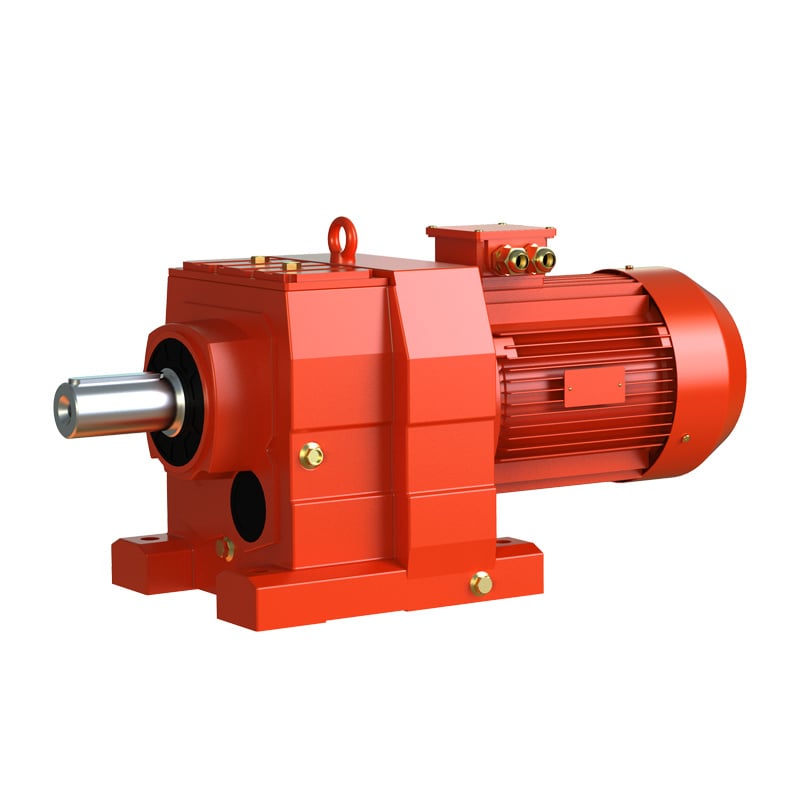
| WR Series | Coaxial inline (parallel input/output axis) | Up to 18,000 N·m | Conveyors, cement, rubber, heavy industrial drives |
| WF Series | Parallel shaft (offset input/output) | Up to 18,000 N·m | Packaging, food processing, general industrial automation |
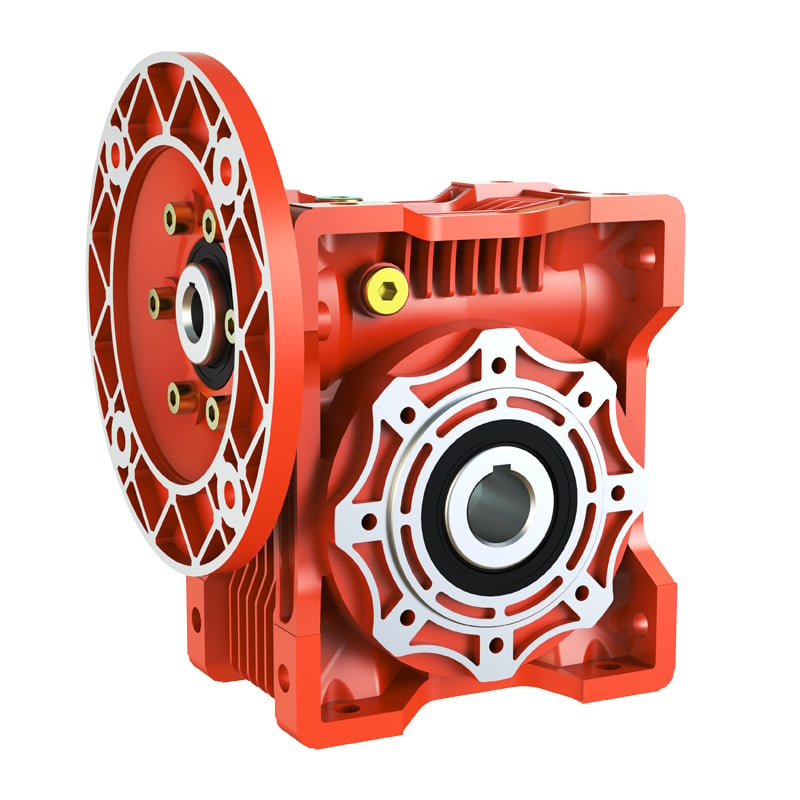
| WS Series | Helical-worm combination (2-stage) | Up to 4,200 N·m | General factory automation, moderate-duty conveyors |
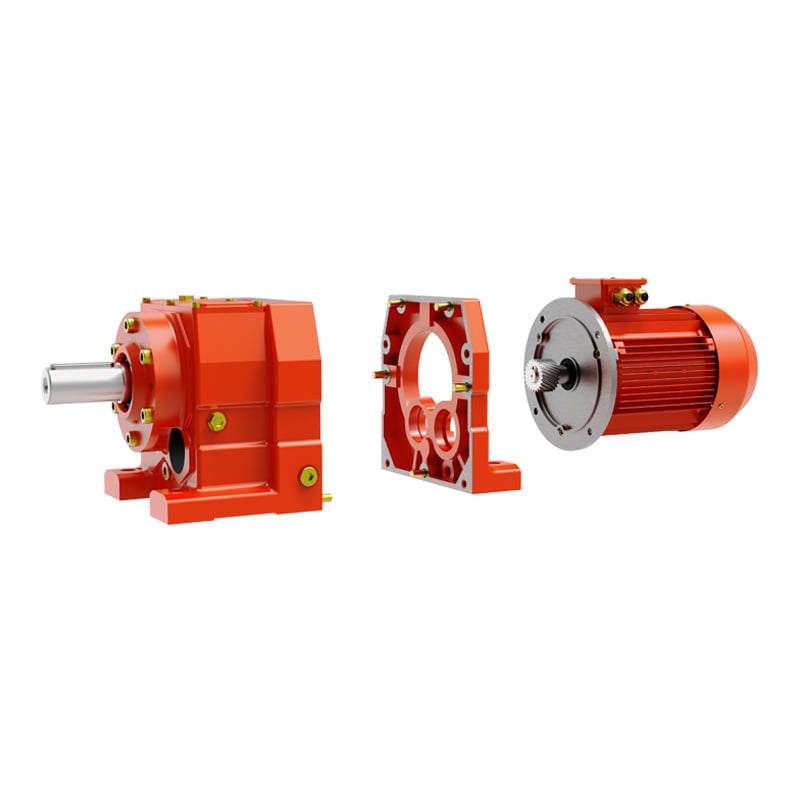
WR and WF series housing dimensions are compatible with SEW models, enabling direct retrofit and replacement on existing equipment without structural modification.
FAQ: Helical Gears vs Spur Gears
What is the difference between helical gears and spur gears?
Spur gears have straight teeth that engage abruptly across the full tooth width, generating impact noise and stress concentration. Helical gears have angled teeth that engage progressively, keeping multiple teeth in contact simultaneously for smoother, quieter, more efficient power transmission.
Why do high-end gearboxes always use helical gears?
Helical gears deliver higher contact ratio, lower noise, greater load capacity per unit size, and longer service life — making them the engineering standard for automotive transmissions, elevators, industrial gearboxes, and any application where reliability and quiet operation are non-negotiable.
What is the axial thrust problem with helical gears and how is it solved?
The angled tooth geometry generates an axial force along the shaft. Wuma Drive manages this through angular contact or thrust bearings at the shaft ends, absorbing axial loads entirely without compromising gear face loading or efficiency.
When should spur gears be used instead of helical gears?
Spur gears are appropriate for low-speed, low-load, or cost-sensitive applications where noise is acceptable and no axial load can be tolerated on the shaft. For any continuous industrial drive, helical gears are the superior choice in both performance and total cost of ownership.
Which Wuma Drive gearboxes use helical gears?
The WK (bevel-helical right-angle), WR (coaxial inline), WF (parallel shaft), and WS (helical-worm combination) series all use precision helical gears as standard, achieving 94–98% efficiency and low-noise operation across industrial applications.
Spur gears can run. Helical gears run longer, more stably, and more quietly — and in industrial applications where downtime, noise, and energy efficiency matter, the choice is clear.
Curious which helical gearbox series fits your application?
 Hot News