All Categories
how to choose the most suitable gearbox-0

Industry Popular Science

Home >  News&Blog >  Industry Popular Science

How to choose the most suitable Gearbox?

Feb 04, 2026

Ⅰ.The first soul-searching question: Why does my equipment need a reducer?


The first step in selection is not to examine parameters, but to clarify requirements. Just as a doctor begins by taking a medical history, you must first determine the role of the reducer in your equipment:


What is the core mission?

Should we simply reduce the motor speed to slow down the output rotation? Or should we increase the motor's output torque to give the equipment more power?  Or perhaps both approaches?

In most cases, the reducer performs two core functions simultaneously: speed reduction and torque increase.


In what situations is it used?

Is your equipment a precision medical testing instrument? A powerful mine crusher? A high-speed automated production line? Or outdoor construction machinery exposed to wind and sun?

Different working environments (temperature, humidity, dust, corrosive conditions, cleanliness requirements) and industrial applications demand significantly different types of gearboxes, protection ratings, materials, and service life specifications.


What is the load type?

This is super crucial! Whats connected to your reducers output?

(1)Uniform Load: For applications like fans, pumps, and conveyor belts that operate at constant speed (steady loads), the selection criteria are relatively mild.

(2)Moderate Shock Load: Examples include mixers (where material distribution may be uneven) and packaging machines (operating intermittently). Allow for some margin.

(3)Heavy Shock Load: Crushers, stamping machines, and excavator buckets. This is the ultimate test for gearboxes! When selecting a model, prioritize impact resistance and service factor.


What about the work schedule?

Does the equipment operate continuously 24 hours a day (S1 shift), or follow a work-rest cycle (S3, S5 shifts)?

Different working modes directly affect the heat and life calculation of the reducer.

图片 2(d3232e75cb).png


Ⅱ.Setting core parameters: torque, speed, and power


Once the requirements are defined, we begin working with numbers. The following parameters form the foundation for selection:


Motor power (P) in kW.

Speed: There are Input speed (n) and Required Output Speed (n)[Unit: rpm].

This directly determines the reduction ratio (i).

The reduction ratio i = n/ n.

For example, if the motor runs at 1450 rpm and you need to output 145 rpm, then i = 1450 / 145 = 10.


Required output torque (T):This is the most critical parameter! It determines how much torque the reducer needs to output to drive your load. The unit is typically Nm (newton-meters).

How to calculate it? Theoretically, you need to know the load's resistance torque. In practice, engineers often use empirical formulas, compare similar equipment, or measure the motor torque required to drive the load to deduce the value (dont forget to divide by the reduction ratio and efficiency).

Simply put: consider how heavy and difficult your load is to rotate.

The power-to-torque-to-speed relationship is expressed as: T = 9550 × P / n, where T denotes torque (Nm), P represents power (kW), and n indicates rotational speed (rpm).


Service Factor (f):

The higher the load impact, the harsher the operating conditions, and the longer the service life required, the larger the safety factor should be (commonly ranging from 1.2 to 2.5 or even higher). The final selected torque is calculated as: Selected T= Theoretical T₂× f.


III. Matching Installation Mode: Space and Connection of Wisdom

A reducer is not an isolated component; it must connect the motor to the load and be securely mounted on the equipment. Common installation methods include:

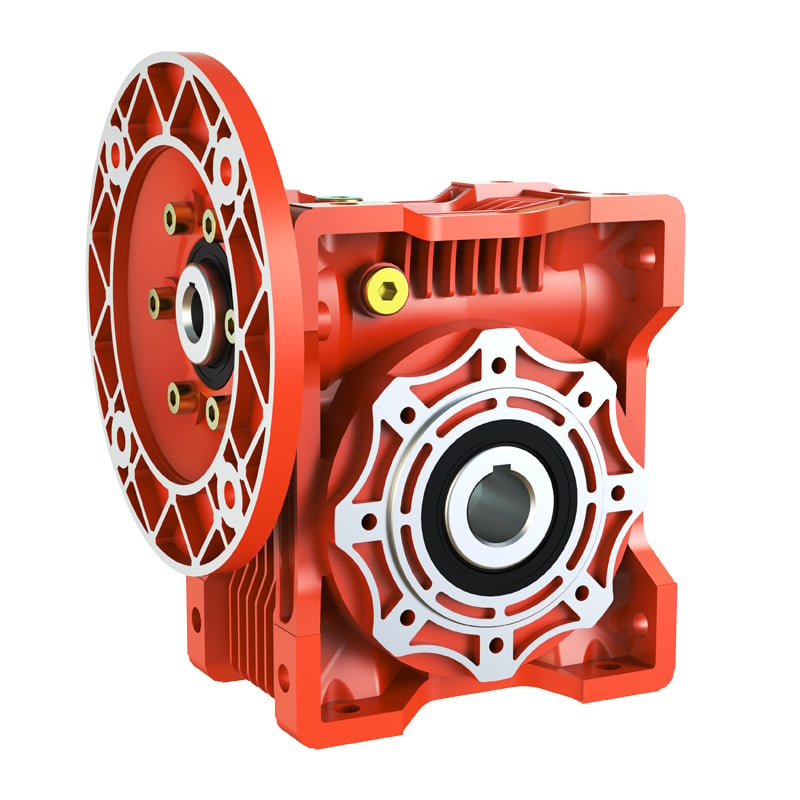
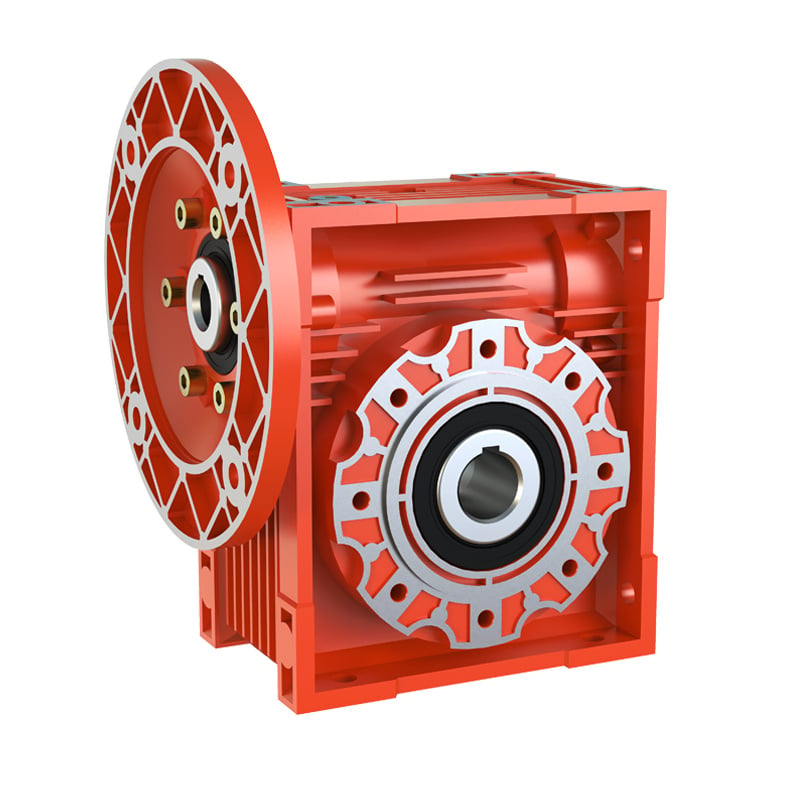
图片 3(cddf4b9885).png

Output end

(1)Solid Shaft

(2)Hollow Shaft

(3)Flange Output

Input end

(1)Input flange

(2)Input Shaft

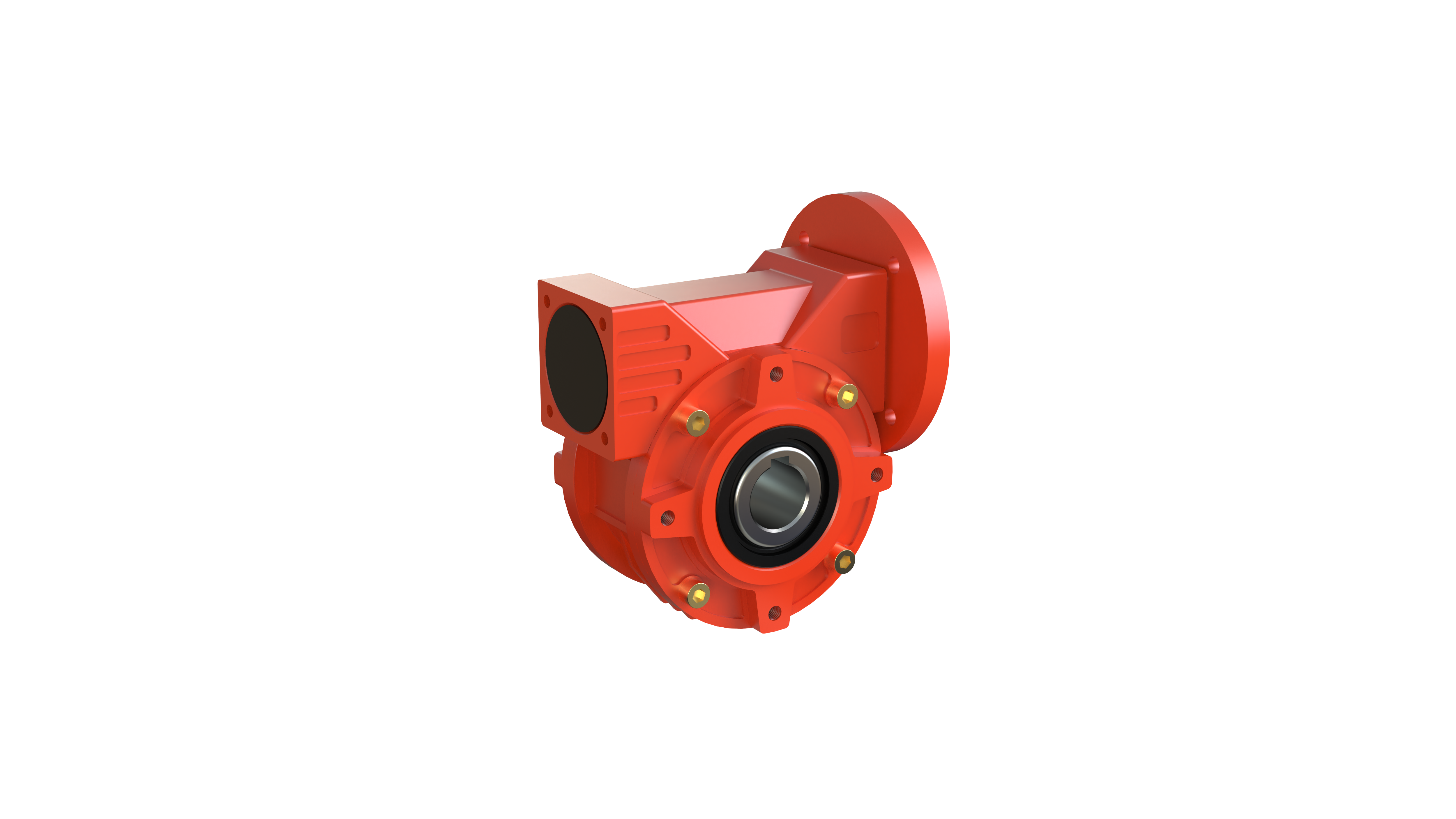
Device installation:

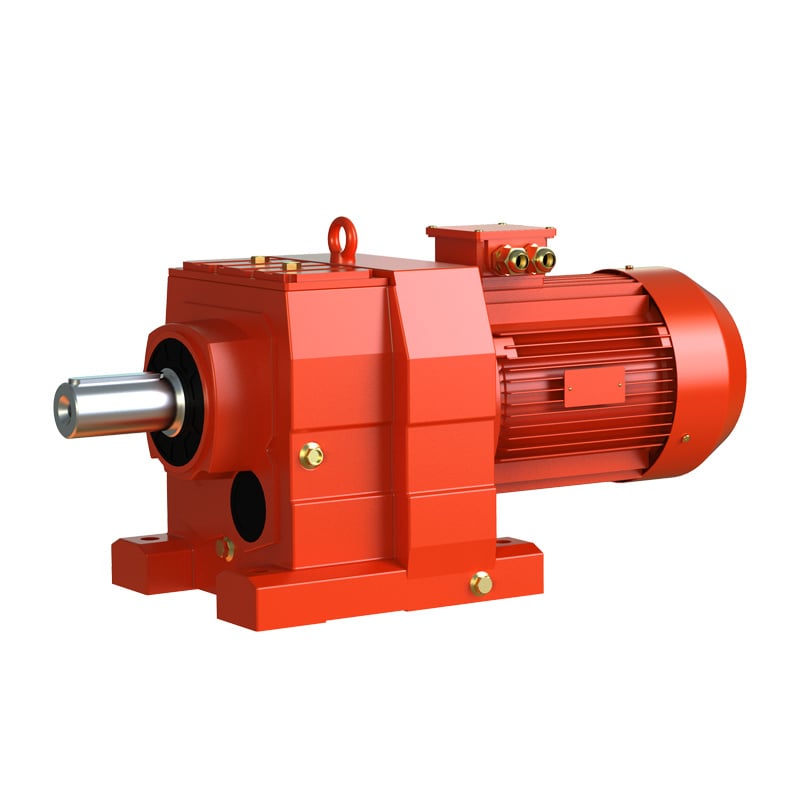
(1)Foot-mounted: The reducer has mounting holes at its base, secured to the base with bolts. It is stable and reliable, and the most common type.

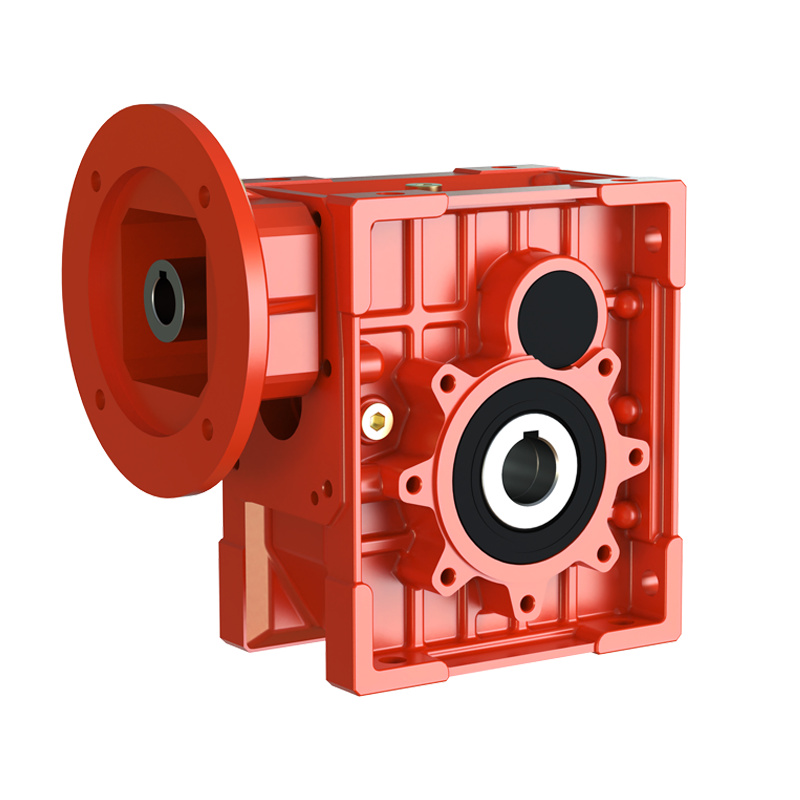
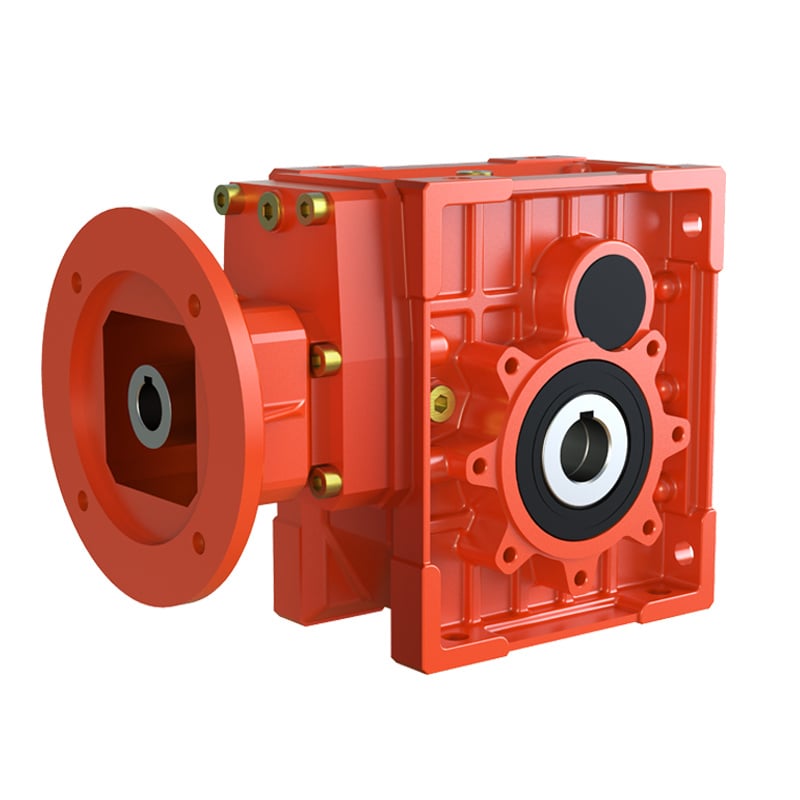
(2)Flange-mounted: The reducer's output or side features a flange for equipment mounting, saving space.

(3)Torque Arm Mounted: This configuration is typically employed in medium-to-large gearboxes or applications requiring reaction torque absorption, where a torque arm must be installed for secure fixation.

*Key selection points: Choose the most convenient, space-saving, and reliable combination based on your device layout, motor type (with or without IEC flange), and load connection method. Confirm the drawing space is critical!

Ⅳ. Consideration of Environment and Efficiency: Details Determine Success or Failure

Protection rating (IP rating): Is the reducer operating in environments with dust, water mist, or flushing? For outdoor or harsh environments, a higher protection rating is required.


Lubrication method and service life: Standard reducers are typically pre-lubricated with oil (or grease) at the factory. Key considerations:

1Maintenance-free life: How long can the reducer operate without grease replacement under normal conditions? This is particularly important for reducers installed in hard-to-maintain locations.

2Oil lubrication: Large or heavy-duty reducers may require forced circulation oil lubrication and cooling systems.

图片 5.png图片 4(4fd346460b).png

Operating temperature range: Extremely low (like cold storage) or extremely high (like metallurgical workshop)? The selected reducer's materials and lubricants must be compatible with these conditions.


Noise requirements: For noise-sensitive environments (e.g., medical, laboratory)? Planetary and bevel gear noise is relatively low, and worm gear may also be quieter.


Backlash: The maximum allowable angular displacement of the output shaft when the input shaft is fixed. Precision positioning systems (like turntables) require minimal backlash (even <1 arc minute), while standard transmissions can tolerate larger backlash (over 10 arc minutes). For high-precision applications, planetary or RV reducers are typically selected.


V. Practical Pitfall Guide: Common Misconceptions in Model Selection

Focusing solely on power while ignoring torque is the biggest rookie mistake! The core parameter of a reducer sample is its rated output torque. Motor power must be converted into output torque capacity through reduction ratio and efficiency to determine sufficiency.

Ignore safety factors! Selecting gearboxes based solely on theoretical load torque poses a high risk of sudden failure when encountering startup shocks or load fluctuations. Always apply an appropriate safety factor!

图片 6.jpg


Type selection is too large or too small:

Too large: Wastes money! Increased volume and weight, occupies valuable space, and raises equipment costs and inertia.

Too small: it may cause overheating, excessive noise, rapid wear, and short service life. In severe cases, tooth breakage or tooth impact may occur.

Therefore, a balance must be struck between reliability and cost.


Ignore installation space and method: Insufficient space in the design? Mismatched connection method? This may cause installation failure or excessive stress during forced installation. Confirm interface dimensions and space in advance!


Ignore the operating condition coefficients/application coefficients: Renowned brand samples provide operating condition coefficient tables for different applications (e.g., uniform load, moderate impact, severe impact), which serve as key references for selection with safety factors. Always consult these tables.


While selecting a reducer may seem daunting with its multitude of parameters, the key lies in focusing on core elements: defining requirements, thoroughly understanding torque, choosing the right type, ensuring proper installation, and considering environmental factors. Remember: Only the one that best suits your equipment application.

If you need, please free contact our salesperson to select the best suitable product for you.