
Gear backlash is the clearance between the non-driving flanks of meshing gear teeth, measured at the pitch circle. When one gear is held fixed and the mating gear is rotated, the angular distance it travels before contact is made is the backlash.
Backlash is not a manufacturing defect. It is a deliberate engineering parameter — defined in the gear design specification alongside tooth profile, module, and center distance. Every production gearbox has a specified backlash tolerance range.
Zero-backlash is not a practical engineering goal for most gearbox applications. The following conditions require a defined clearance gap between meshing teeth:
Gears and housings expand when they heat up during operation. Steel gears and aluminum housings expand at different rates. If no backlash is present, the expanded teeth fill the entire tooth space — friction increases sharply, and tooth surfaces press against each other under thermal load. This leads to jamming in extreme cases. Backlash provides the buffer space that absorbs this dimensional change without causing interference.
A functioning gear drive relies on an oil film separating the tooth surfaces. This film requires physical space to form between the flanks. Without backlash, lubricant cannot enter the mesh zone — metal contacts metal directly, generating heat and wear. For worm gear and helical-bevel reducers where lubricant paths are more complex, sufficient backlash is particularly important to distribute oil across the full tooth width.
Under high torque, gear teeth deform elastically. Shafts also flex under bending load. A gear system designed with zero clearance would experience unintended interference as soon as the load reaches operating levels. Backlash accommodates this deformation without generating additional contact stress on the non-driving flank.
Manufacturing tolerances in center distance, gear tooth profile, and shaft alignment accumulate in a built gearbox. A zero-backlash design would require an assembly environment with extremely high precision and temperature control — impractical for field installation. Designed backlash absorbs this accumulated dimensional variation and makes assembly feasible under normal workshop conditions.
The same logic applies to maintenance. When a gearbox is disassembled for inspection, gear replacement, or relubrication, the presence of backlash allows the meshing surfaces to be separated and reassembled without damage to the tooth profiles.
When backlash exceeds the design tolerance, performance degrades across several measurable dimensions:
| Effect | Mechanism | Application Impact |
|---|---|---|
| Noise and impact | Teeth strike each other on direction reversal | Audible impact noise; vibration transmitted to frame |
| Positioning error | Dead zone in drive chain on direction change | Inaccurate positioning in servo and CNC applications |
| Accelerated tooth wear | Uneven load distribution across tooth width | Reduced gearbox service life |
| Transmission efficiency loss | Impact energy absorbed in the mesh zone | Higher operating temperature; motor load increases |
Backlash grows progressively during a gearbox's service life. The main contributing factors:
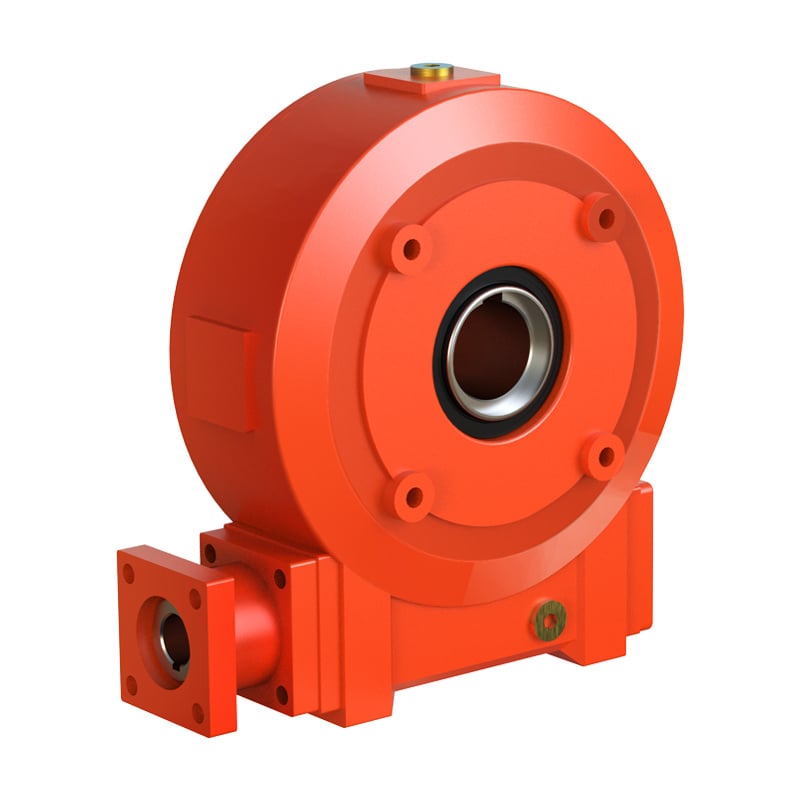
Worm gear reducers use sliding mesh geometry — the worm thread slides across the worm wheel tooth surface rather than rolling. This generates more heat than rolling-element mesh types. To accommodate thermal expansion, worm shaft bending, and the natural deformation under load, worm gear reducers are designed with higher backlash than helical or bevel reducers. For right-angle configurations used in spatial steering transmissions, the torsional compliance of the housing also contributes to the effective backlash at the output.
When positioning accuracy or reversing precision is a requirement, this characteristic makes worm gear reducers less suitable than helical or hypoid alternatives. See the WKM Hypoid vs WMRV Worm Gearbox comparison for a direct performance breakdown.
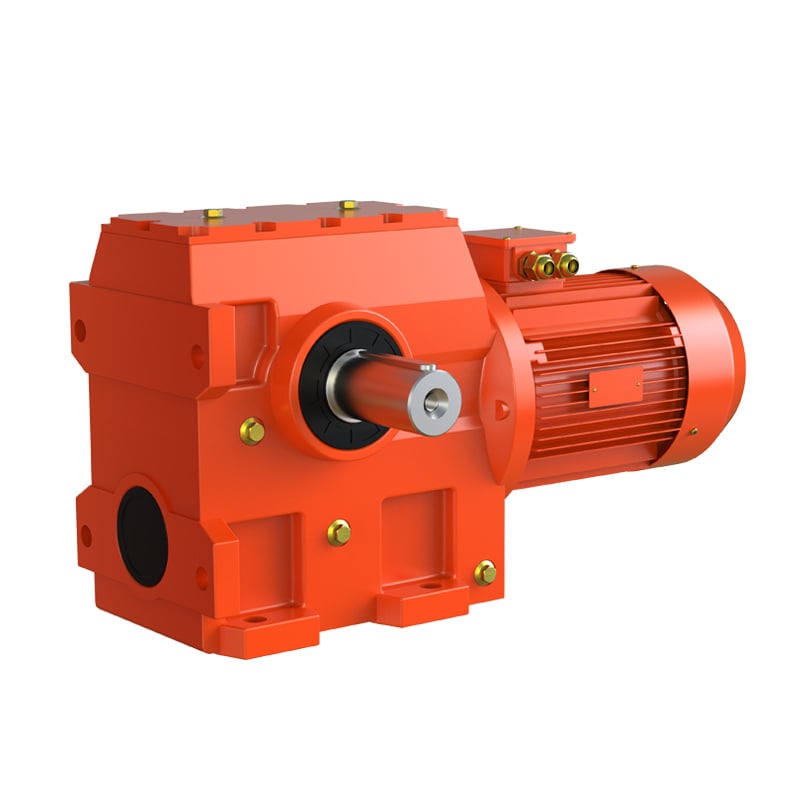
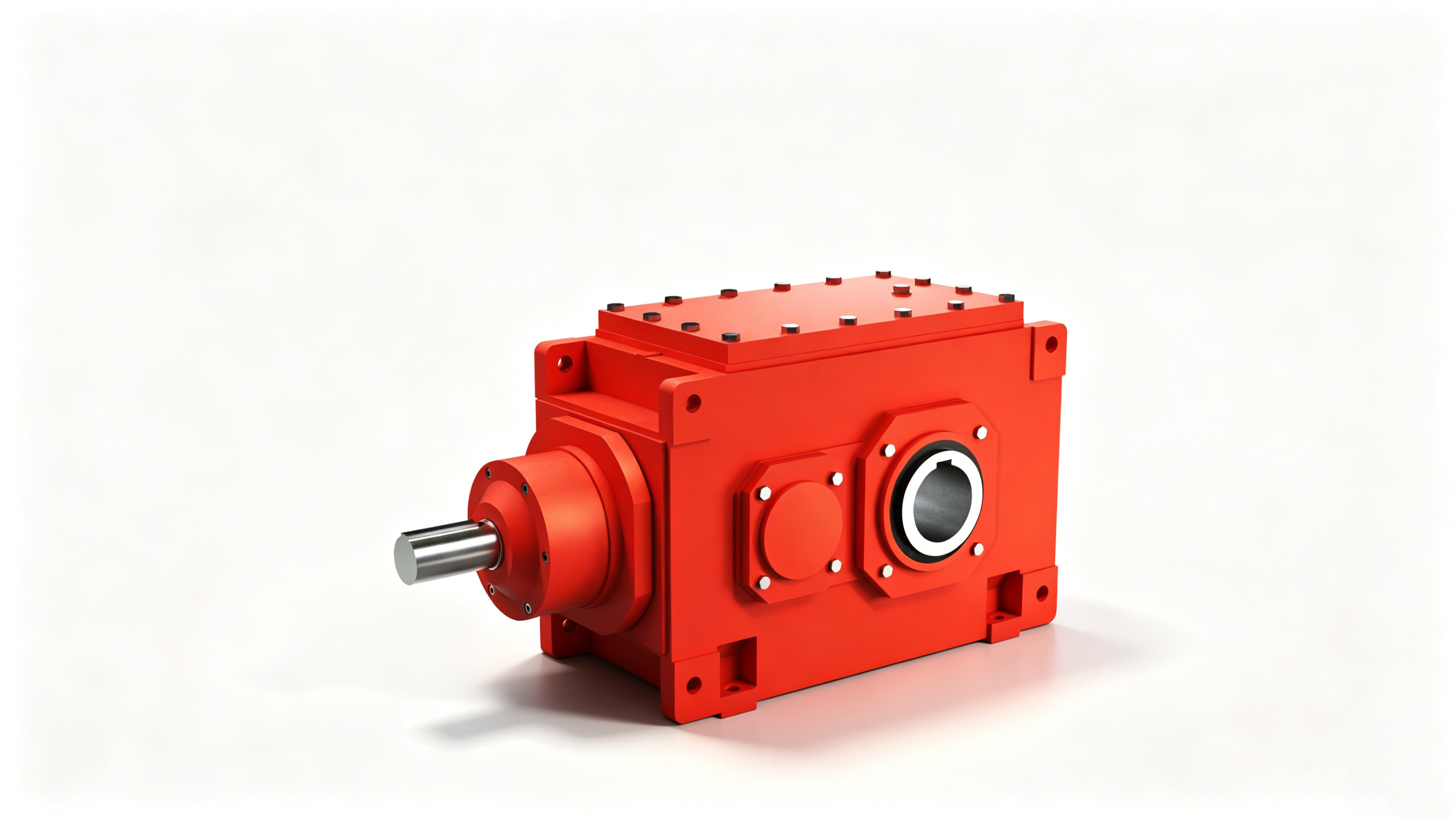
Parallel-shaft helical reducers achieve rolling mesh contact with a progressive tooth engagement. This generates lower heat and requires less thermal clearance than worm mesh. Backlash in helical reducers primarily accounts for load deformation and lubrication requirements, resulting in tighter tolerances compared to worm types. For conveyor and general industrial drive applications, helical reducers offer a good balance between acceptable backlash and service life. More on selection criteria: Gear Reducer Service Factor Guide.
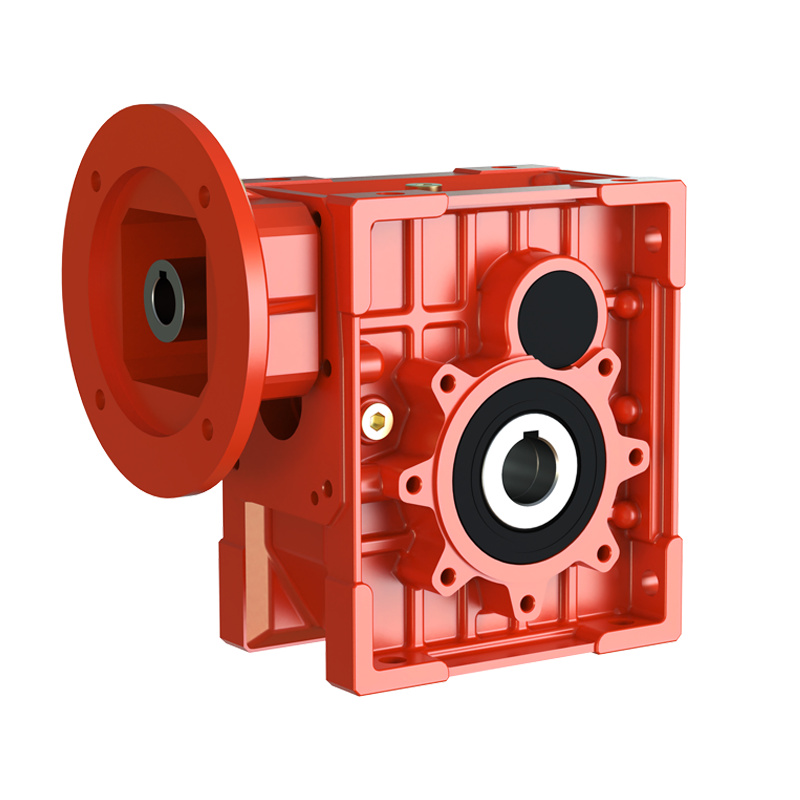
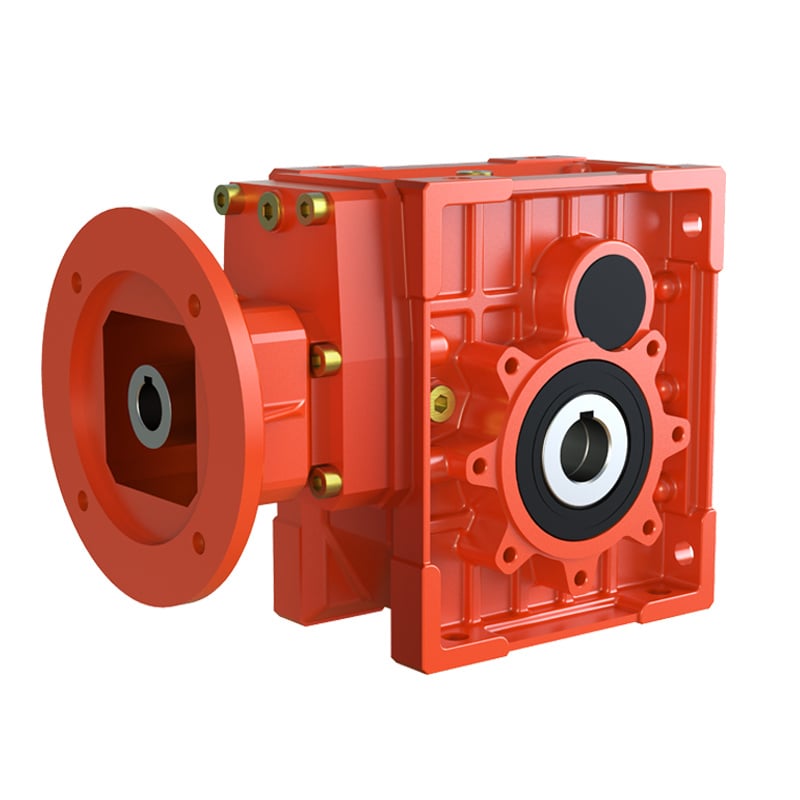
Hypoid gears combine the compact right-angle geometry of worm gears with rolling-dominant mesh contact. This reduces operating temperature and allows tighter backlash specifications than worm reducers, while maintaining the same mounting interface. For applications that need right-angle output with better accuracy and lower backlash, hypoid reducers are the direct functional upgrade from worm designs.
Backlash tolerance is one parameter among several in a complete gearbox selection. Its weight in the decision depends on the application type:
| Application | Backlash Priority |
|---|---|
| Servo positioning / robotics | Critical — low backlash required |
| Conveyor / material handling | Low priority — load and service factor matter more |
| General industrial drive | Medium — standard tolerance acceptable |
| Space-constrained high-torque | Medium — right-angle needed, lower backlash than worm |
Gear backlash is the small clearance between the contact surfaces of two meshing gear teeth, measured at the pitch circle. It is a designed parameter — not a defect — required for lubrication, thermal expansion, and load deformation tolerance.
Tooth surface wear is the primary cause, particularly under high load or insufficient lubrication. Manufacturing tolerance accumulation, gear misalignment, thermal cycling, and thinning tooth profiles all contribute to backlash growth during service.
In servo or CNC applications, excessive backlash creates a dead zone: when drive direction reverses, the output shaft does not move until the gap is taken up. The positioning error is directly proportional to the backlash magnitude. Low-backlash gearboxes are required for these applications.
Precision planetary gearboxes achieve the lowest backlash (< 1 arcmin). Helical reducers have low-to-medium backlash. Hypoid reducers (WKM series) offer lower backlash than equivalent worm gearboxes. Standard worm gear reducers have the highest backlash among common gearbox types due to sliding mesh geometry.
Backlash tolerance is one part of a complete selection. Browse Wuma Drive's series comparison guides or contact our engineers for a specification review.
Browse Gearbox Series Contact Wuma Drive Hot News
2026-08-26
2026-08-18
2026-08-15
2026-08-11
2026-07-31
2026-07-29
Welcome to Wuma , a manufacturer committed to developing and manufacturing various types of gear reducers and gearmotors for the field of gear transmission.
No. 10, Xiangcun Industrial Zone, Dongyuan Town, Qingtian County, Lishui City, Zhejiang, China
Copyright © Zhejiang Wuma Drive Co., Ltd All Rights Reserved Privacy Policy Blog
 EN
EN