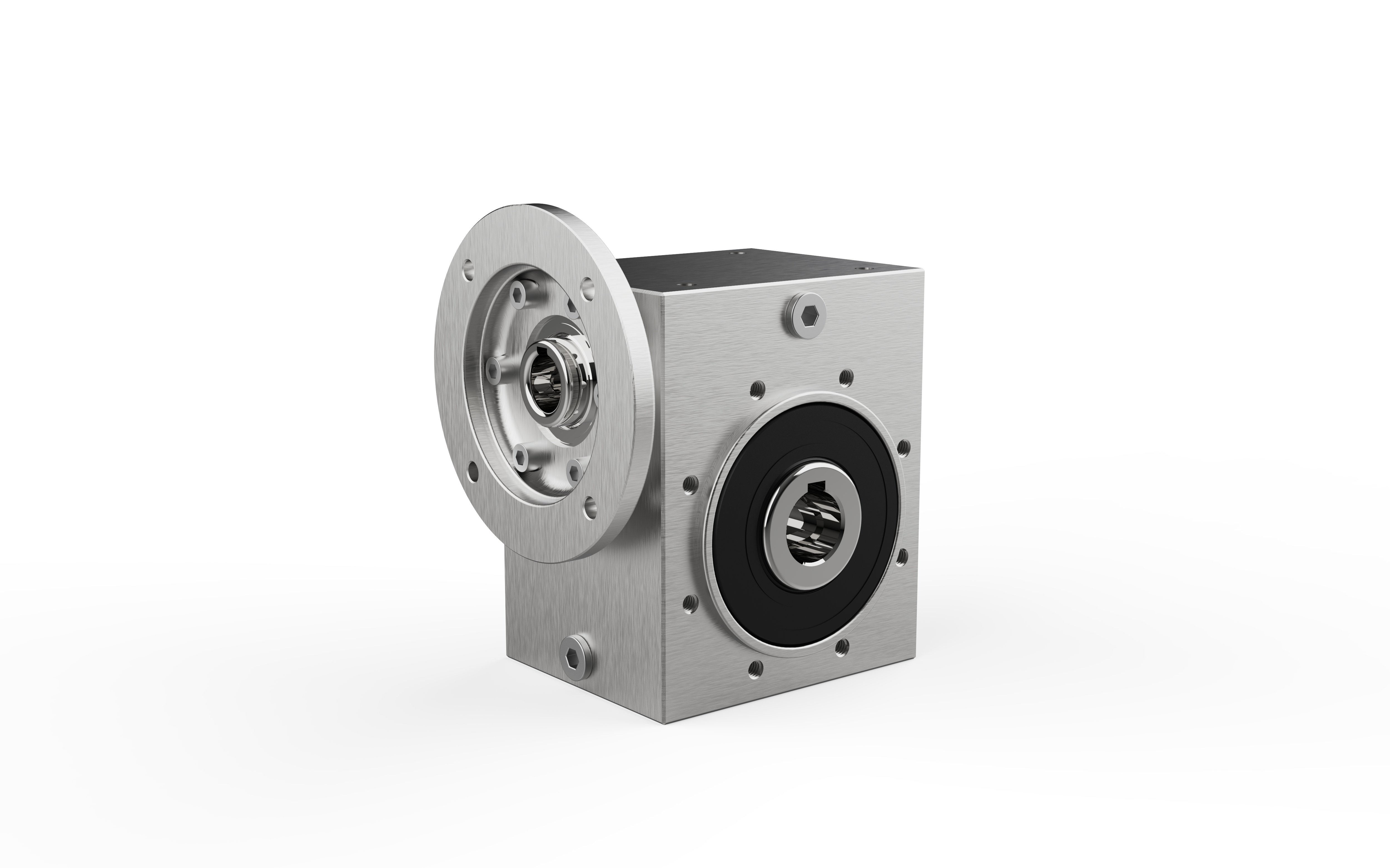
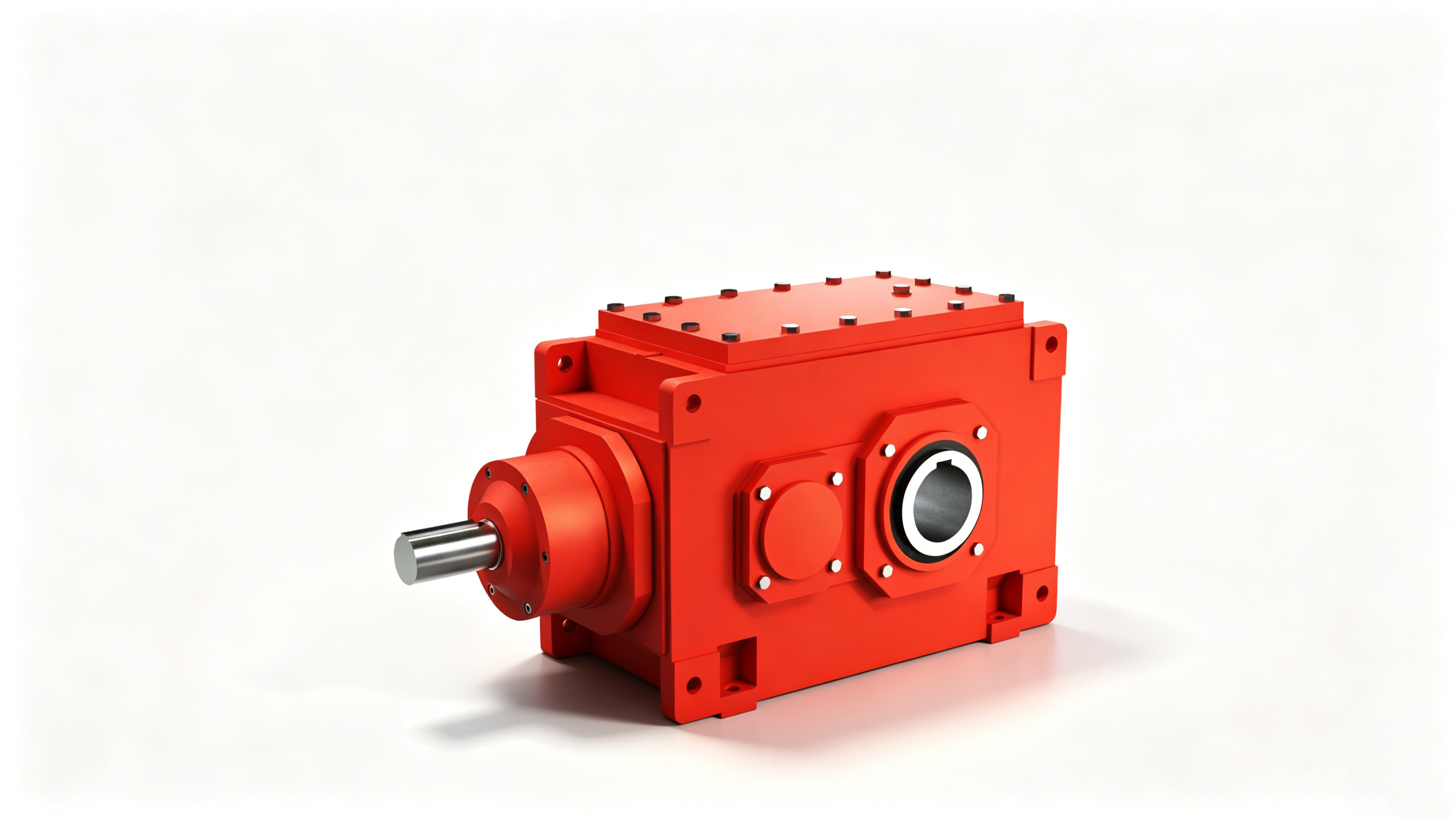
Quick Answer: There are three ways to connect a motor to a gearbox — flange connection (rigid, compact, high precision), coupling connection (flexible, misalignment-tolerant, easy to service), and integrated gearmotors (factory-assembled, no field alignment needed). The right choice depends on your space, precision, and maintenance requirements.
1. Three Connection Methods at a Glance
Flange Connection
- • Motor bolts directly to gearbox input face
- • No intermediate component
- • Highest rigidity and coaxial precision
- • Most compact axial footprint
Coupling Connection
- • Coupling element between motor and gearbox shafts
- • Absorbs misalignment and shock
- • Easy to install and service separately
- • Extra axial space required
Integrated Gearmotor
- • Motor and gearbox factory-assembled as one unit
- • No field alignment required
- • Best for compact, servo-driven applications
- • Replace as complete unit for service
2. Flange Connection — Rigid, Precise, Compact
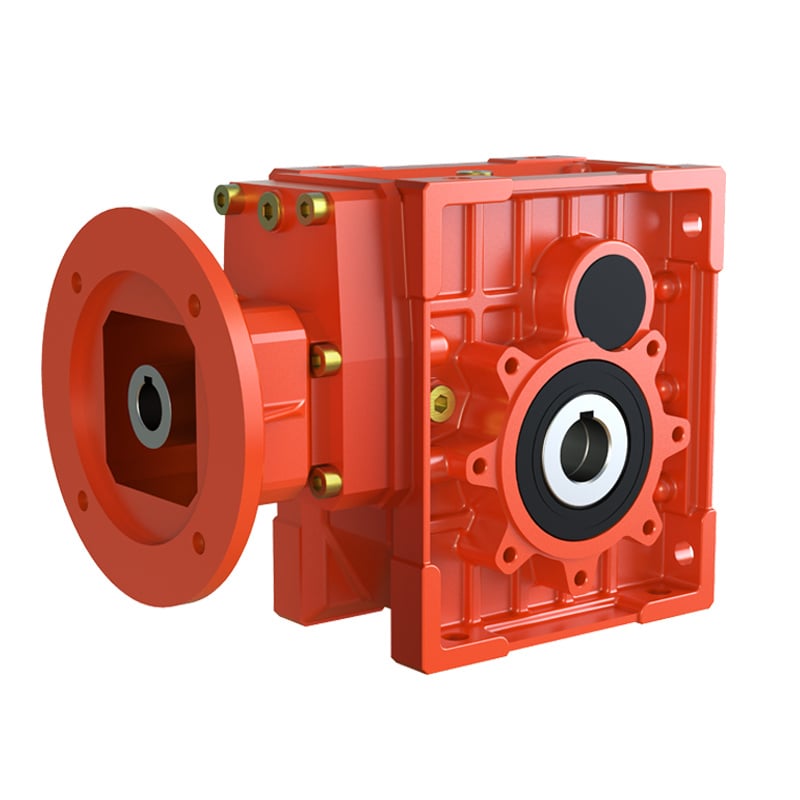
A flange connection uses a motor with an IEC B5 or B14 flange (or NEMA equivalent). The motor shaft inserts directly into the gearbox input bore. The two mating faces are bolted together.
Advantages
- • Maximum torsional rigidity — no coupling elasticity or backlash in the drive chain
- • Compact footprint — eliminates coupling length; ideal for tight installations
- • Better sealing — motor shaft is enclosed within the input chamber, reducing contamination risk
- • High servo precision — shorter mechanical path means faster dynamic response and better positioning accuracy
Limitations
- • Requires precise machining of both mating flanges — any runout causes bearing preload and early wear
- • Thermal expansion is not independently absorbed — generates internal stress if motor and gearbox heat at different rates
- • Any vibration from load side transmits directly into the motor
- • Flange standard must match exactly (IEC frame size, shaft diameter, key slot)
Best for: Servo-driven automation, robotic joints, packaging machinery, and any application requiring precise positioning and a compact drive package.
3. Coupling Connection — Flexible, Fault-Tolerant, Easy to Service
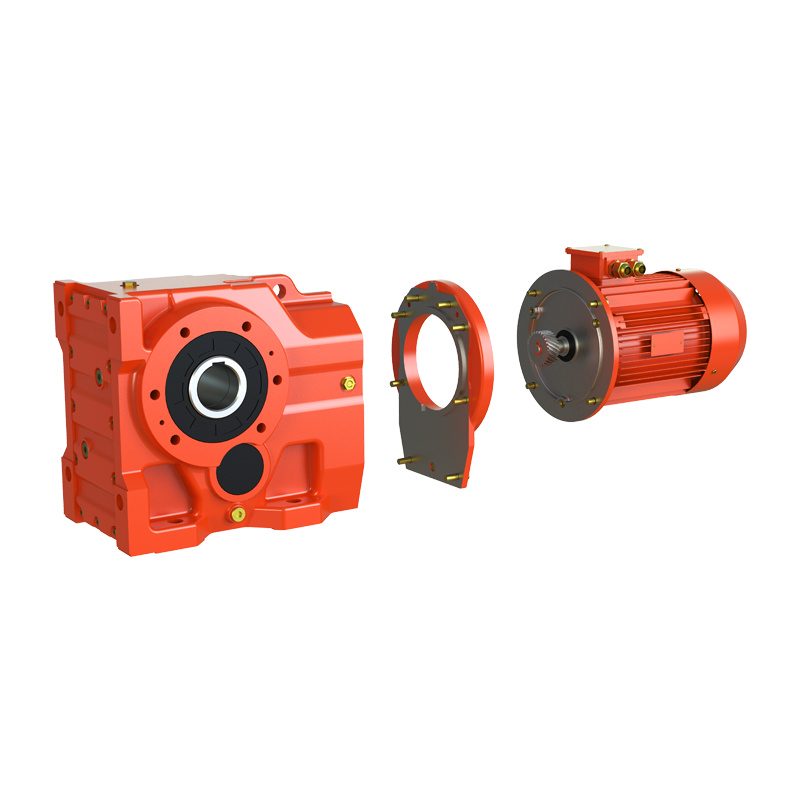
A coupling sits between the motor output shaft and the gearbox input shaft. Common types include jaw (spider), disc, bellows, and gear couplings — each with different levels of misalignment tolerance and torsional stiffness.
Advantages
- • Misalignment tolerance — compensates radial, axial, and angular offset from thermal effects or foundation settlement
- • Shock and vibration absorption — elastic couplings buffer torque peaks during frequent starts/stops or load spikes
- • Independent serviceability — motor and gearbox can be installed, aligned, and replaced separately
- • Lower installation skill requirement — alignment tools adjust coupling instead of mating faces
Limitations
- • Coupling adds axial length — not suitable for the most space-constrained designs
- • Introduces some torsional elasticity and backlash — reduces precision in servo applications
- • Coupling element (spider, disc) wears over time and requires periodic inspection
Best for: Crushers, presses, conveyors, long-shaft systems, field-installed equipment with foundation deformation risk, or anywhere easy motor replacement is a priority.
4. Integrated Gearmotor — Factory-Aligned, Plug-and-Play
An integrated gearmotor combines motor and reduction mechanism into a single factory-assembled unit. Internal alignment is performed under controlled conditions — no field shaft alignment is required.
Why Engineers Choose Gearmotors
- • Space savings — eliminates couplings, guards, and adapter bases; axial length is significantly shorter
- • Fast installation — mount the unit, connect power; no alignment calibration on site
- • Higher torsional stiffness — motor shaft and gearbox input share a rigid connection or common bearing support
- • Better sealing — integrated housing protects gears and bearings from dust and coolant ingress
- • Factory-verified compatibility — internal component matching is tested before shipment, reducing assembly errors
Best for: Automated production lines, AGVs, medical and packaging equipment, compact servo-driven applications where installation speed and layout flexibility matter.
5. Which Connection Method Should You Choose?
| Requirement |
Flange |
Coupling |
Gearmotor |
| Compact installation space |
✓✓ |
✗ |
✓✓✓ |
| Servo / high positioning precision |
✓✓ |
✓ |
✓✓✓ |
| Shock / torque spike absorption |
✗ |
✓✓✓ |
✓ |
| Easy field motor replacement |
✓ |
✓✓✓ |
✗ |
| Fast installation, no alignment |
✓ |
✓ |
✓✓✓ |
| Foundation deformation / misalignment risk |
✗ |
✓✓✓ |
✓ |
6. Reading the Motor Nameplate for Gearbox Matching
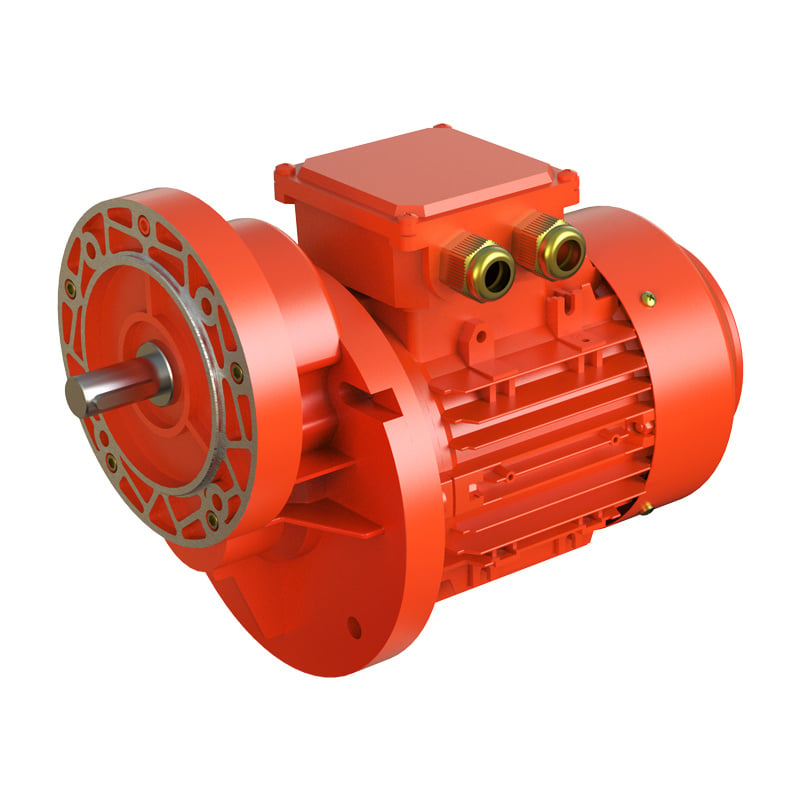
Before selecting a connection method, confirm the motor parameters. Three nameplate values are critical for gearbox compatibility:
Rated Power (kW / HP)
Mechanical output at shaft under rated load. Determines the gearbox torque capacity required at the selected ratio.
Rated Speed (r/min)
Input speed to the gearbox. Combined with desired output speed, this determines the required gear ratio. Most 4-pole motors run at ~1450 r/min (50Hz).
Mounting Type & Flange
IEC B5/B14 or NEMA frame designation sets the shaft diameter, key slot, and flange bolt pattern — all must match the gearbox input interface.
Other nameplate parameters (voltage, insulation class, IP rating, duty cycle) are important for electrical and environmental selection but do not affect the mechanical gearbox interface directly.
7. Wuma Drive Products for Every Connection Method
| Connection Method |
Recommended Series |
Typical Application |
| Flange (IEC B5 / B14) |
WMRV, WKM, WF/WR |
Servo automation, packaging, AGV |
| Coupling (shaft input) |
WK, WS |
Conveyors, crushers, heavy-duty mixers |
| Integrated gearmotor |
WF/WR/WK/WS with motor |
Compact automated lines, food processing |
FAQ
What is the difference between a flange connection and a coupling connection?
Flange connection bolts the motor directly to the gearbox face — rigid, compact, and zero intermediate components. Coupling connection uses a separate element between the shafts, allowing misalignment and shock absorption at the cost of extra axial length.
When should I choose an integrated gearmotor over a separate gearbox?
Choose an integrated gearmotor when installation space is tight, alignment on site is difficult, or the application requires maximum torsional stiffness (servo, robotics). Use a separate gearbox when you need to replace the motor independently or the application involves severe shock loads.
Which motor nameplate parameters matter most for gearbox matching?
Rated power (kW), rated speed (r/min), and mounting type (IEC or NEMA flange size). These three determine torque output, gear ratio, and mechanical interface compatibility.
Can I use any motor with a worm gearbox?
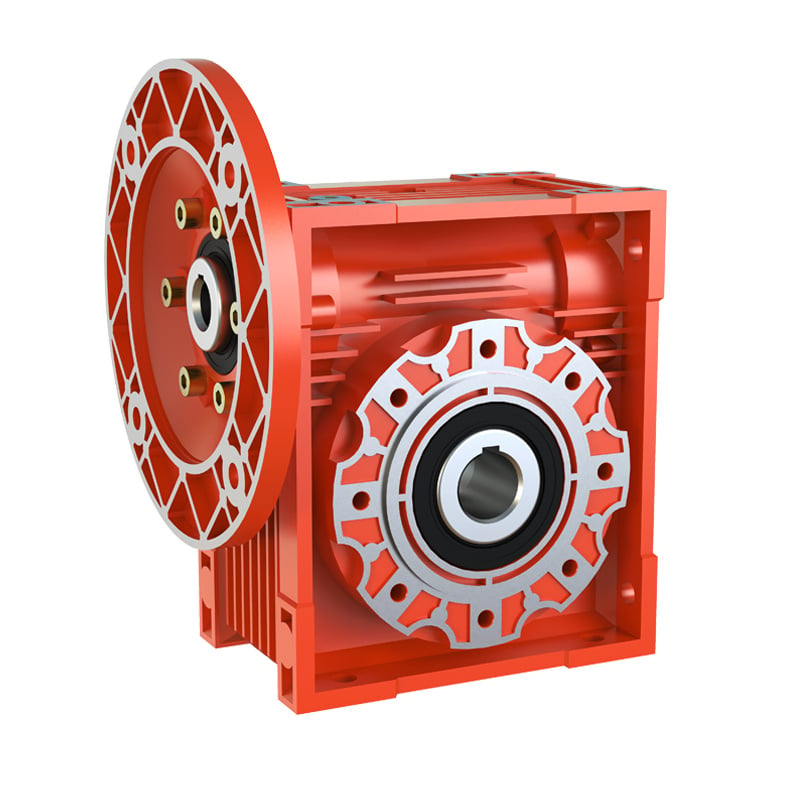
No. Shaft diameter, key slot dimensions, and flange standard (B5/B14 or NEMA) must match the gearbox input interface. Always verify these three dimensions before ordering.
Need Help Matching a Motor to Your Gearbox?
Tell us your motor nameplate data and application — Wuma Drive engineers will confirm the right connection method and series.
Contact Wuma Drive Browse Gearbox Series


 Hot News
 EN
EN