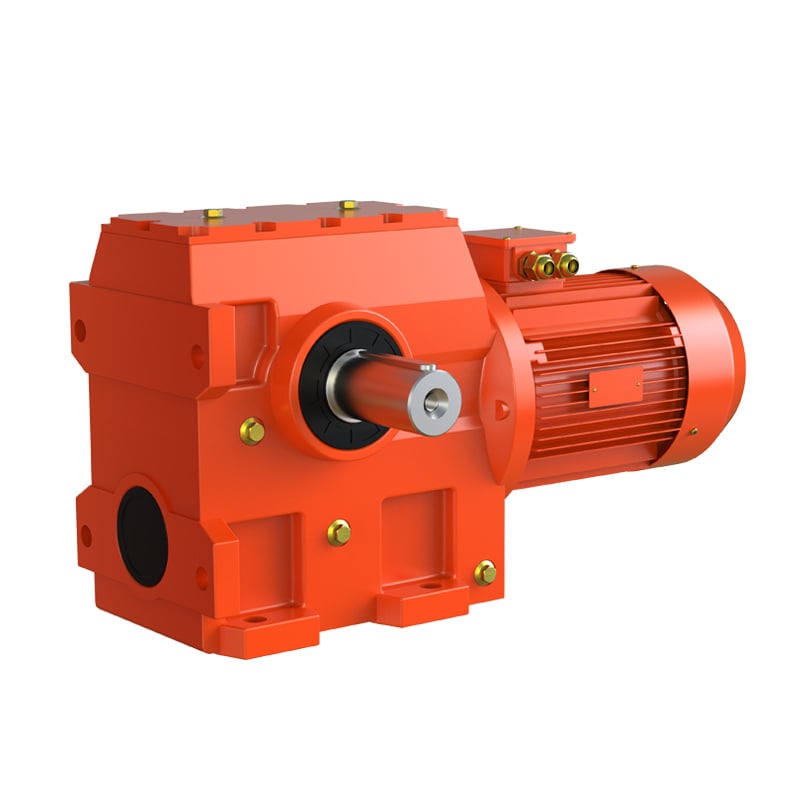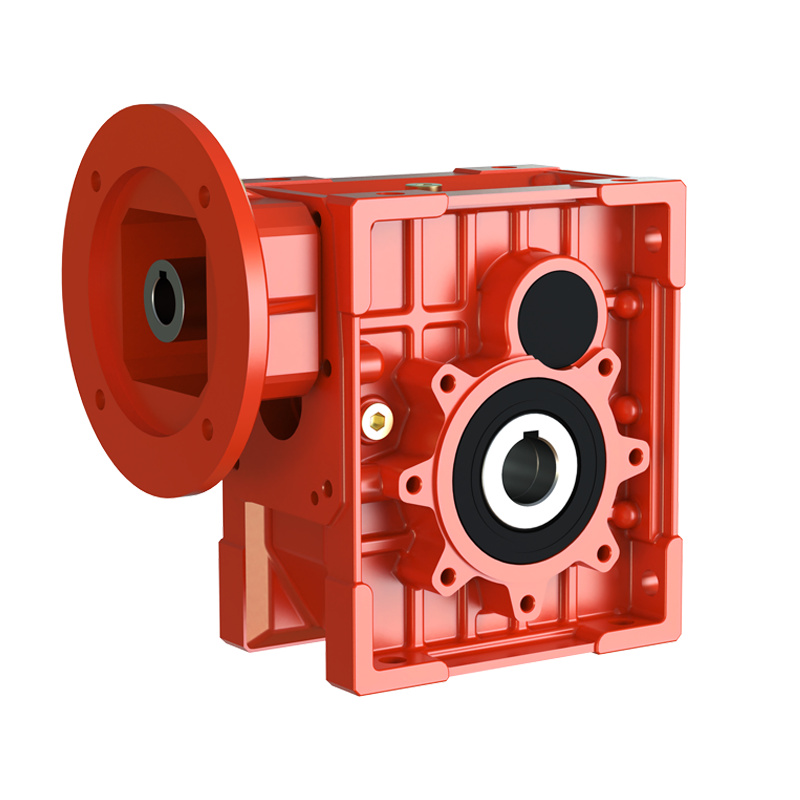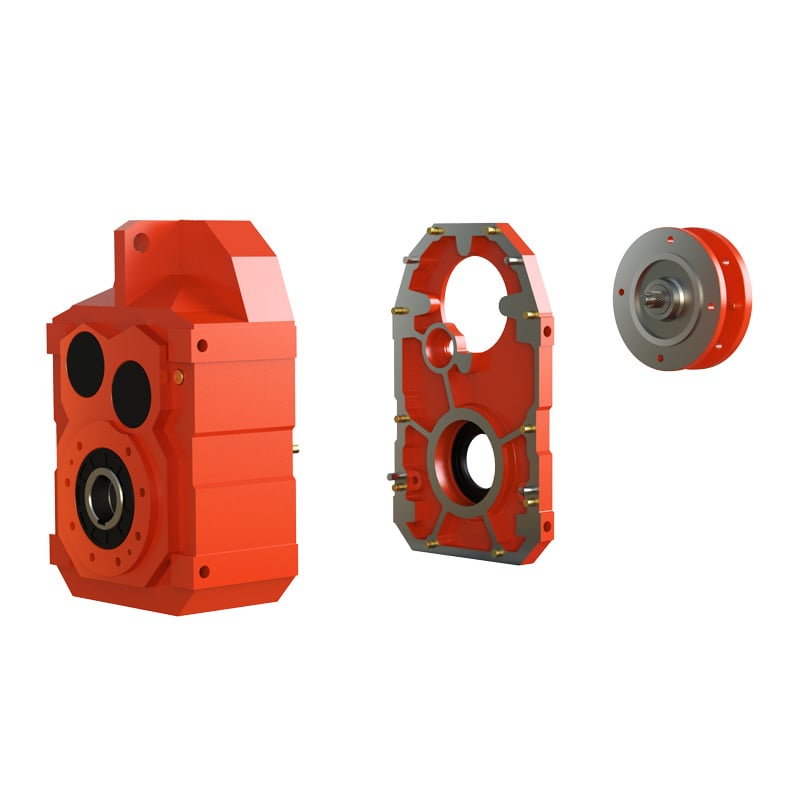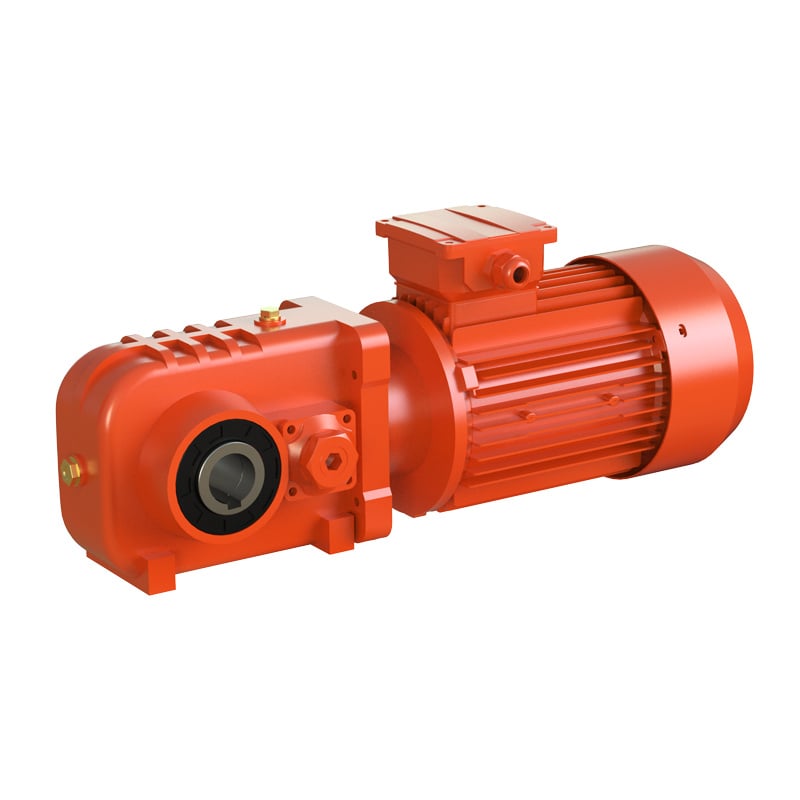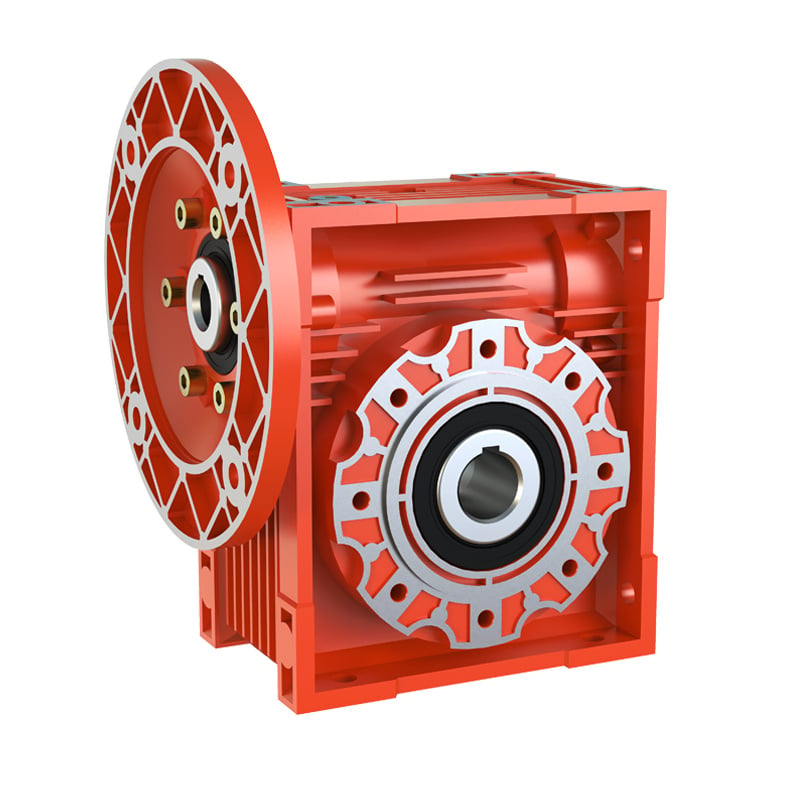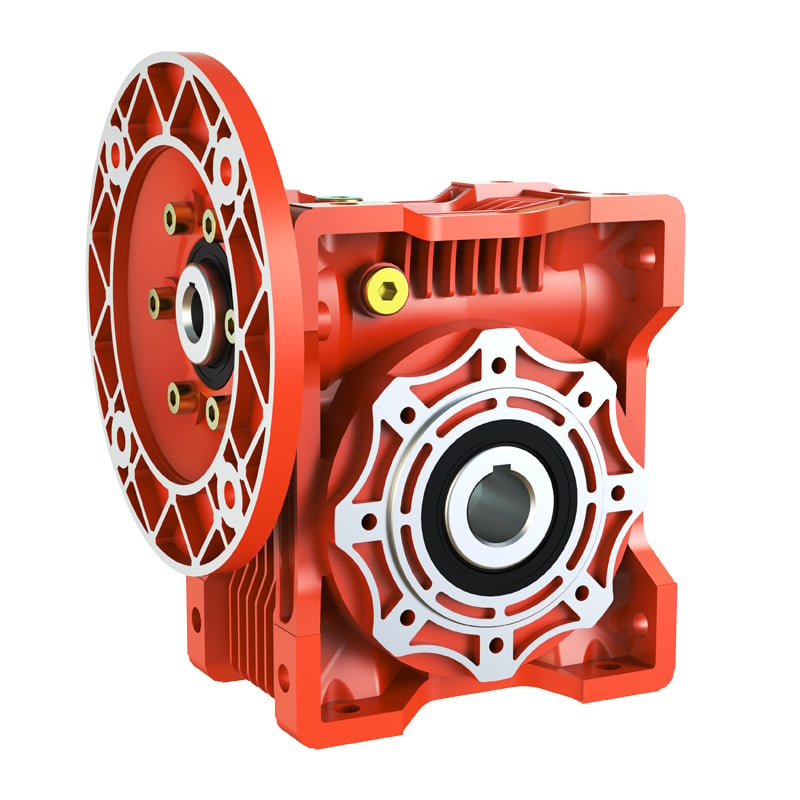

Then there’s the WF series parallel shaft helical gearbox: its shafts run parallel. That parallel layout gives you really smooth running, less shake, and quieter operation.
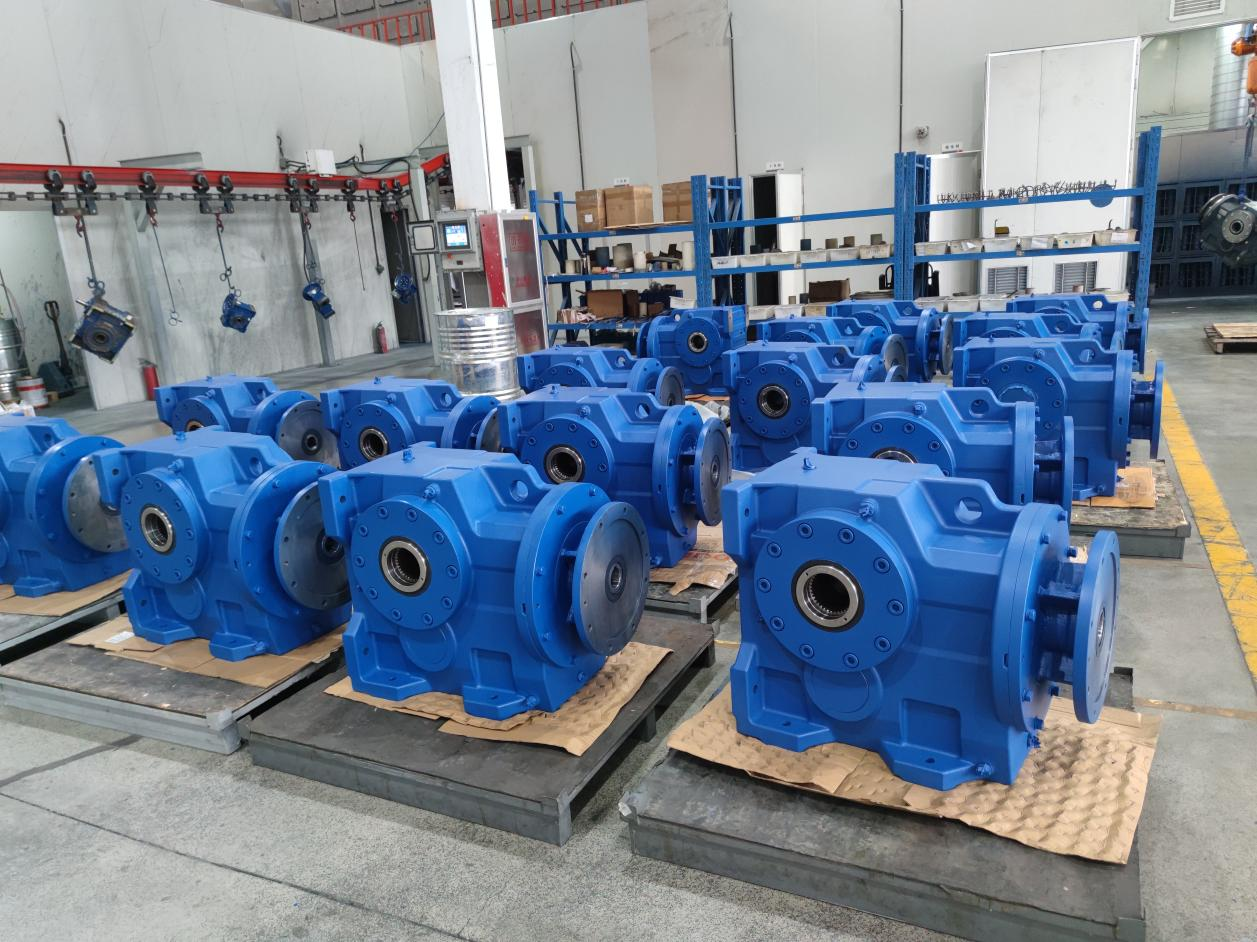
What they have in common:
•Mounting options are flexible—foot, flange, or hollow shaft, so they fit into all sorts of setups.
•Both use hardened and ground spiral bevel gears. They’re tough, wear-resistant, handle heavy loads and shocks well, and last a good while.
•Modular design means you can get high ratios and high torque in a neat package.
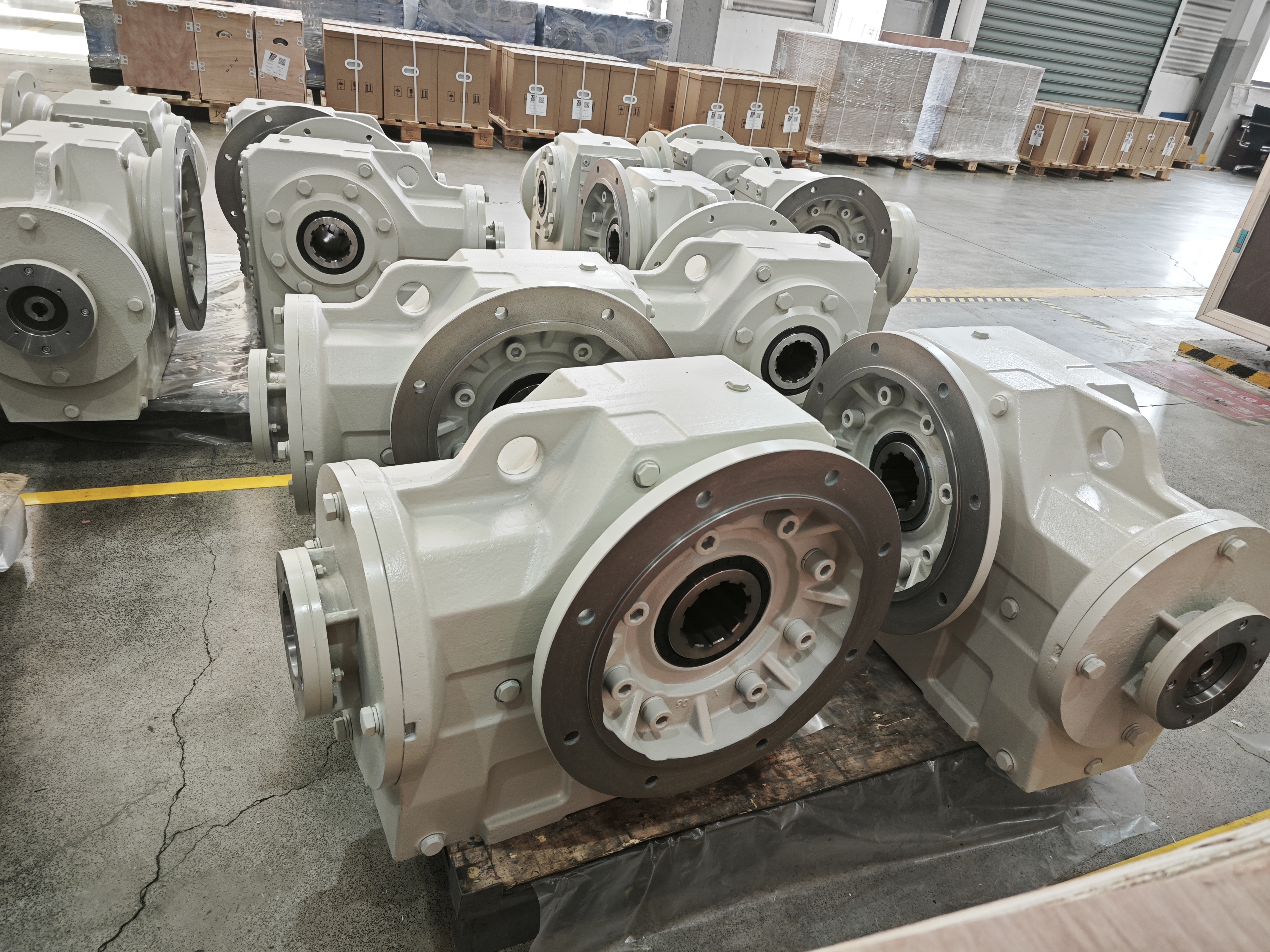
Where they differ:
•Housing – Bevel-Helical Gearbox has an L-shaped box; Parallel Shaft Helical Gearbox is more of a cylinder shape.
•Space – The Bevel-Helical Gearbox’s L-shape keeps things compact, saving room. The WF is longer and narrower, better where you’ve got a straight, clear line.
•Efficiency – Parallel Shaft Helical Gearbox wins here. The parallel shaft setup loses less power, so it’s cheaper to run long-term.
•Noise – Again, Parallel Shaft Helical Gearbox comes out ahead. Helical gears just run smoother and quieter than bevel gears.
Where you’d use them – Bevel-Helical Gearbox fits right-angle turns and 3D layouts: think vertical mixers, mining gear, conveyor corners, bottle line diverters. Parallel Shaft Helical Gearbox is better when you want efficiency and quiet: long conveyors, food/pharma lines, or high-precision setups with servos (like robots, machine tools, automation).
 Hot News
2026-08-26
2026-08-18
2026-08-15
2026-08-11
2026-07-31
2026-07-29
Welcome to Wuma , a manufacturer committed to developing and manufacturing various types of gear reducers and gearmotors for the field of gear transmission.
No. 10, Xiangcun Industrial Zone, Dongyuan Town, Qingtian County, Lishui City, Zhejiang, China
Copyright © Zhejiang Wuma Drive Co., Ltd All Rights Reserved Privacy Policy Blog
 EN
EN