All Categories
worm gear vs hypoid gearbox the ultimate showdown of efficiency and cost-0

Industry Popular Science

Home >  News&Blog >  Industry Popular Science

Worm Gear vs. Hypoid gearbox: The Ultimate Showdown of Efficiency and Cost

Jan 23, 2026

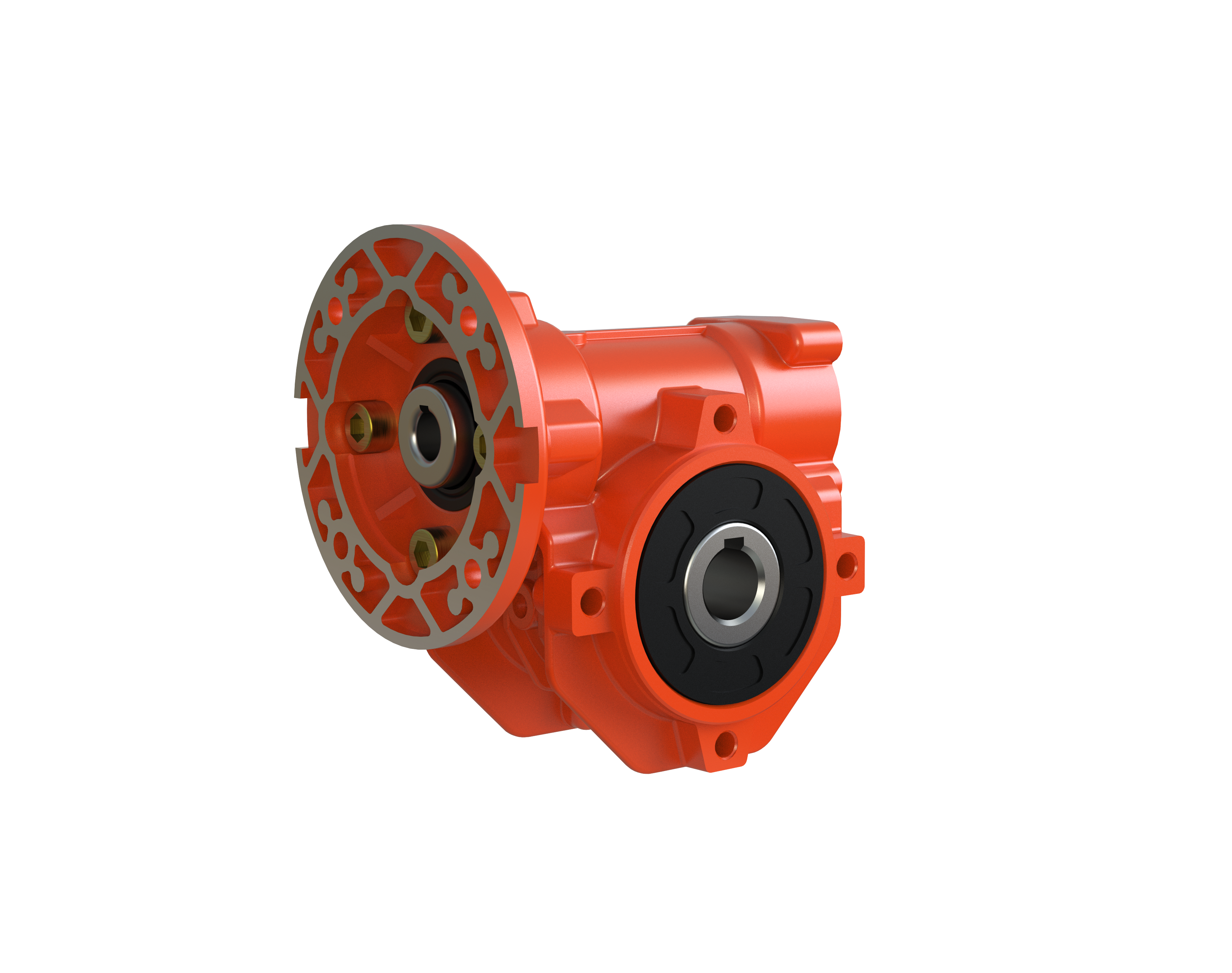
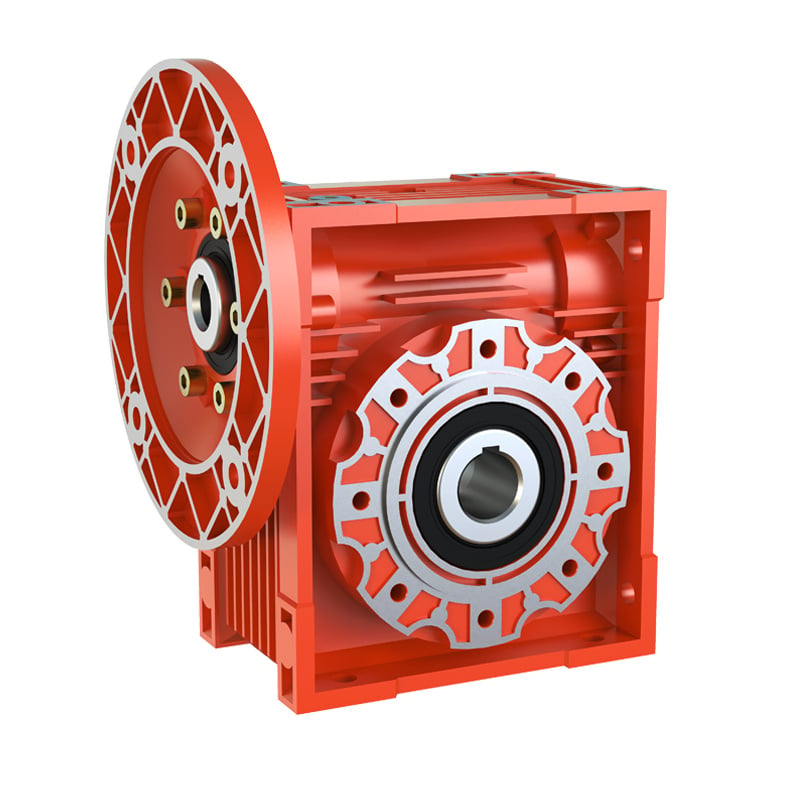
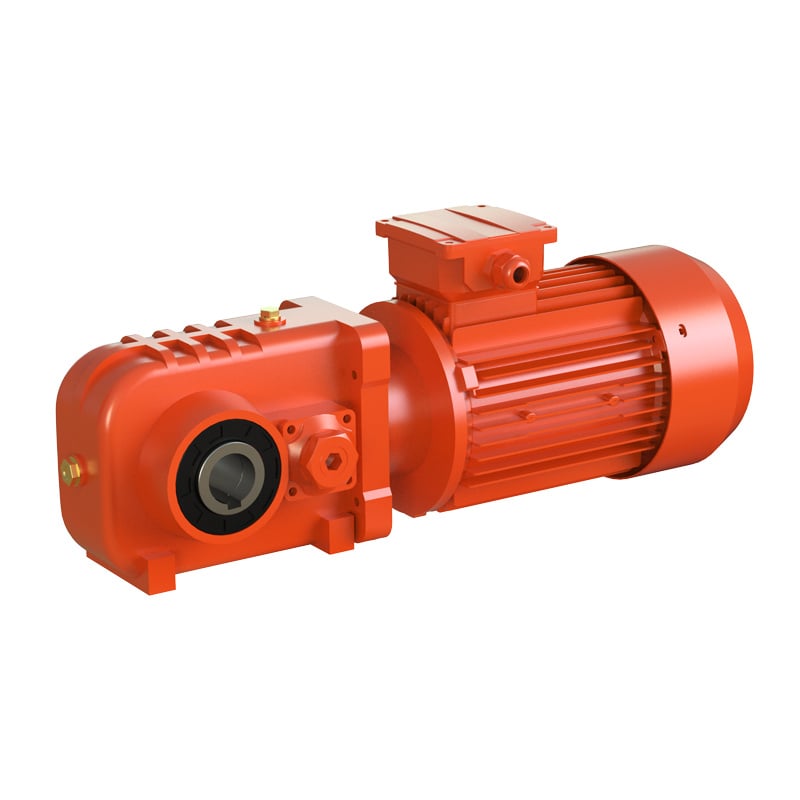
Faced with the demands of compact spaces and right-angle transmissions, we have traditionally opted for classic worm gear reducers (represented by the WMRV/WDVF/WMVF series). However, a formidable challenger has emerged – the Hypoid reducer (WKM). The relationship between these two is far more complex than a simple substitution; it represents a crucial choice concerning efficiency, cost, and total value of ownership.

The core difference between the two reducers stems from the fundamental principle of gear meshing, which directly determines their efficiency limits.

图片 1(47f5b88162).png

Worm Gear Drives: A Design Primarily Based on Sliding Friction

The transmission relies on the helical teeth of the worm (usually hardened steel) continuously "scraping" against the tooth surface of the worm wheel (usually tin bronze). This motion involves significant sliding friction, resulting in considerable energy loss converted into heat. Therefore, even with precise design and manufacturing, the single-stage efficiency of worm gear drives typically ranges from 70% to 85%. This means that as much as 15% to 30% of the input power is unnecessarily lost.

Hypoid Transmission: An Evolution Dominated by Rolling Friction

Hypoid gears feature teeth with complexly calculated Hypoid helical surfaces. The meshing mechanism is line contact, with rolling motion as the primary mode of motion, accompanied by controllable micro-slippage. This design significantly reduces friction between the tooth surfaces. Therefore, the single-stage transmission efficiency of Hypoid reducers can generally reach 94%-96%, or even higher.

Let's quantify the real cost impact of this efficiency gap. Consider a typical automation scenario:

For example : One customer is using WMRV75-30-Y1 .5 KW for 8 hours every day.

the needed output torque is 194 N.M , S.F is 1.2. Now if he would like to use WKM75B-30 -Y1 .5 KW (output torque is 237N.M ,S.F is 1.44 ) as replacement. How much power can be save per day and per year?

So if using Hypoid gearbox, 0.27Kw/H can be saved per hour, 0.27*8=2.16 Kw/H can be saved per day, 2.16*360=777.6 Kw/H per year can be saved.

Saving cost per year: 777.6 Kw/H * your electricity cost

In this example, choosing the more efficient Hypoid reducer, if it operates for 5 years, would allow the cost to cover, or even far exceed, the initial purchase cost difference between the two options.

When selecting components for your next project, consider this comparison. True cost control begins with intelligent choices in the initial design. Choosing a more efficient transmission is not just choosing a product, but choosing a future-oriented, sustainable profit model.