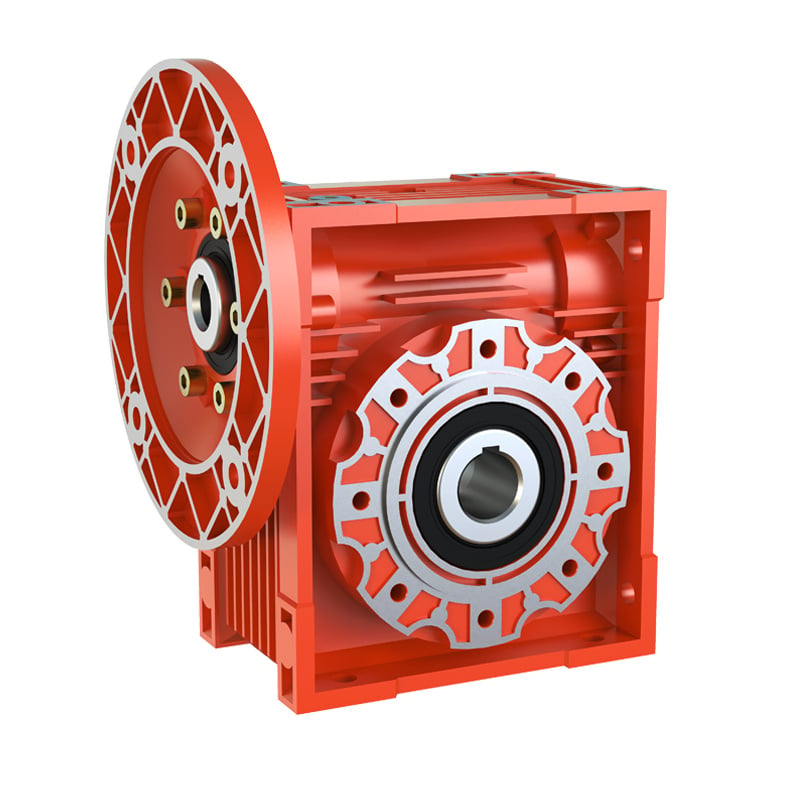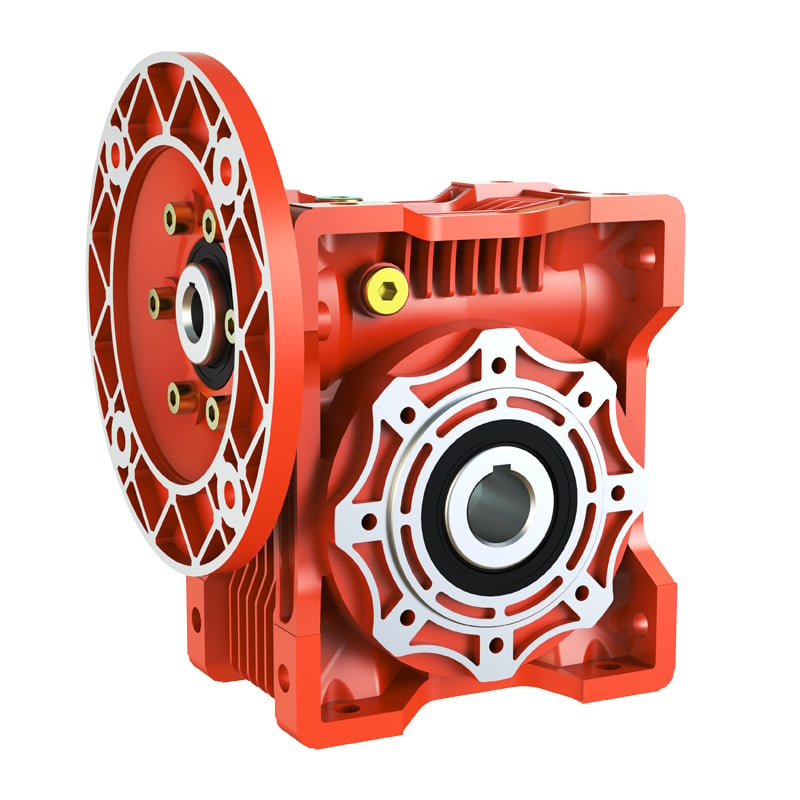

The lubricating oil directly affects the equipment's operating efficiency and service life. Among the many parameters of oil, viscosity is the most crucial physical indicators. Viscosity grade and viscosity index is two key parameters of viscosity which are essential for selecting a suitable lubricating oil.
Vislint is typically classified according to the International Organization for Standardization (ISO) viscosity grade system, such as ISO VG 68 and ISO VG 220. This parameter represents the center value of the kinematic viscosity of the oil at 40 °C. This standard provides a universal benchmark for selecting oil viscosity. Low viscosity lubricating oil cannot form a sufficiently thick oil film on the gear surfaces that leading to boundary lubrication, increased wear, and pitting. highviscosity Oil increases internal frictional resistance, causing starting difficulties and a rapid rise in operating temperature. Generally speaking, speed reducers with high speeds and light loads should use lower viscosity oils; conversely, low-speed, heavy-load conditions require higher viscosity oils to ensure the oil film strength effectively protects and lubricates the precision gears.
The temperature of a gearbox during actual operation is constantly changing. It is at the same temperature as the ambient environment when startup.But after some time working,the internal oil temperature can reach 70-90 °C or even higher. The viscosity of the oil will changes with temperature.When the temperature rises, the viscosity will decreases. This is where the viscosity index, another crucial parameter, becomes apparent.
The viscosity index (VI) is a dimensionless parameter that measures the degree to which the viscosity of lubricating oil changes with temperature. A higher viscosity index indicates that the oil's viscosity is less affected by temperature, resulting in better viscosity-temperature performance. A high viscosity index lubricating oil can maintain a higher effective viscosity at high temperatures than a low viscosity index oil of the same viscosity grade, thus providing good lubrication protection at operating temperatures. At low temperatures, its viscosity increase is relatively small, and the oil's fluidity is better, which is beneficial for cold starts and reduces starting wear.
In high-temperature environments, high viscosity index oils maintain a more stable oil film, prevent increased gear wear and reduced gearbox efficiency. In low-temperature environments, they ensure good pumpability and startability, avoiding friction caused by insufficient oil supply during startup. , Using high viscosity index oils is an effective way to improve operational stability and extend oil change intervals for gearboxes operating in environments with large temperature variations or those with inherently high temperature rise.
Different application scenarios have significantly different viscosity index requirements, which directly determines the specific oil selection:
Equipment operating in indoor, constant-temperature environments with minimal temperature variations does not require a high viscosity index. In this case, high-performance mineral oils (viscosity index around 100) are usually sufficient, making it an economical and practical choice.
However, for outdoor equipment facing significant temperature variations between day and night and throughout the seasons, high viscosity index requirements are necessary. High viscosity index mineral oils, or even better synthetic oils (viscosity index typically greater than 120), must be selected to ensure stable protection for the shaft in both summer and winter outdoor environments.
In frigid regions, low-temperature startup is a major challenge, thus requiring extremely high viscosity index. High viscosity index synthetic oils (viscosity index greater than 130 and extremely low pour point) must be used to ensure the oil does not solidify at extremely low temperatures and can be pumped normally to lubrication points.
Guidelines for selecting lubricating oil for gearboxes should first determine the basic ISO viscosity grade based on the manufacturer's instructions and actual operating loads. Secondly, the viscosity index requirements should be assessed considering the specific application scenario and ambient temperature range. Finally, other properties such as extreme pressure anti-wear properties, oxidation resistance, anti-foaming properties, and rust prevention should also be considered; these are typically achieved by adjusting the proportions of different additives.
The correct viscosity grade ensures basic lubrication effectiveness, while a suitable viscosity index gives the oil strong resilience to handle complex operating conditions. Only by combining both factors and closely considering the actual operating scenarios of the equipment can we select an ideal lubricant for the speed reducer that can flow smoothly during cold starts and work stably under high temperature and heavy loads, ultimately achieving the maintenance goals of reducing wear, lowering energy consumption, and extending equipment life.
If you want know more information about reducer or gearbox,please feel free to contact WUMA engineer.If you want know more information about reducer or gearbox,please feel free to contact WUMA engineer.
 Hot News
2026-08-26
2026-08-18
2026-08-15
2026-08-11
2026-07-31
2026-07-29
Welcome to Wuma , a manufacturer committed to developing and manufacturing various types of gear reducers and gearmotors for the field of gear transmission.
No. 10, Xiangcun Industrial Zone, Dongyuan Town, Qingtian County, Lishui City, Zhejiang, China
Copyright © Zhejiang Wuma Drive Co., Ltd All Rights Reserved Privacy Policy Blog
 EN
EN