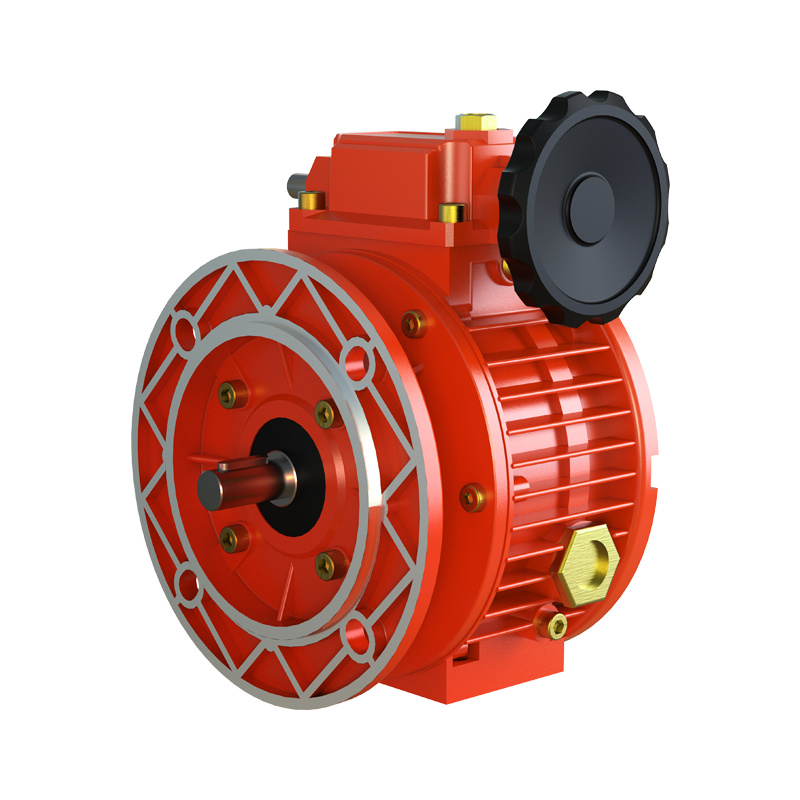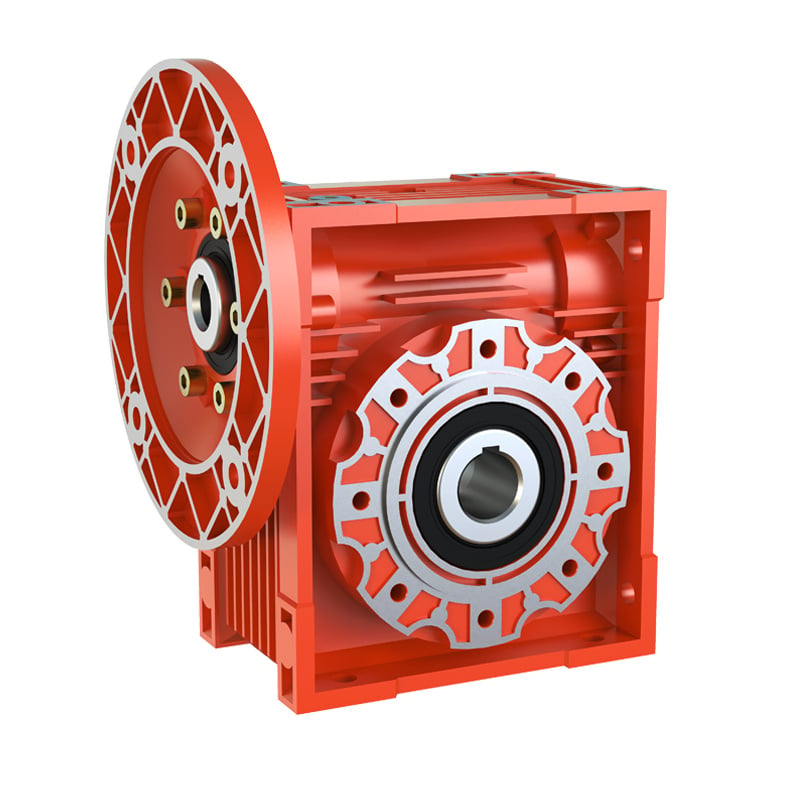

1. Causes of oil leakage in the speed reducer
1.1Pressure difference is generated inside and outside the reducer
During the operation of the speed reducer, the friction of the moving parts generates heat and is affected by the ambient temperature, causing the speed reducer temperature to rise. If there is no vent or the vent is blocked, the internal pressure will gradually increase. The higher the internal temperature, the greater the pressure difference between the speed reducer and the outside. Under the action of the pressure difference, the lubricating oil will leak out from the gaps.
1.2The reducer's structural design is unreasonable.
A. The inspection hole cover plate is too thin, and it is prone to deformation after the bolts are tightened, resulting in uneven mating surfaces and oil leakage from the contact gaps;
B. During the manufacturing process of the speed reducer, if the castings are not annealed or aged to eliminate internal stress, deformation will inevitably occur, resulting in gaps and leakage.
C. The housing lacks an oil return groove, causing lubricating oil to accumulate at the shaft seal, end cover, and mating surfaces. Under pressure differential, this oil leaks outward from the gaps.
D. Inadequate shaft seal design. Early reducers often used oil groove and felt ring shaft seal structures. During assembly, the felt was compressed and deformed to seal the gaps at the mating surfaces. If the contact between the journal and the seal was not ideal, the seal would fail quickly due to the poor compensation performance of the felt. Although there were oil return holes in the oil groove, they were easily clogged, making it difficult for the oil return function to be effective.
1.3 Too much fuel
During the operation of the speed reducer, the oil sump is violently agitated, and the lubricating oil splashes everywhere inside the machine. If too much oil is added, a large amount of lubricating oil will accumulate in the shaft seal, mating surfaces, etc., leading to leakage.
1.4 Improper maintenance procedures
During equipment maintenance, oil leaks can also occur due to incomplete cleaning of contaminants on the mating surfaces, improper selection of sealant, reversed installation of sealants, or failure to replace sealants in a timely manner.
2. How to fix oil leaks in a speed reducer
2.1Improve the vent cap and inspection hole cover.
One of the main causes of oil leakage is that the internal pressure of the reducer is greater than the external atmospheric pressure. If the internal and external pressures are balanced, oil leakage can be prevented. Although reducers have vent caps, the vent holes are too small and easily clogged by coal dust and oil. Furthermore, each time oil is added, the inspection port cover must be opened, increasing the possibility of leakage and potentially causing leaks in previously leak-free areas. To address this, an oil cup-type vent cap was developed, and the original thin inspection port cover was thickened to 6mm. The oil cup-type vent cap is welded to the cover plate, with a 6mm diameter vent hole for easy ventilation and pressure equalization. Moreover, oil is added through the oil cup, eliminating the need to open the inspection port cover and reducing the chance of leakage.
2.2 Smooth flow
To prevent excess lubricating oil thrown onto the bearing by the gears from accumulating at the shaft seal, the excess lubricating oil must flow back to the oil sump in a certain direction, ensuring smooth flow. Specifically, a return oil groove inclined inwards is cut in the center of the lower bearing shell of the bearing housing, and a notch is also cut at the straight opening of the end cover, directly opposite the return oil groove. In this way, excess lubricating oil flows back to the oil sump through the notch and the return oil groove.
2.3 Improve shaft seal structure
A. Improvement of Shaft Seals for Gearboxes with Half-Shaft Output Shafts: The output shafts of gearboxes in most equipment such as belt conveyors, screw unloaders, and impeller feeders are half-shafts, making modification relatively convenient. Disassemble the gearbox, remove the coupling, and take out the gearbox shaft seal end cover. Machine a groove on the outside of the original end cover according to the dimensions of the matching skeleton oil seal, and install the skeleton oil seal with the spring side facing inwards. During reassembly, if the end cover is more than 35mm from the inner end face of the coupling, a spare oil seal can be installed on the shaft outside the end cover. If the oil seal fails, the damaged oil seal can be removed, and the spare oil seal can be pushed into the end cover, thus saving the time-consuming and laborious steps of disassembling the gearbox and removing the coupling.
B. Improvement of Shaft Seal for Reducers with a Single Output Shaft: Reducers with a single shaft drive lack a coupling on the output shaft. Modifying it according to the 2.3.1 scheme would be too labor-intensive and impractical. To reduce workload and simplify the installation procedure, a split-type end cover was designed, and an open-type oil seal was tested. A groove is machined on the outer side of the split-type end cover. When installing the oil seal, first remove the spring, then saw the oil seal into an open shape. Place the oil seal onto the shaft through the opening, use adhesive to align the openings, with the opening facing upwards, then install the spring and push in the end cover.
2.4Use new sealing materials
For leaks at static sealing points in a speed reducer, a new type of polymer repair material can be used for sealing. If oil leaks from static sealing points during speed reducer operation, an emergency oil surface repair agent based on surface engineering technology—a composite repair material of polymer 25551 and 90T—can be used to seal the leak, thereby eliminating the oil leakage.
2.5 Strictly implement the maintenance procedures.
When overhauling a speed reducer, the process specifications must be strictly followed. The oil seal must not be installed backwards, the lip must not be damaged, the outer edge must not be deformed, the spring must not fall off, the mating surfaces must be cleaned, the sealant must be applied evenly, and the amount of oil added must not exceed the mark on the dipstick.
2.6 Wipe
The static sealing points of the reducer can generally be made leak-free through treatment. However, due to reasons such as aging of the seals, poor quality, improper assembly, and high surface roughness of the shaft, some dynamic sealing points may still have slight leakage. Due to the poor working environment, coal dust sticks to the shaft, making it look oily. Therefore, it is necessary to wipe the oil stains off the shaft after the equipment stops running.
 Hot News
2026-08-26
2026-08-18
2026-08-15
2026-08-11
2026-07-31
2026-07-29
Welcome to Wuma , a manufacturer committed to developing and manufacturing various types of gear reducers and gearmotors for the field of gear transmission.
No. 10, Xiangcun Industrial Zone, Dongyuan Town, Qingtian County, Lishui City, Zhejiang, China
Copyright © Zhejiang Wuma Drive Co., Ltd All Rights Reserved Privacy Policy Blog
 EN
EN